




Regency Fainting Couch
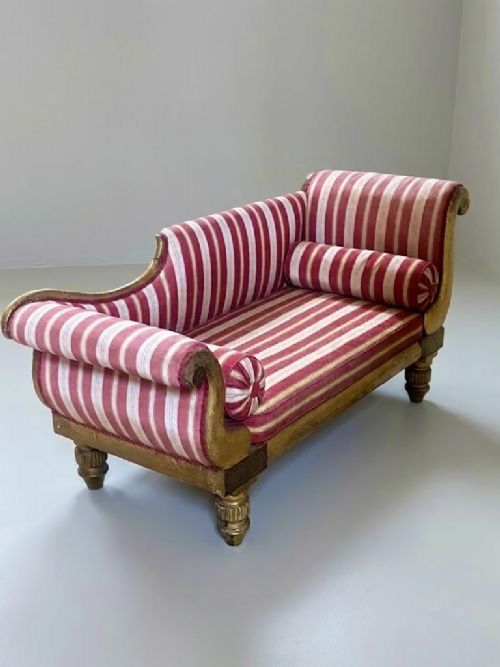
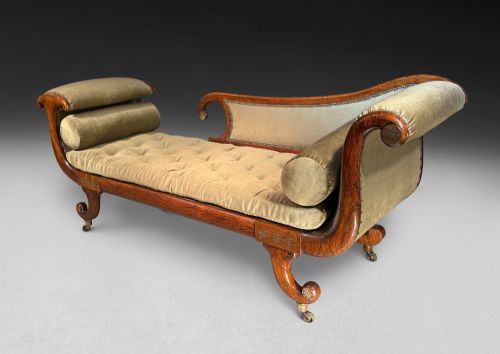
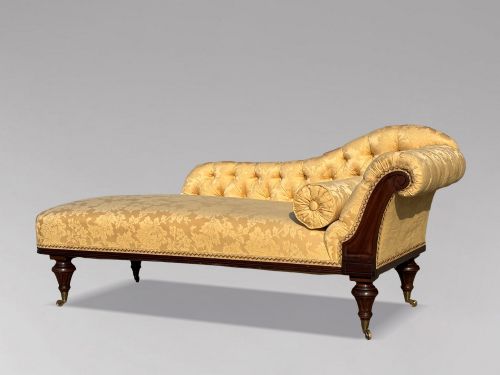
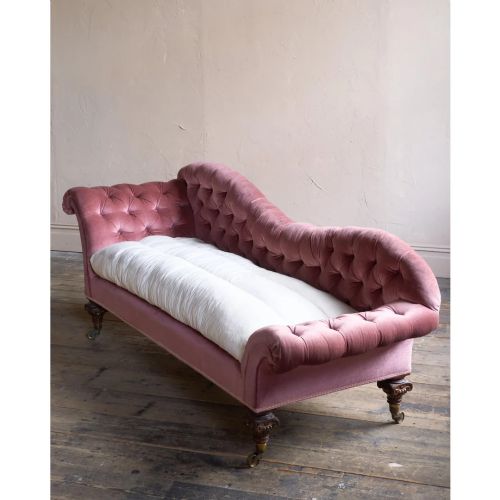
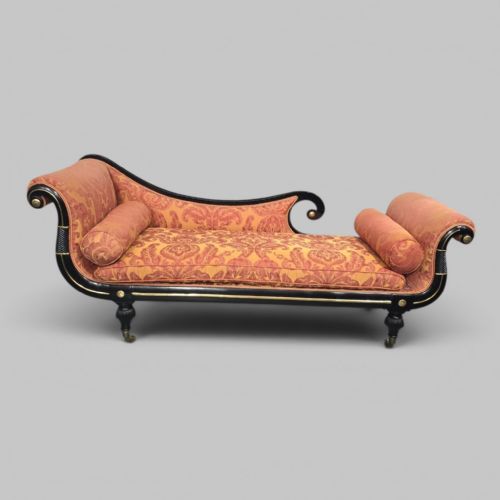
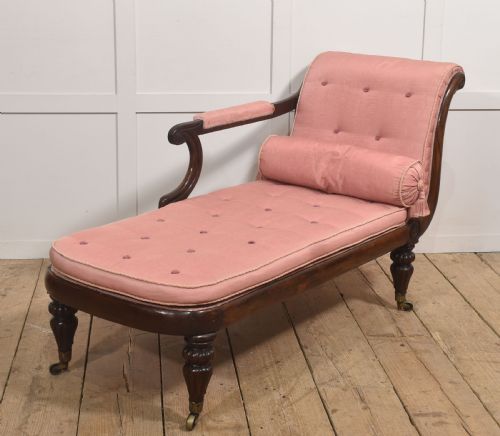
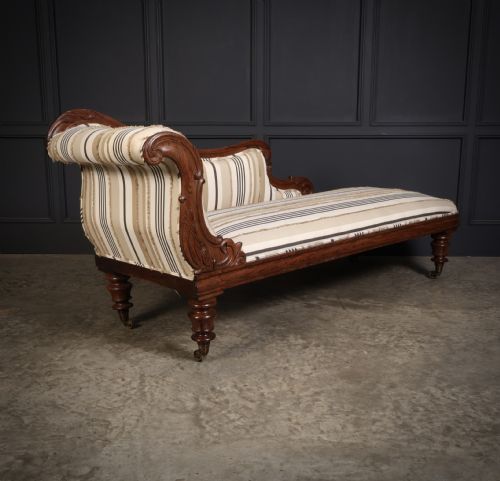
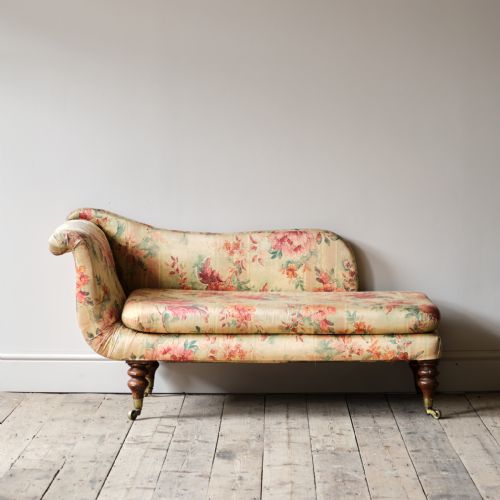
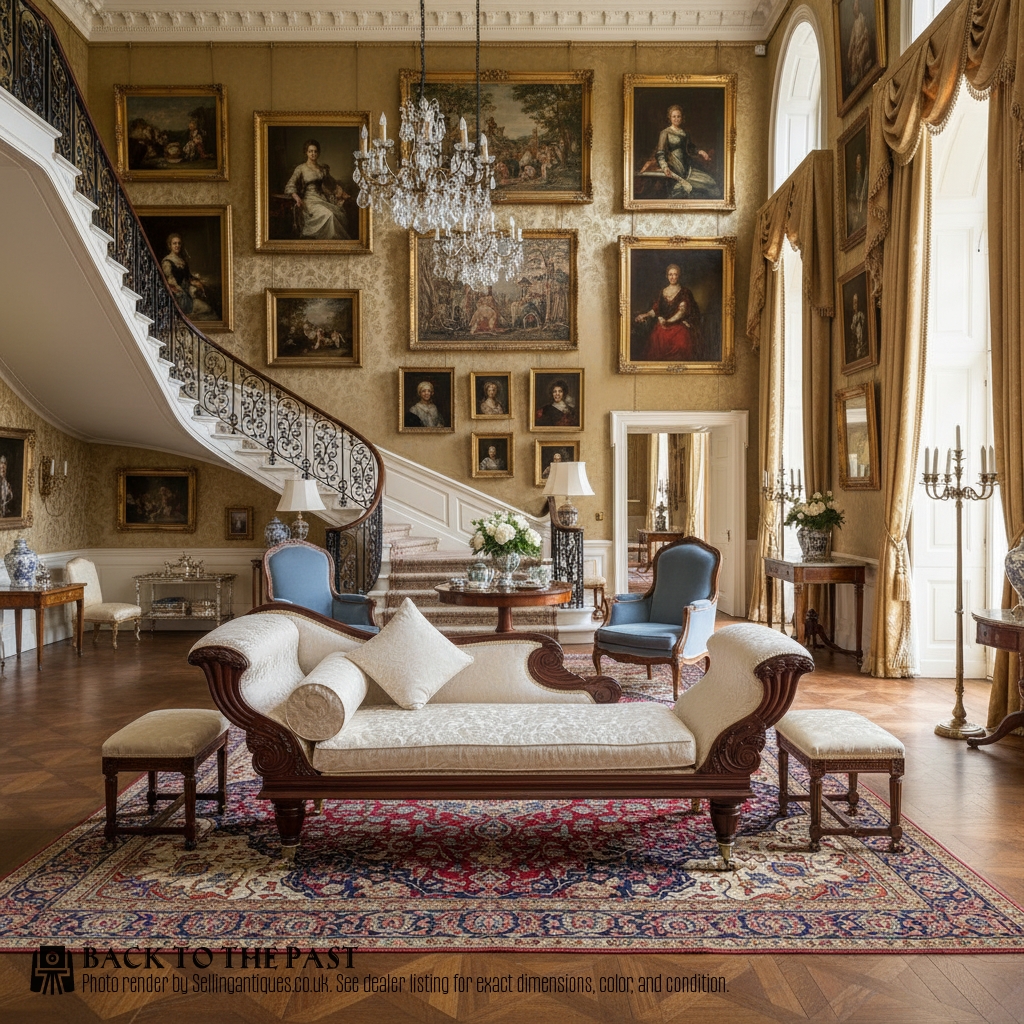
A regency fainting couch is an elongated seat designed for reclining, bringing grand neoclassical curves and deep comfort into a room.
Regency Fainting Couch
When you search for a regency fainting couch, you encounter daybeds, sofas, and chaise longues spanning the nineteenth century alongside later twentieth-century interpretations. The pieces you are most likely to meet on this page date from the Regency and William IV periods, constructed in mahogany, rosewood, and giltwood.
These forms range from monumental architectural frames with ionic column legs to scroll-arm sofas and daybed frames upholstered in silk, velvet, damask, or fitted with cane seating. Many echo classical forms, while occasional pieces like the surrealist daybed demonstrate later design directions.
Makers working in the manner of Gillows or William Trotter produced variations that define the standard forms seen here. Buyers select them for their singular reclining silhouette and the presence they command in a reception room or study.
How they were made
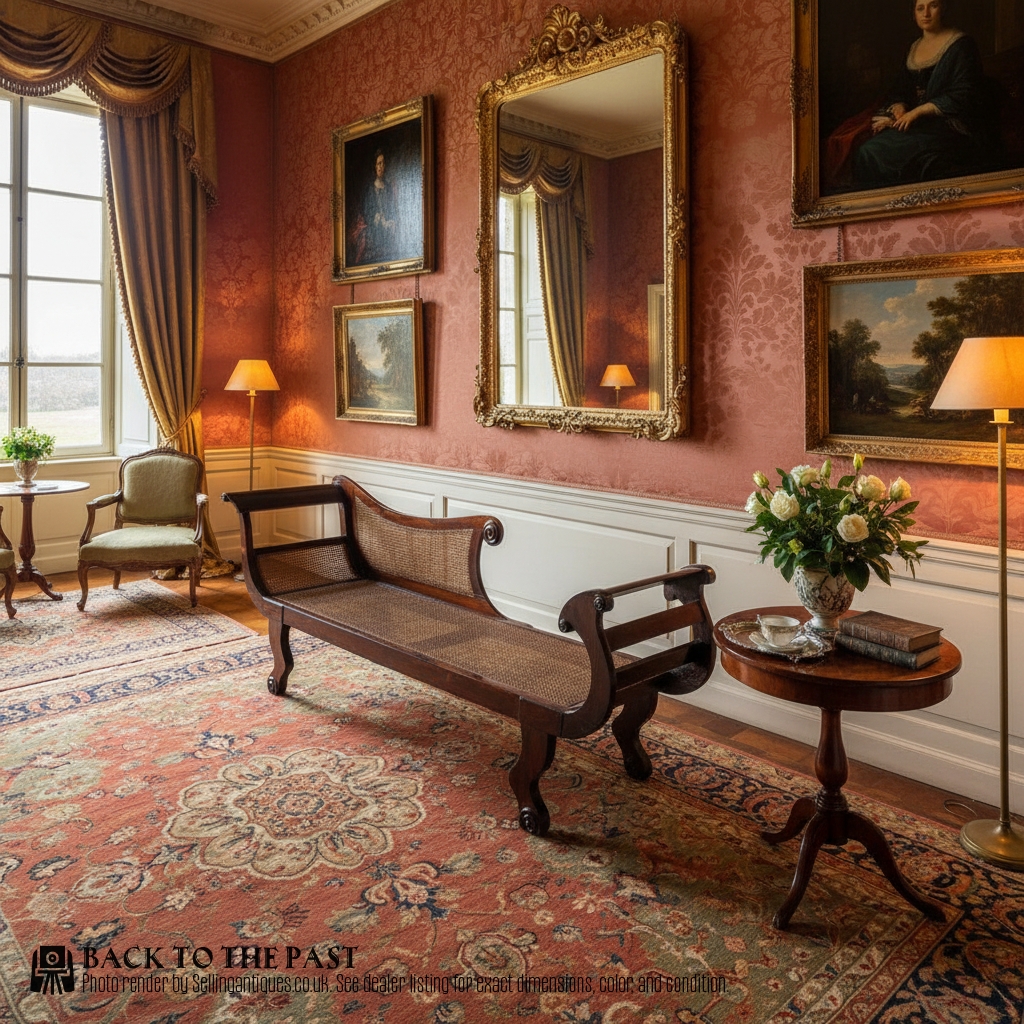
Cabinetmakers constructed the structural frames of a regency fainting couch from dense hardwoods such as mahogany and solid Rio rosewood, frequently incorporating simulated rosewood and ebonised finishes. Brass inlay and carved wooden details embellished the primary rails and supports.
Upholstery techniques involved supportive webbing and horsehair stuffing beneath outer coverings of silk, velvet, damask fabric, or simple cane seating. Turnings, scroll arms, and architectural elements like ionic column legs were hand-carved directly into the timber.
Regency Fainting Couch Retail Price Guide 2026
Typical asking prices for regency fainting couch among the pieces listed under this phrase on Sellingantiques today, from the lower quarter to the upper quarter. They describe what is for sale here now, not the wider market.
Listings feature nineteen-century pieces alongside twentieth-century works, utilising materials from solid Rio rosewood and brass to silk and cane.
What varies in quality
The refinement of the timber carving and the precision of brass inlay separate standard examples from finer works attributed to workshops in the manner of Gillows. Crisp definition in scroll arms and column legs indicates superior hand-tooling.
The integrity of the underlying frame construction and the choice of primary wood, such as solid Rio rosewood versus general hardwoods, determine the baseline durability and finish. Upholstery materials range from simple cane work to antique striped silk and damask.
Gillows·Willian Trotter·Syrie Maugham
The Regency Fainting Couch Glossary
- Daybed
- An elongated seat used for resting during the day without a full bed enclosure. Frames range from simple open timber structures to heavily carved architectural designs.
- Ionic Column
- A classical column style featuring scrolled volutes on the capital. These columns frequently appear as structural legs on nineteenth-century seating.
- Récamier
- A type of daybed with two raised ends or scrolled backs derived from classical French forms. It is named after Madame Récamier, who was painted lounging on such a couch.
- Giltwood
- Timber coated with a thin layer of gold leaf. This finish creates a brilliant metallic surface on formal Regency frames.
Regency Fainting Couch: Frequently Asked Questions
How do I identify a Regency period piece?
Regency pieces often display classical motifs inspired by ancient Greece and Rome, including brass inlay, rosewood or mahogany veneers, and ionic column supports. Proportions remain clean and architectural.
Later nineteenth-century William IV examples tend to be heavier in scale with bolder carving. Comparing the timber grain and leg structure helps clarify the period of manufacture.
Where should I place a fainting couch in a modern room?
These pieces function well floating away from walls where their curved scroll arms and carved backs remain visible. They suit drawing rooms, large bedrooms, or studies.
Because of their elongated silhouette, they require adequate floor space to be appreciated from multiple angles. Positioning them near natural light highlights the timber grain.
Are these couches comfortable for daily lounging?
Most antique pieces utilise traditional stuffing methods like horsehair, which provides a firmer seat than modern foam cushions. Their ergonomic shape supports reclining.
Many examples retain period upholstery fabrics such as silk or velvet, while others feature cane seating. Comfort depends on the restoration history and internal webbing condition.