



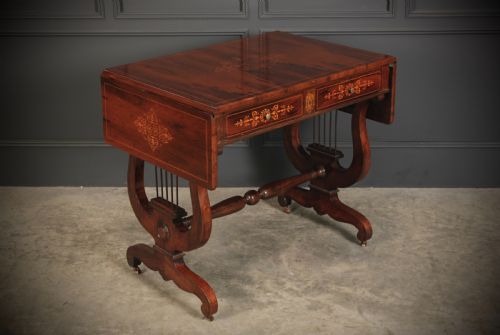


Regency Drop Flap Desk
A regency drop flap desk brings tactile warmth to a study, offering folding leaves and fitted writing surfaces in rich figured woods.
Regency Drop Flap Desk
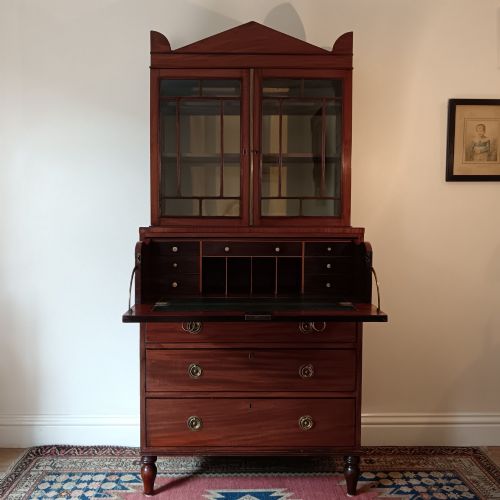
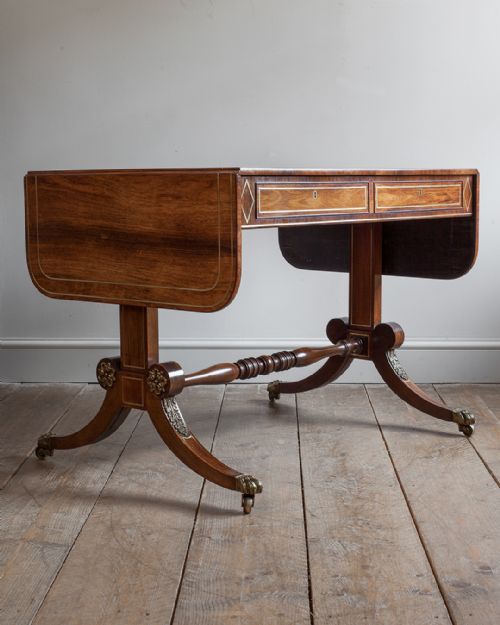
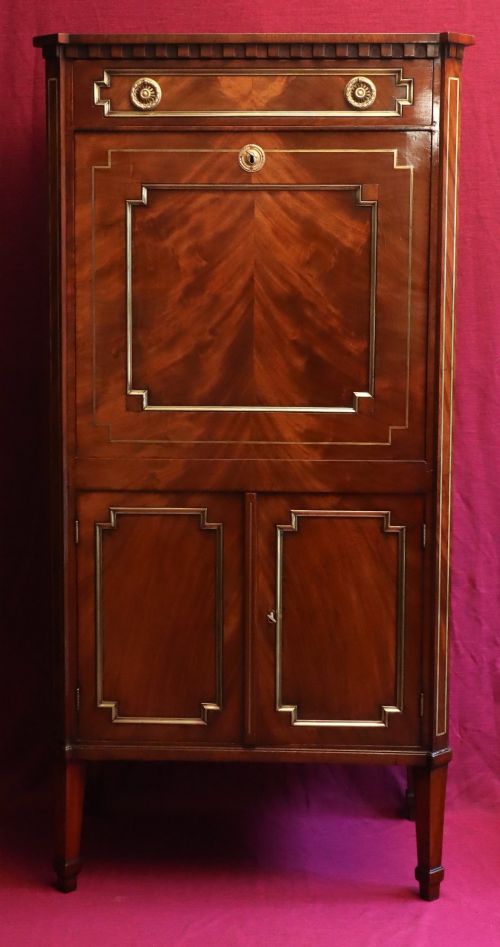
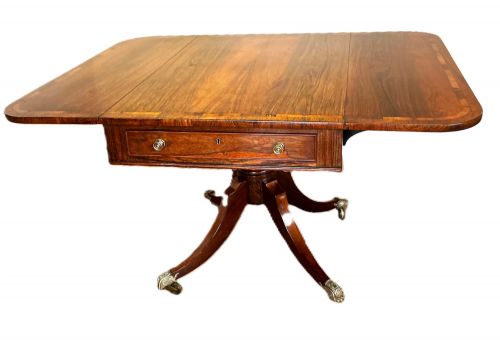
A regency drop flap desk spans several forms across the Georgian, Regency, and William IV periods, including sofa tables, Pembroke tables, and secretaire cabinets. Buyers searching this phrase most frequently encounter sofa tables and drop leaf tables configured with writing drawers or flaps, originating primarily from the early nineteenth century.
The materials recorded across these examples range from solid mahogany and rosewood to satinwood and walnut, often ornamented with boxwood or general wood inlay. These pieces serve practical writing and serving functions while anchoring a room with period proportion and dark timber grain.
Materials and Construction
Cabinet makers utilised dense native and imported timbers, predominantly mahogany and rosewood, selected for structural stability and striking grain pattern. Surfaces frequently incorporate delicate contrasting stringing and banding in boxwood and satinwood to frame the primary timber.
Structural elements integrate brass fittings such as castors, hinges, and drawer pulls, which provide both mobility and mechanical support for folding flaps and writing surfaces. Joinery relies on traditional techniques to accommodate the movement of drop leaves and extendable leaves over time.
Regency Drop Flap Desk Retail Price Guide 2026
Typical asking prices for regency drop flap desk among the pieces listed under this phrase on Sellingantiques today, from the lower quarter to the upper quarter. They describe what is for sale here now, not the wider market.
Some tables double as lady's screen writing desks, keeping drafty ankles at bay while you pen your letters.
Markers of Quality
Quality rests upon the selection of timber veneers and solids, where deeply figured rosewood or dense mahogany elevate a piece above plain utilitarian examples. The crispness of inlay work, such as boxwood and satinwood stringing, demonstrates the precision of the workshop.
Construction integrity is visible in the smoothness of drawer operations, the weight and finish of original brass hardware, and the stability of drop flap mechanisms. Pieces that retain their original castors and unblemished timber surfaces represent the upper echelon of the period.
George Oakley
The Regency Drop Flap Desk Glossary
- Drop flap
- A hinged leaf that folds down or up to alter the surface area of a table or desk. This mechanism allows furniture to adapt quickly to smaller or larger spaces.
- Pembroke table
- A small occasional table featuring two hinged flaps on opposite sides. It typically includes one or more small drawers and rests on four legs.
- Secretaire
- A piece of furniture containing a drawer or compartment that folds down to form a writing desk. It conceals pigeonholes and small drawers inside.
- Inlay
- A decorative technique where contrasting materials are inserted into recesses cut into the base wood. Boxwood and satinwood are common contrasting timbers used for this purpose.
Regency Drop Flap Desk: Frequently Asked Questions
What is a regency drop flap desk?
A regency drop flap desk encompasses tables and cabinets from the early nineteenth century featuring folding leaves and writing provisions.
These pieces combine the utility of a writing surface with the versatility of drop leaves, appearing in forms such as sofa tables and secretaire cabinets.
How were these tables used originally?
They served as movable writing surfaces, work tables, and occasional furniture for drawing rooms and libraries.
Drop leaves allowed the furniture to be expanded for correspondence or dining, then folded down to save space against a wall or behind a sofa.
How do I identify a Regency period piece?
Regency pieces typically date from the early nineteenth century, exhibiting classical proportions, dark timbers like mahogany and rosewood, and brass mounts.
Detailing often includes boxwood inlay, saber legs, or twin pedestal bases reflecting the neoclassical taste of the era.
How do I care for rosewood and mahogany?
Protect antique timber surfaces by keeping them away from direct sunlight and maintaining stable indoor humidity levels.
Dust regularly with a soft, dry cloth and apply occasional specialist wax to nourish the grain without building up heavy residue.