





Regency Door Handles
Regency door handles are period brass and bronze fittings designed to anchor a room in the style of the early nineteenth century.
Regency Door Handles
When you search for regency door handles, you are looking at hardware that brings formal early nineteenth-century design to a door, most often encountered here as brass knobs or plates from the Regency period or late Regency style. These pieces include pairs of oval door knobs, single centre door knobs, and complete assemblies with matching backplates.
The form follows the classicism of the era, favouring clean geometrical turns and restrained ornamentation rather than heavy Victorian casting. You will find them recorded across periods spanning the Regency era itself into later nineteenth-century revivals, yet the core aesthetic remains rooted in the years around eighteen twenty.
How they were made
The physical weight of these fittings comes from solid cast brass and bronze, metals chosen for their durability and capacity to hold a sharp profile during casting. Workshops shaped the metal through traditional founding techniques, sometimes water gilding the surface to achieve a brilliant, reflective finish.
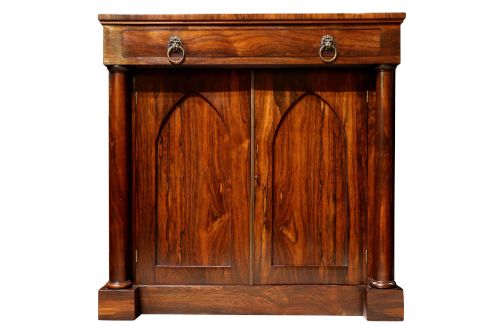
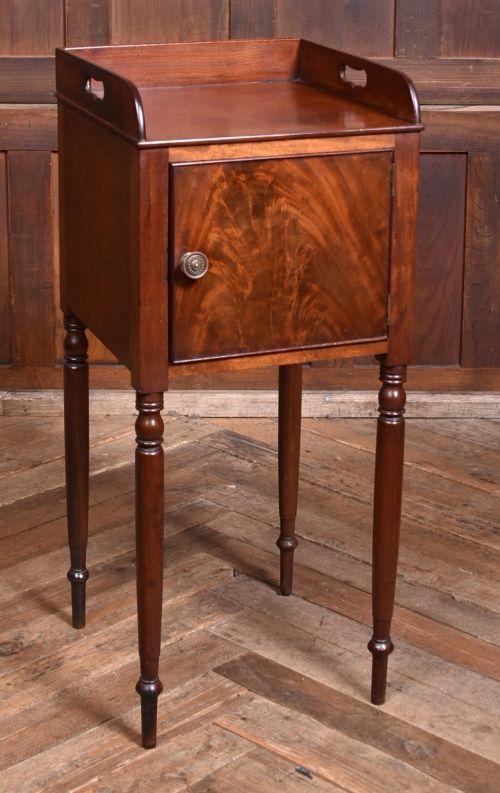
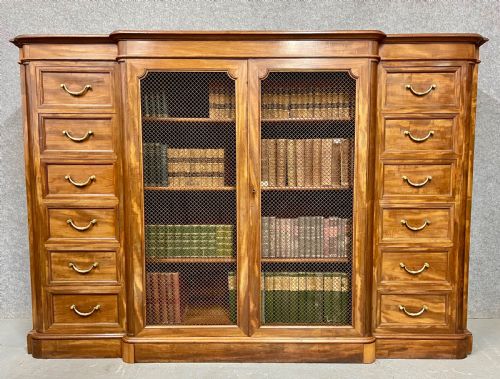
Makers combined metal components with timber mounts or paired the hardware with dense cabinet woods such as rosewood and mahogany across related interior furnishings. This reliance on durable alloys ensured the handles could withstand daily domestic use while maintaining their formal appearance.
Regency Door Handles Retail Price Guide 2026
Typical asking prices for regency door handles among the pieces listed under this phrase on Sellingantiques today, from the lower quarter to the upper quarter. They describe what is for sale here now, not the wider market.
Materials recorded across these door hardware listings include brass, bronze, rosewood, mahogany, cast iron, and lead.
What varies in quality
Quality in these handles rests upon the crispness of the casting and the precision of the turning, where finer examples display sharp definition and a satisfying heft in the hand. Poorer versions lack this deliberate handling of the metal, often showing softened edges and simpler finishing that fails to catch the light correctly.
The integrity of the matching plates and the survival of the original gilding or surface patination also divide standard production from superior examples. A well-preserved piece retains its original architectural proportion, whereas lesser items can feel clumsy or out of scale for a standard door.
The Regency Door Handles Glossary
- Regency
- A style and period spanning the early nineteenth century, characterised by classical restraint, symmetry, and refined proportion. It draws heavily on Greek and Roman architectural motifs.
- Centre door knob
- A decorative handle fixed to the middle of a grand entrance door rather than the latch side, used primarily for pulling the door closed.
- Water gilding
- A traditional technique applying a thin layer of gold leaf over a prepared gesso and size base, producing a brilliant surface that can be burnished to a high shine.
- Bronze
- A copper alloy traditionally combined with tin, valued in hardware for its deep tonal quality, strength, and resistance to corrosion over centuries of handling.
Regency Door Handles: Frequently Asked Questions
Are regency door handles sold in pairs?
Many listings offer matching pairs intended for both sides of a standard interior door, though single centre door knobs and door plates also appear.
Buyers should check whether the hardware includes spindles or backplates to ensure complete installation on historic doors.
What materials were used?
The primary metals seen in these fittings are solid brass and bronze, occasionally accompanied by water gilding for a bright reflective finish.
Related furnishings from the same period utilise rosewood and mahogany, though the functional hardware itself remains metal.
How do I date these handles?
Dating relies on stylistic markers such as classical restraint, the sharpness of the casting, and the specific period attribution given by the dealer.
Pieces range from the Regency era around eighteen twenty to late nineteenth-century revivals adhering to the same design language.
Can I fit them on modern doors?
These antique fittings can generally be installed on modern doors provided the spindle size and mortise alignment are compatible with contemporary mechanisms.
Careful measurement of the backplate and door thickness is recommended before attempting installation.