


Georgian Door Handles
Georgian door handles are enduring architectural brass and bronze fixtures that bring period character to interior entrances.
Georgian Door Handles
You are most likely to meet centre door knobs and oval pairs in brass, alongside related hardware such as bell pulls and door stops. These pieces reflect the functional hardware needs of eighteenth and nineteenth-century homes.
The objects range from simple ovular shapes to ornate centre pulls in bronze. Each piece preserves the utilitarian design language of its specific period.
How They Were Made
These fixtures rely primarily on cast brass and bronze, metals chosen for their durability and weight in daily use. The casting process created solid forms capable of withstanding constant handling over centuries.
Manufacturers shaped the metal into distinct geometric profiles, including oval, round, and octagonal configurations. Some examples combine brass with horn or other traditional materials to achieve specific decorative effects.
Listings span the Georgian, Regency, and Victorian periods, with brass and bronze appearing as the primary metals alongside cast iron.
What Varies in Quality
Quality rests in the crispness of the casting and the weight of the metal. Finer examples show sharp detailing on moulded edges and balanced proportions that sit comfortably in the hand.
The integrity of the original mounts and fixings distinguishes standard production items from superior examples. Better pieces retain their original surface patination and structural solidity without excessive wear.
The Georgian Door Handles Glossary
- Centre door knob
- A large door handle mounted in the middle of a front door rather than at the edge. These were typically used to pull heavy timber doors shut.
- Bell pull
- A mechanical lever or handle connected to a wire system inside a house for summoning servants. These share the architectural metalwork style of door hardware.
- Door porter
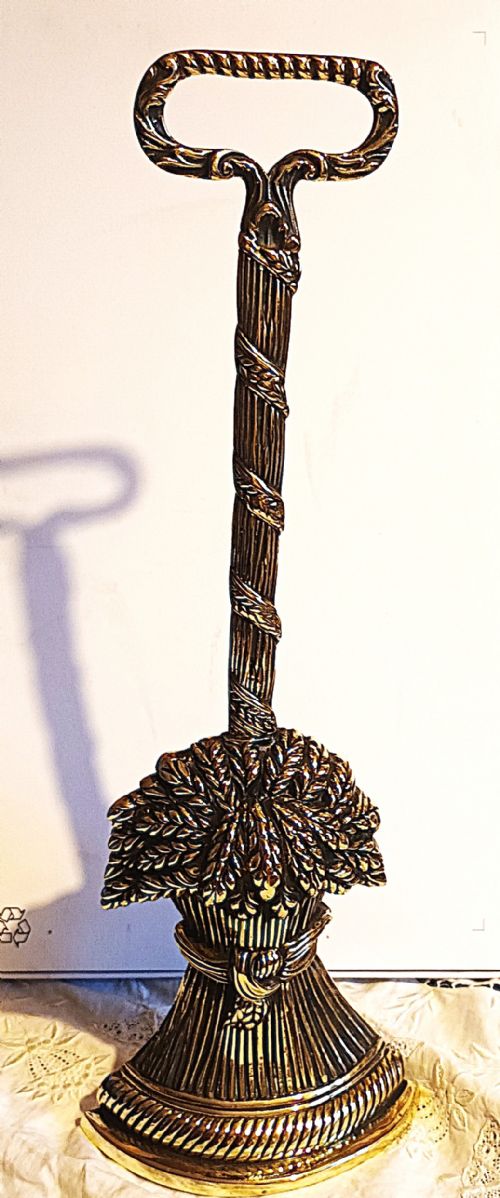
- A heavy portable doorstop, often made of cast brass with a ring handle at the top. They were designed to hold interior doors open against draughts.
- Patina
- The surface sheen and colour developed by metal over decades of handling and oxidation. This natural ageing process indicates genuine period use.
- Ovular
- Egg-shaped in profile, forming a smooth curved handle designed to fit the grip of the hand. This shape was common across Regency and Georgian designs.
Georgian Door Handles: Frequently Asked Questions
What are Georgian door handles made of?
These hardware pieces are predominantly made from cast brass and bronze. Some examples incorporate secondary materials like horn for decorative effect.
The use of heavy metals ensured the handles could endure daily use in domestic properties.
Where were centre door knobs placed?
Centre door knobs were mounted directly in the middle of main entrance doors. They served as a sturdy grip for pulling the heavy timber doors closed.
Unlike latch handles placed at the edge, these fixtures worked alongside separate mortice locks.
Are these door handles suitable for modern doors?
Many period door handles can be fitted to standard modern interior doors with appropriate adaptation. Their robust brass and bronze construction ensures they remain fully functional.
Buyers should check spindle sizes and backplate dimensions to ensure compatibility with existing joinery.