
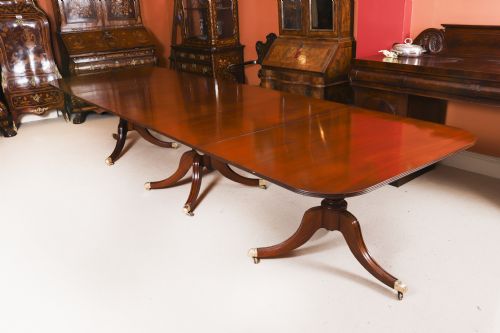
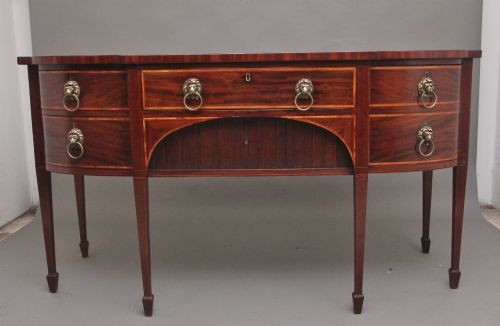


Regency Dining Room Furniture
Regency dining room furniture brings together mahogany tables, brass-inlaid sideboards, and rosewood chairs designed for formal dining.
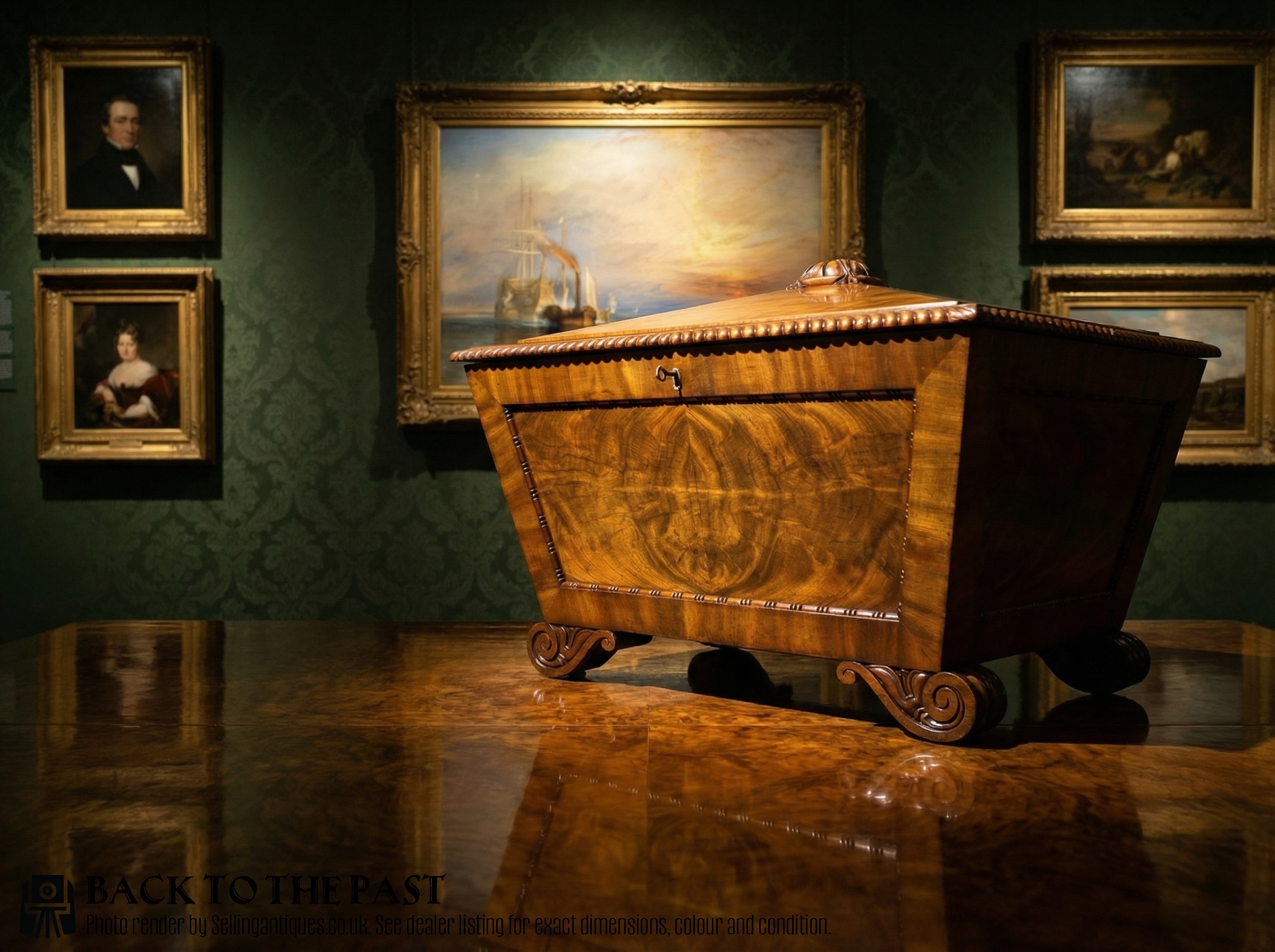
Regency Dining Room Furniture
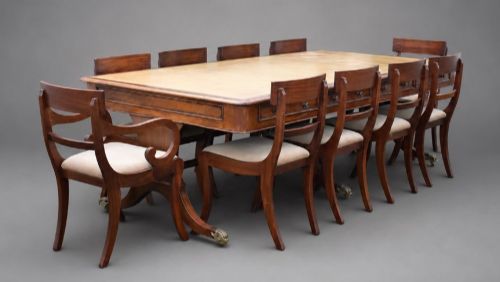
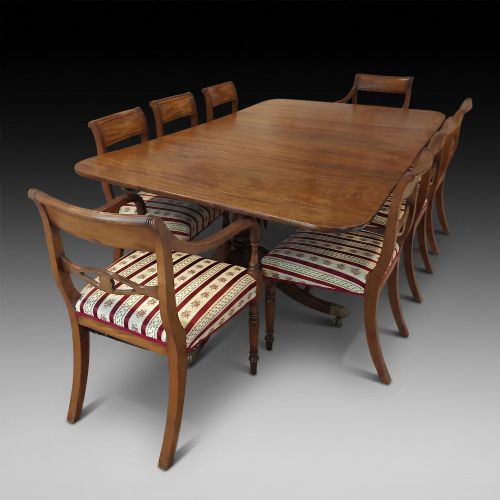
When you examine regency dining room furniture, you encounter pieces spanning the Regency, William IV, and George IV periods, alongside later revival pieces. Dining tables, sideboards, serving tables, and chair sets form the primary objects you meet.
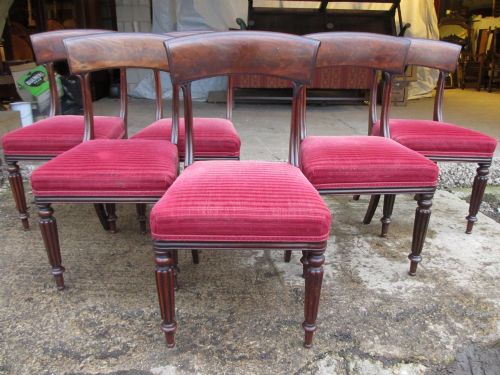
Sideboards and serving tables often feature pedestal bases or sarcophagus wine coolers, while dining chairs appear in sets with upholstered seats. Woods range from standard mahogany to flame mahogany veneer, rosewood, coromandel, and pollard oak.
Styles cover standard Regency, Grand Regency, Irish Regency, and Anglo-Indian variants, alongside Edwardian and 1920s revivals. You also find specialised pieces like dumb waiters, buffets, and cellarettes designed to assist with service.
Materials and Construction
Cabinet makers utilised solid mahogany and rosewood, frequently applying flame mahogany veneer or burr elm over secondary timbers to create patterned surfaces. Crossbanding and brass inlay add linear contrast to tabletops and sideboard doors.
Dining tables often employ pedestal or pillar supports, sometimes with draw-leaf or tilt mechanisms, while seating relies on sturdy mahogany or ebony frames with fabric, leather, or upholstery fabric coverings.
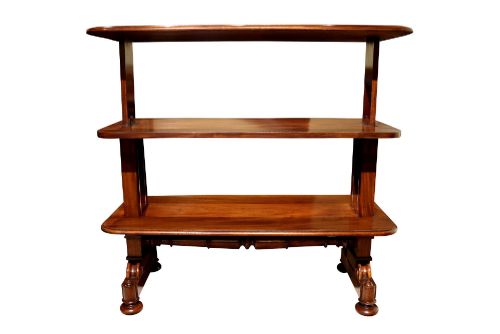
Pollard oak dumb waiters let your side dishes rotate in style while pretending you have a butler.
Standards of Execution
Quality in these dining pieces rests upon the selection of timber figures, such as fiddleback mahogany or figured walnut, and the precision of the cabinet work. Matched grain patterns across pedestals and drawer fronts indicate superior workshop practice.
The refinement of brass inlay, carved details on chair splats, and the integrity of structural joints distinguish high-grade production from simpler utilitarian pieces.
Whytock and Reid·Mack Williams and Gibton·The Woodworkers Ltd Kilkenny·Gillows
The Regency Dining Room Furniture Glossary
- Cellarette
- A cabinet or box designed to hold bottles of wine near the dining table. They frequently take a sarcophagus shape with brass fittings.
- Dumb waiter
- A tiered revolving or shelving unit used to hold dishes and glasses without requiring a servant present. These stand on central pillars with tripod or pedestal bases.
- Chiffonier
- A low sideboard or cabinet enclosed by doors, often fitted with a shelf on top. They frequently incorporate brass inlay and flame mahogany.
- Crossbanding
- A strip of veneer applied to the border of a tabletop or drawer front with the grain running perpendicular to the main surface. This technique frames the primary wood figure.
- Sarcophagus
- A monumental tomb-like shape with a pitched lid, adopted for large wine coolers and cellarettes during the period. These pieces sit on carved paw feet or plinth bases.
Regency Dining Room Furniture: Frequently Asked Questions
How do I identify a genuine period piece?
Examine the secondary timbers inside drawers and beneath tabletops, as older pieces utilise period-appropriate woods and hand-cut joinery. Look for construction methods that match the early nineteenth century rather than later revival standards.
Compare the timber grain and patination with documented examples from the same stylistic era. Makers often utilised specific regional woods like pollard oak or Irish mahogany.
How were dumb waiters used?
Dumb waiters stood beside the dining table to hold extra courses, plates, and wine bottles during meals. This allowed diners to serve themselves without servants hovering.
The tiered revolving shelves kept utensils and glassware within reach during lengthy formal dinners. They range from simple mahogany stands to three-tier rise and fall designs.
What is the difference between a cellarette and a wine cooler?
Cellarettes and wine coolers both stored bottles, but cellarettes often functioned as portable lockable boxes placed beneath sideboards. Wine coolers were larger, fixed architectural pieces lined for ice.
Both forms frequently adopted sarcophagus shapes with lead linings and brass carrying handles. They utilised heavy mahogany, rosewood, or walnut construction.
Can I use an antique dining table daily?
Mahogany and rosewood tables tolerate regular domestic use provided you protect the polished surface from moisture and heat. Modern dining requires sensible precautions like mats and coasters.
Pedestal tables offer sturdy support, though extending mechanisms require careful handling. Regular waxing preserves the finish against everyday wear.