

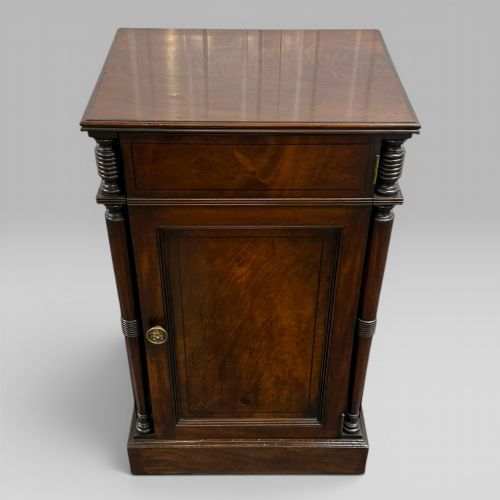
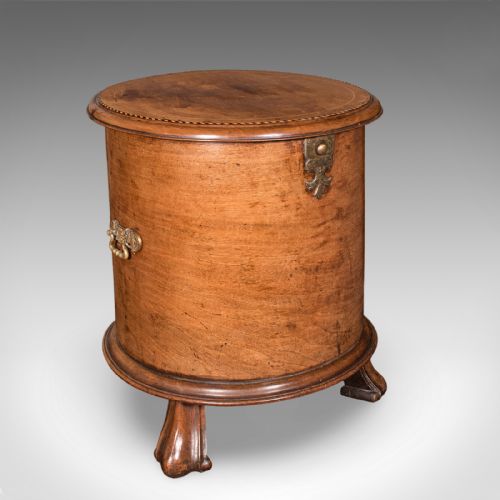

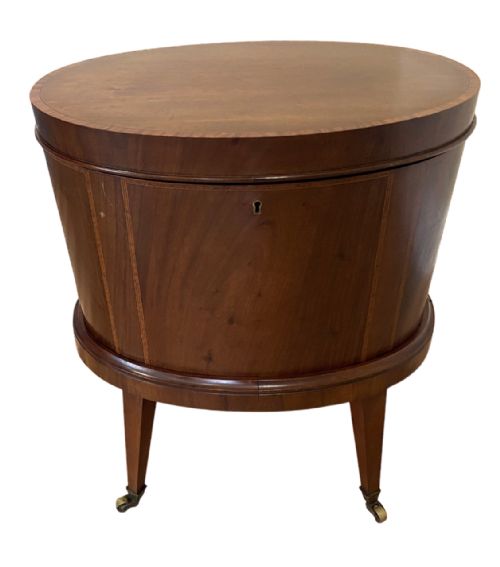


Brown Wood Wine Chest
These brown wood wine chests are timber cellarettes and coolers designed to hold bottles, offering period character and practical storage for any interior.
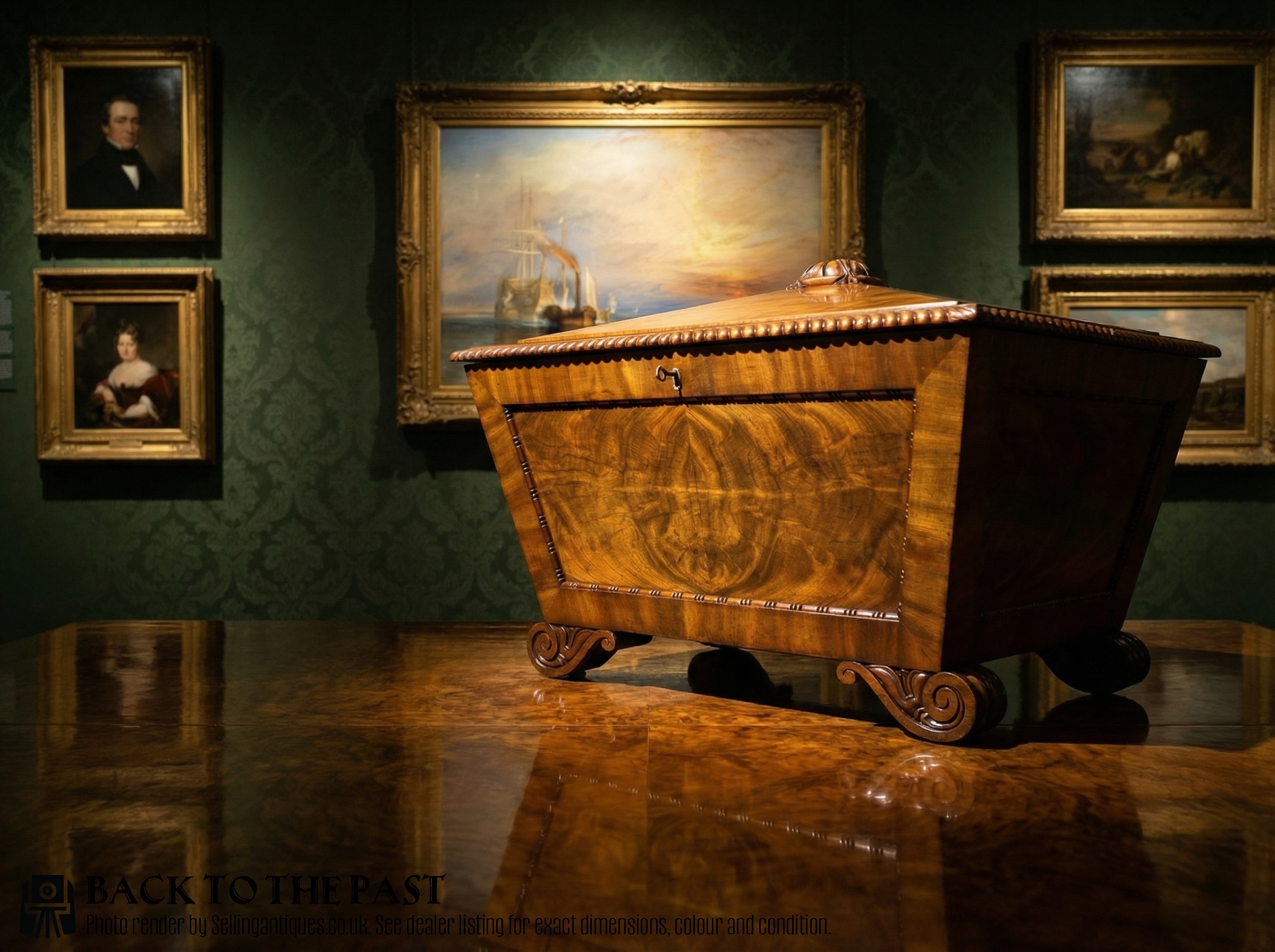
Brown Wood Wine Chest
A brown wood wine chest brings substantial timber craftsmanship and period presence to a room, functioning primarily as a cellarette, wine cooler, or specialised box. These pieces appear across various historical eras including the Georgian, Regency, and Victorian periods, each bringing distinct architectural proportions to the domestic interior.
The items found on this page span several recognizable forms, from large sarcophagus shapes resting on paw feet to oval coolers and pedestal stands. Walnut, burr elm, satinwood, and mahogany provide the primary structural timber for these functional containers.
Originating largely from British workshops alongside Anglo-Indian traditions, these brown wood wine chests serve both as historical artefacts and as practical storage units for modern settings. Their forms reflect the changing dining customs and social habits of the nineteenth century.
How they were made
Cabinetmakers constructed these brown wood wine chests using dense hardwoods such as mahogany and walnut, often accentuating the grain with satinwood or burr elm veneers. Timber selection prioritized both structural durability and rich visual depth.
Metal components played a crucial structural and decorative role, with brass banding providing reinforcement around the wooden bodies of the coolers. Carved details, such as paw feet, appeared on specific Regency and Victorian examples to elevate the design.
Brown Wood Wine Chest Retail Price Guide 2026
Typical asking prices for brown wood wine chest among the pieces listed under this phrase on Sellingantiques today, from the lower quarter to the upper quarter. They describe what is for sale here now, not the wider market.
Listings feature mahogany, walnut, burr elm, and satinwood across Georgian, Regency, and Victorian periods.
What varies in quality
The standard of a brown wood wine chest depends upon the caliber of the timber figures and the precision of the cabinetwork. Pieces utilising highly figured burr elm or rich satinwood displays distinct visual refinement compared to standard mahogany iterations.
Proportion and decorative restraint separate exceptional examples from standard utilitarian items, particularly in the handling of carved elements like paw feet and brass mounts. The integrity of the timber joints and the preservation of the original surface finish dictate the overall standing of each piece.
Gillows·Maples and Co
The Brown Wood Wine Chest Glossary
- Cellarette
- A lockable cabinet or box designed to hold bottles of wine near the dining table. These containers frequently featured lead-lined interiors to hold ice.
- Sarcophagus
- A monumental coffin-shaped design style popular for large wine coolers during the Regency period. This form often rested upon robust feet and utilised heavy timber construction.
- Pedestal
- An architectural support structure beneath certain warming or cooling vessels. These elements elevated the main storage body to a convenient height.
- Vener
- A thin layer of superior wood applied to a base timber carcass to create decorative surface patterns. Burr elm and satinwood often appeared in this manner.
Brown Wood Wine Chest: Frequently Asked Questions
What is a wine chest?
A wine chest is a specialised timber container designed to store and chill bottles for dining room use.
These pieces typically feature internal compartments and robust construction to handle heavy liquid containers.
How were these coolers used?
Historical households utilised these chests to hold wine bottles and ice during formal meals.
The lead-lined interiors helped maintain temperature control for the drinks before serving.
Where should I place one?
These chests function effectively as freestanding statement pieces in dining rooms or living spaces.
Their substantial timber presence allows them to serve decorative storage roles alongside traditional uses.
How do I identify a Regency piece?
Regency items often display classical architectural motifs, sarcophagus proportions, and carved paw feet.
Cabinetmakers of this era favored dense mahogany and bold decorative brass mounts.