
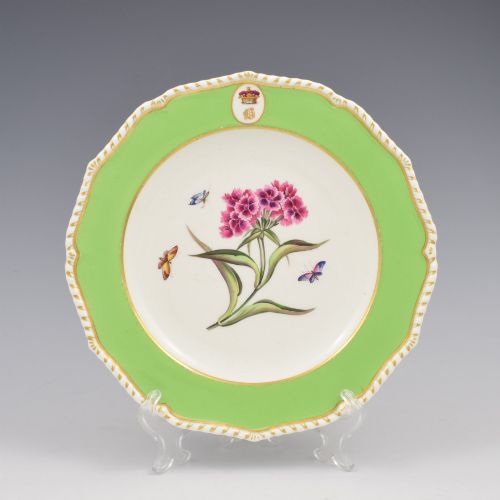


Regency Dessert Dishes
Regency dessert dishes bring the elegance of early nineteenth-century dining tables into modern homes through vibrant hand-painted porcelain and ironstone.
Regency Dessert Dishes
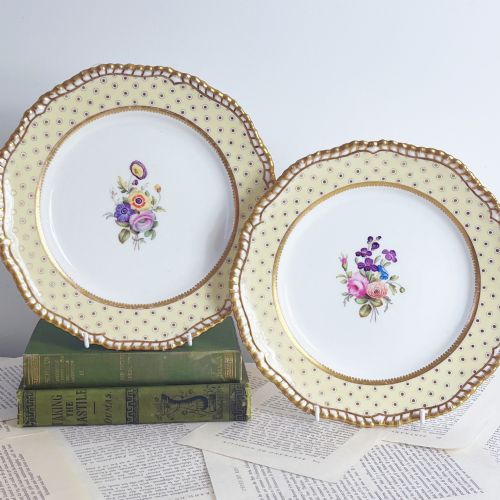
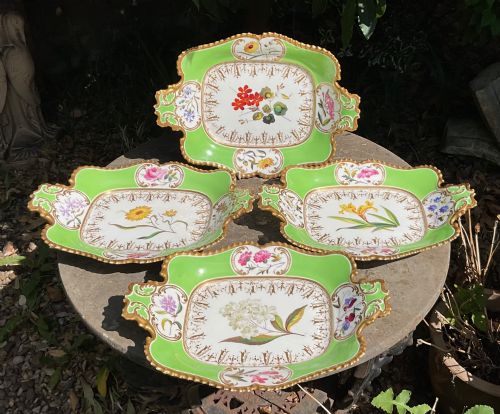
When searching for regency dessert dishes, buyers encounter serving dishes, cabinet plates, and dessert services created across the early nineteenth century. These forms span from the Georgian era through the Regency period and into the early Victorian years, reflecting the shift toward specialised tableware for the final course of a meal.
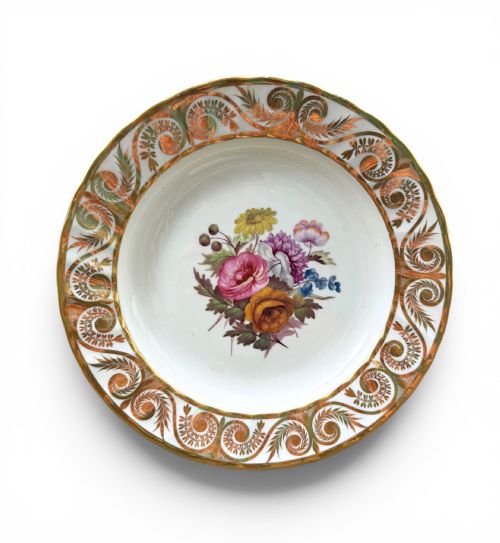
The pieces available on this page include porcelain and ironstone examples originating from prominent English factories. Makers such as Spode, Chamberlain's Worcester, and Bloor Derby dominate the selection, offering botanical studies, armorial crests, and topographical scenes.
Most items appear as individual plates, pairs, or matched sets designed to present fruit, confections, and sweetmeats. Buyers will find both large moulded serving dishes and finely painted dessert plates suited for display or collection.
Materials and Manufacture
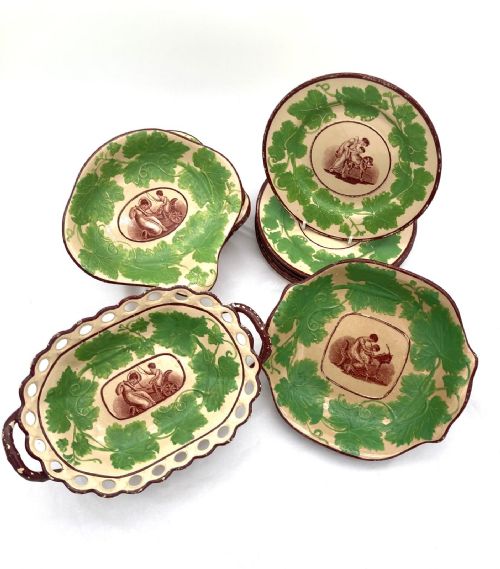
Potters of this era relied primarily on porcelain, earthenware, and ironstone bodies to form the base of each dish. Ironstone provided a durable, heavy material suited for busy households, while fine porcelain allowed for delicate potting and translucent qualities.
Decoration involved hand-painted enamel colours combined with generous applications of gold leaf and gilding. Artisans applied botanical motifs, floral sprays, and transfer-printed patterns before firing the pieces to fix the brilliant glaze.
The listings span the nineteenth century, focusing heavily on the Regency and Georgian periods through porcelain and ironstone forms.
Distinctions in Quality
Quality rests upon the skill of the hand-painting and the clarity of the porcelain body. Pieces featuring named botanical studies or detailed topographical art by known painters command attention for their artistic execution.
The application of rich gilding and the preservation of bright enamel colours elevate certain examples above standard utilitarian wares. Rich armorial crests and complex moulded ironstone shapes further distinguish the finer pieces in a service.
Spode·Chamberlains Worcester·Derby·Bloor Derby·Coalport·Flight Barr and Barr·Masons Patent Ironstone China·Wedgwood·Minton·Ridgway
The Regency Dessert Dishes Glossary
- Armorial
- Bearing a heraldic coat of arms or family crest. These bespoke designs were commissioned by landed families.
- Ironstone
- A heavy, durable type of earthenware patented to withstand rigorous daily use. It offered a strong alternative to delicate porcelain.
- Gilding
- The application of gold leaf or gold paint to edges and motifs. This technique added a reflective finish to formal tableware.
- Enamel
- Opaque glass-like paint fused to the ceramic surface during firing. It provided the brilliant greens, blues, and reds seen on Regency plates.
- Imari
- A decorative style inspired by Japanese exports, featuring deep blues, iron red, and gilt details. English factories adapted this palette enthusiastically.
Regency Dessert Dishes: Frequently Asked Questions
How were regency dessert dishes used?
These dishes formed part of the final course of formal dinners, which typically consisted of fresh fruit, nuts, cheeses, and sweet confections. Servants placed them centrally or passed them around the table after the main meal was cleared.
Because dessert was a social affair meant to display hospitality, the tableware used was often the most colourful and decorative portion of the entire dinner service.
Can I use these antique dishes for food?
While these pieces remain structurally sound, many owners choose to display them in cabinets or on walls to protect the delicate hand-painted enamel and gold leaf from wear. Modern dishwashers and harsh detergents will damage the historic glaze.
If you do choose to use them for dining, wash them gently by hand in lukewarm water with mild soap immediately after use.
How do I identify a Regency period plate?
Regency ceramics often feature distinct design markers such as apple green borders, botanical illustrations with handwritten titles on the reverse, and rich armorial crests. The shapes frequently incorporate gadroon or moulded leaf borders popular in the early nineteenth century.
Factory marks stamped, painted, or impressed on the underside also help date the piece, though many unmarked ironstone and porcelain items rely on style and paste characteristics for attribution.
What is the difference between porcelain and ironstone?
Porcelain is a fine, vitrified ceramic that is white and sometimes translucent when held to the light. It was favoured for delicate cabinet plates and high-status dessert services.
Ironstone is a dense, opaque earthenware designed for strength and heavier daily use. It resists chipping better than porcelain while still accepting colourful enamel patterns and gilt decoration.