

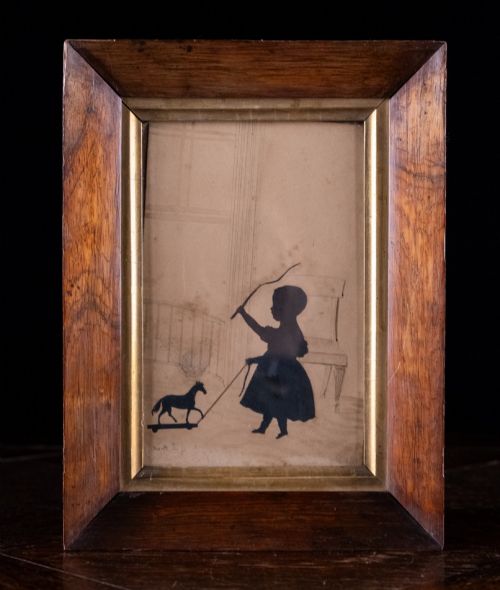
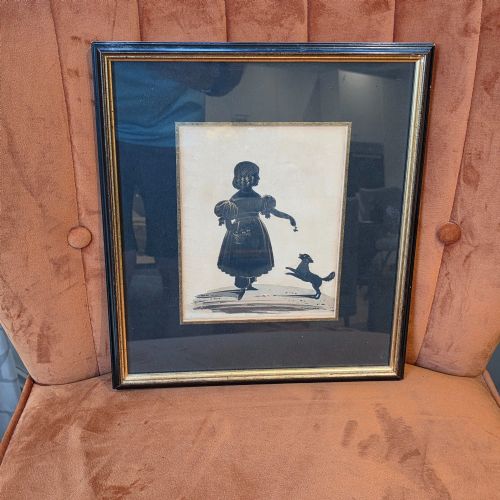
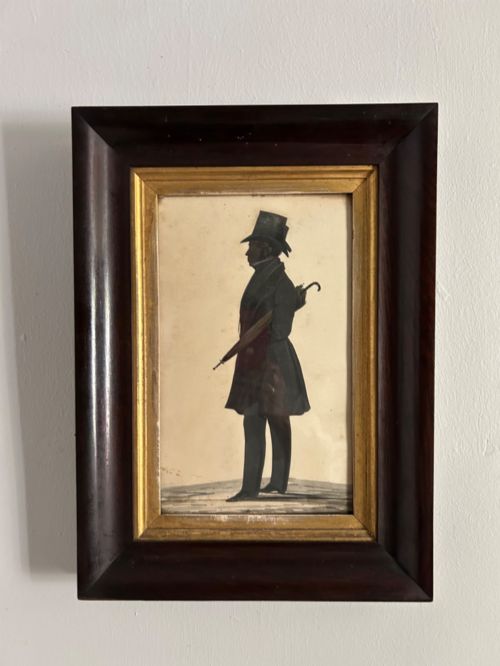


Regency Cut Silhouette
These regency cut silhouette works are striking miniature portraits and studies that capture individual likenesses through precise paper cutting.
Regency Cut Silhouette
When you search for a regency cut silhouette, you encounter detailed portrait miniatures and wall art that depict gentlemen, ladies, children, and animals in profile. These works emerge predominantly from the nineteenth century, including pieces dated to the regency and georgian eras.
The subjects appear as full-length figures or bust portraits, often housed in rosewood, maple, or ebony frames. Many examples display delicate hand-cut paper mounted against contrasting backgrounds.
You frequently meet paired portraits of ladies and gentlemen alongside single figures. The forms extend from simple profile likenesses to complex domestic scenes featuring children with dogs or birds.
Materials and Techniques
Makers mount the finished paper cuttings onto contrasting backdrops, often enclosing them behind protective glass. The resulting assemblies sit within timber frames constructed from rosewood, maple, ebony, or brass-mounted woods.
Regency Cut Silhouette Retail Price Guide 2026
Typical asking prices for regency cut silhouette among the pieces listed under this phrase on Sellingantiques today, from the lower quarter to the upper quarter. They describe what is for sale here now, not the wider market.
Listings feature paper, glass, ink, wood, brass, gold leaf, rosewood, and maple across nineteenth-century wall art.
Judging Quality and Execution
Quality rests upon the precision of the paper cutting and the fidelity of the profile likeness. Superior works exhibit clean edges and intricate detail in clothing, hair, and accessories without relying excessively on painted embellishments.
The sophistication of the secondary media, such as subtle gold leaf or watercolor highlights, distinguishes finer examples from basic cut paper work. The selection and condition of the original framing materials also influence the character of each piece.
Bateman·William James Hubard·Frith·Augustin Edouart·Wm Hill
The Regency Cut Silhouette Glossary
- Profile
- A side view of a human head or figure. This format forms the fundamental basis of silhouette art.
- Hollow cut
- A technique where the silhouette is cut out from a sheet of paper, leaving a negative window placed over a dark background.
- Gilded
- Decorated with gold leaf or gold paint. This finish adds bright highlights to costumes and accessories.
- Miniature
- A small-scale portrait. These works pack fine detail into compact framed dimensions.
Regency Cut Silhouette: Frequently Asked Questions
How do I hang a silhouette frame?
These framed artworks require secure picture hooks suited to their modest weight and timber frames. Hang them at eye level in rooms protected from direct sunlight to preserve the paper and ink.
Grouping pairs or small collections together creates a traditional display arrangement on a wall. Ensure the hanging location avoids damp environments that could damage the paper and wooden frames.
Were silhouettes painted or cut?
Makers used both methods, often combining paper cutting with ink, watercolor, and gold leaf highlights. Some examples feature reverse cut paper work where artists painted details onto the glass or background.
Hand-cut paper remains the defining feature of regency pieces. Painted embellishments added depth to costumes, bonnets, and facial expressions.
How do I identify a regency frame?
Regency frames often utilise dark hardwoods like rosewood, maple, or ebony, sometimes incorporating brass fittings. These materials provide a strong contrast to the pale background and dark paper silhouette.
Frames from this period frequently feature simple, elegant mouldings designed to complement miniature artwork without overwhelming the central portrait.
What subjects appear in these works?
Portraits of gentlemen, ladies, and children dominate the subject matter, occasionally accompanied by dogs or birds. Full-length standing figures and bust portraits are common.
Artists also recorded family groups and pairs of companions. Every subject appears in profile, capturing contemporary fashion through detailed clothing and headwear like turban caps.