
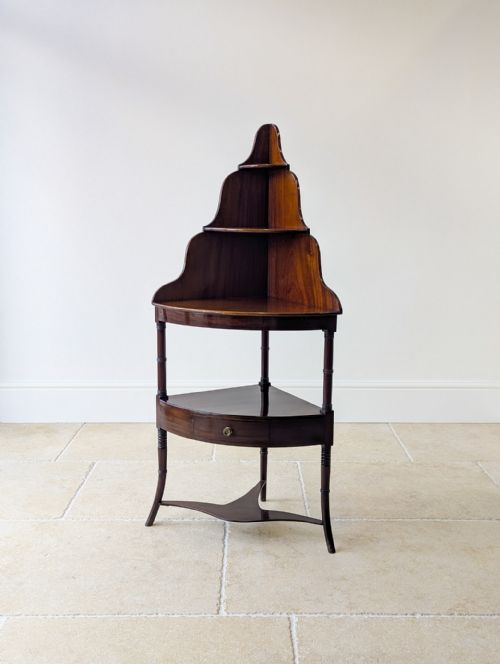


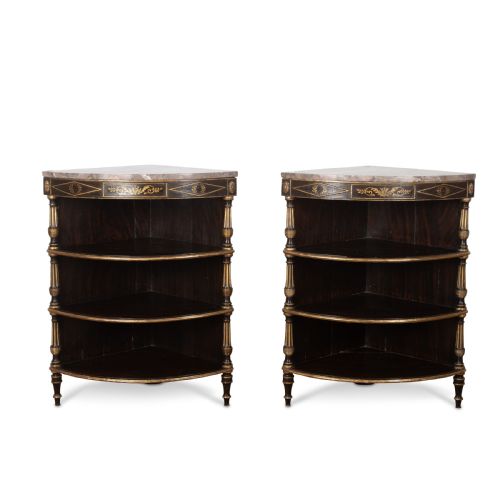


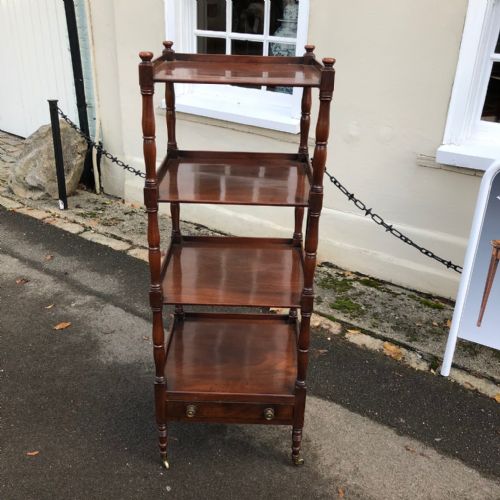


Regency Corner Etagere
These pieces of regency corner etagere are tiered display furniture designed to make use of awkward spaces.
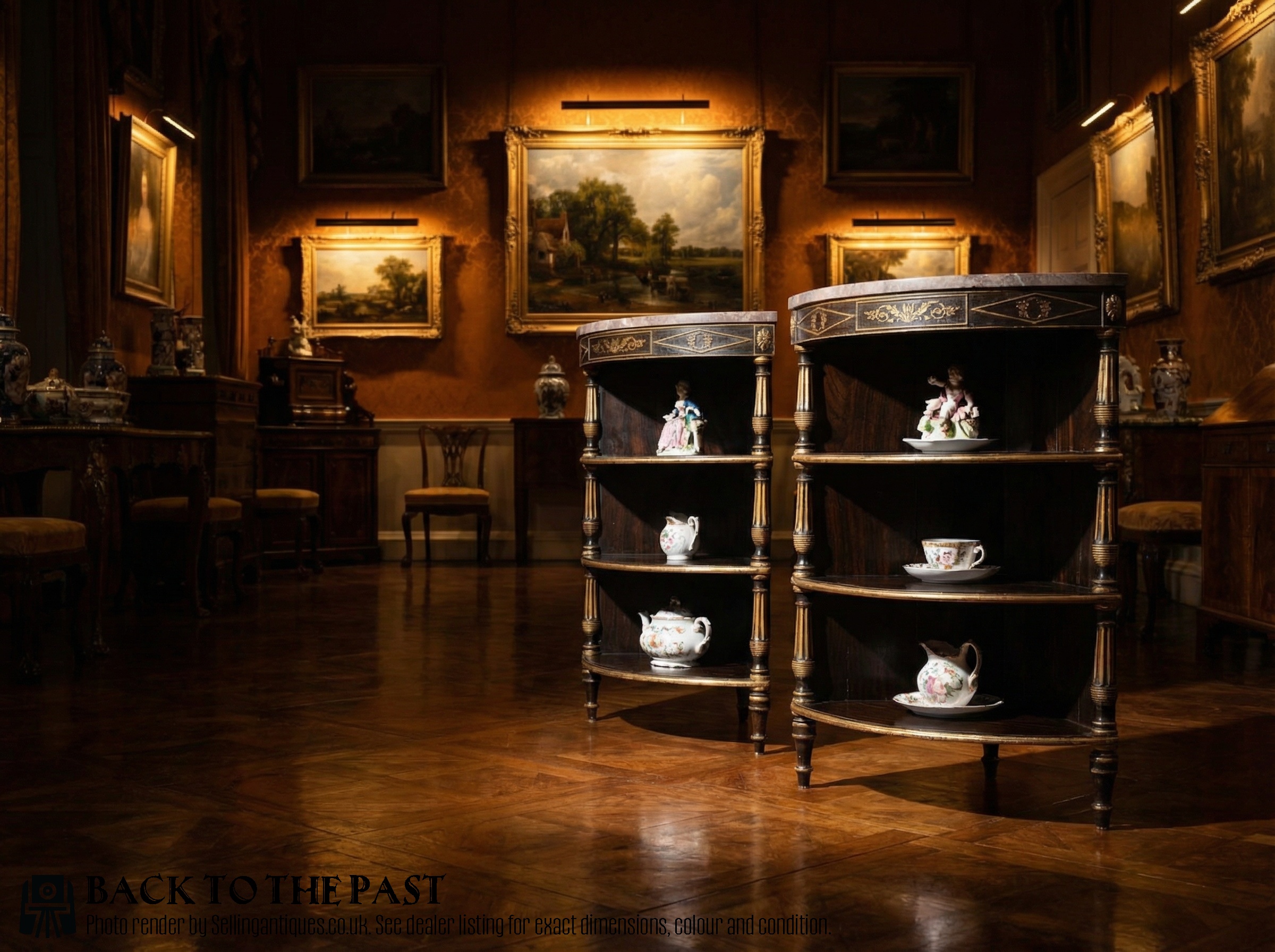
Regency Corner Etagere
A regency corner etagere is a tiered shelving unit designed to fit neatly into the corner of a room, providing open display space for decorative objects and books. The forms seen here include corner stands, shelving units, and whatnots, spanning the Georgian, Regency, and Victorian periods.
How they were made
Cabinetmakers constructed these pieces using dense timbers such as mahogany and rosewood, often selecting figured veneers like birdseye maple for decorative effect. Structural components frequently incorporate oak, while brass details and marble tops appear on select pieces.
Joinery techniques suited the tiered architecture, utilising sturdy supports and corner-fitting frames to bear the weight of multiple shelves. Some variations include woven cane or painted wood finishes, reflecting the diverse stylistic preferences of the nineteenth century.
At least one clever cabinetmaker decided an octagonal footprint was vastly superior to a square one for squeezing into tight corners.
What varies in quality
The choice of primary timber and the selection of veneer heavily influence the character and status of a piece, with richly figured mahogany and rosewood marking out finer examples. Superior specimens often display thoughtful proportions, such as tapering forms or unusually compact dimensions designed for specific interiors.
Integration of secondary materials like marble tops, brass mounts, or lower cupboards elevates a piece beyond standard utility. The finesse of the turning on the upright supports and the crispness of the shelf edges separate standard workshop production from higher-tier cabinet work.
The Regency Corner Etagere Glossary
- Etagere
- A movable set of open shelves used for displaying small ornaments or books. This form became popular during the late eighteenth and nineteenth centuries.
- Whatnot
- A tiered piece of furniture with open shelves, similar to an etagere. It was designed for the convenient storage and display of household objects.
- Regency
- A style period spanning the early nineteenth century, characterised by classical restraint and elegance. Furniture from this era often draws inspiration from ancient Greek and Roman designs.
- Birdseye maple
- A figured timber showing small, swirling dots that resemble bird eyes within the grain. Cabinetmakers prized this wood for decorative veneering.
- A-frame
- A structural shape tapering inward toward the top, providing stability and a distinct visual profile. This configuration is found on certain corner stands.
Regency Corner Etagere: Frequently Asked Questions
What is a regency corner etagere used for?
These units served primarily for displaying decorative objects, porcelain, and books in drawing rooms or parlours. Their corner design allowed households to utilise empty or awkward wall angles effectively.
Over time, their role evolved from utilitarian display to ornamental furnishing, often housing prized collections where floor space was at a premium.
How do I tell a whatnot from an etagere?
The terms are largely interchangeable in historical and modern trade contexts, both referring to multi-tiered shelving units. Slight regional or period preferences dictated which word a maker or owner used.
Some contemporary listings apply 'etagere' more frequently to lighter, decorative French-influenced designs, while 'whatnot' often describes sturdy English multi-tier stands.
What woods were used in these pieces?
Mahogany is the predominant timber found in these nineteenth-century items, valued for its stability and deep colour. Cabinetmakers also utilised rosewood, oak, and birdseye maple for varied visual effects.
Secondary woods like pine or oak frequently appear in the hidden structural elements, shelf backs, and drawer linings.
How do I fit a corner etagere into a modern room?
A corner etagere naturally occupies unused wall junctions, making it ideal for compact spaces where standard rectangular furniture will not fit. Use the open tiers to display small plants, framed photographs, or pottery.
Ensure the piece is anchored securely if it holds heavy volumes or sits on uneven historic flooring to prevent tipping.