

Regency Commode
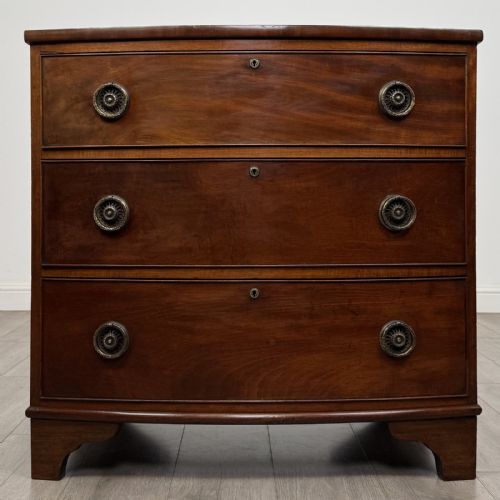
These pieces known as a regency commode are low storage chests built for formal rooms, valued for clean architectural lines and rich figured timbers.
Regency Commode
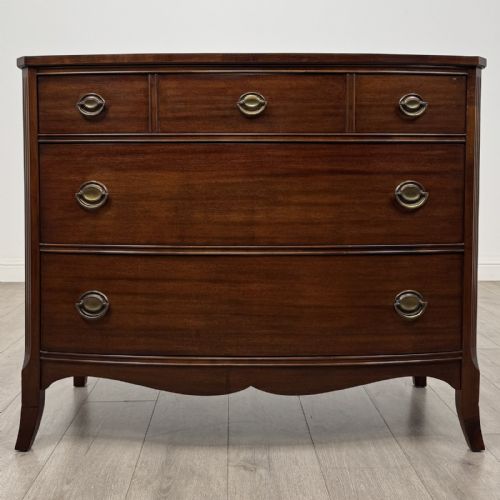
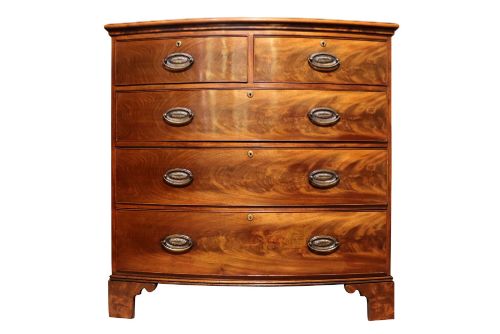
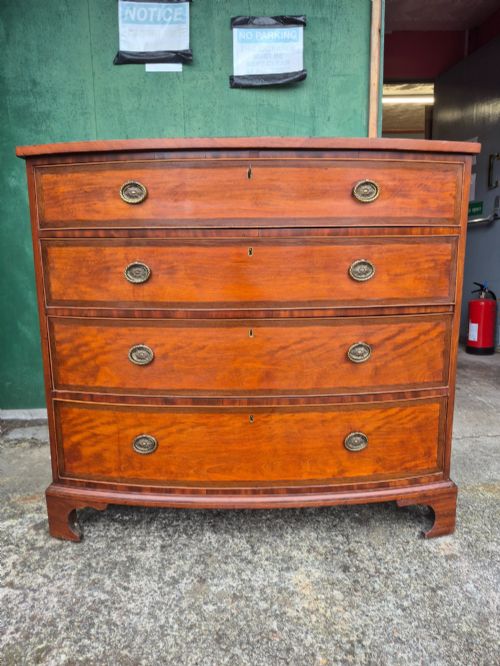
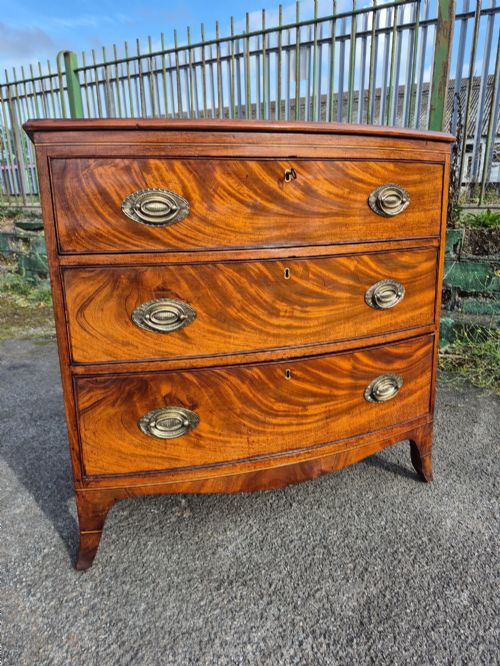
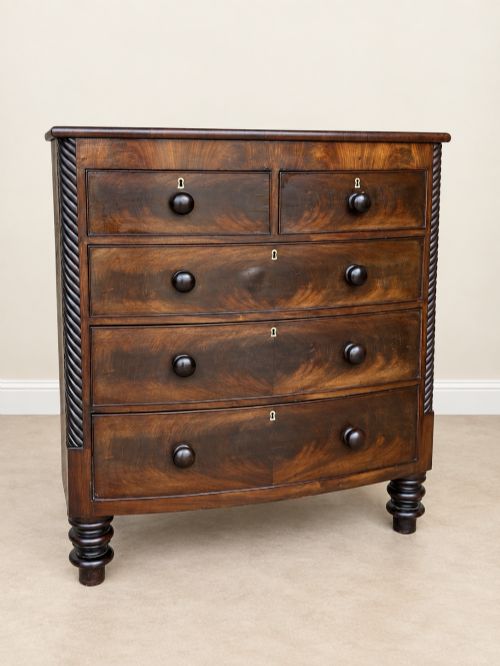
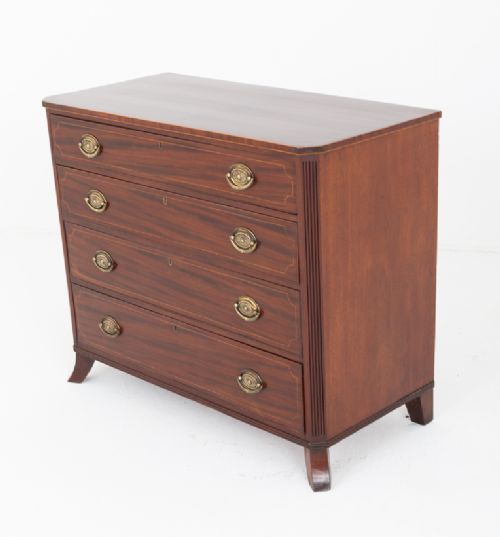
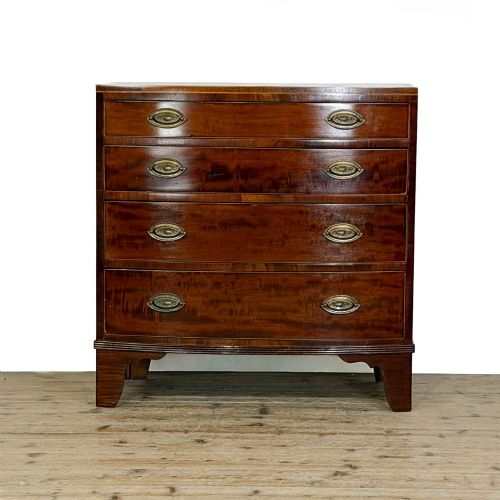
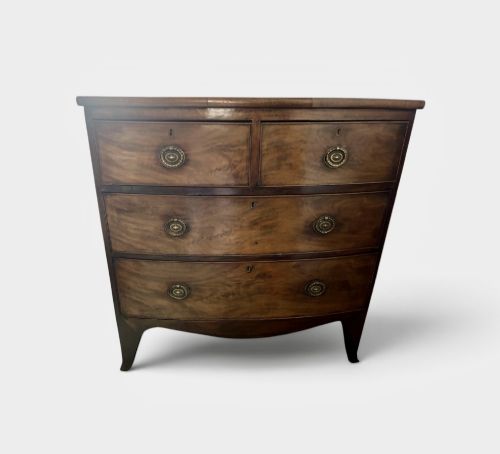
A regency commode generally takes the form of a mahogany or satinwood chest of drawers, often featuring a bow front designed to soften room corners. While the term originates from French furniture, British makers adapted the low chest format during the nineteenth century into robust forms with graduated drawers.
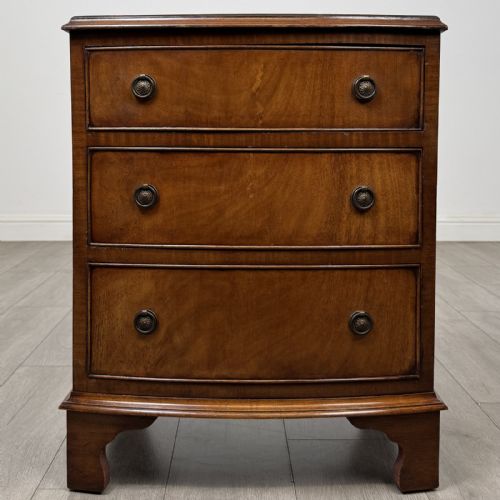
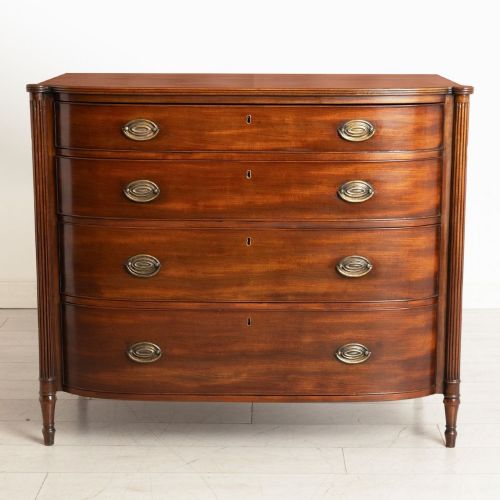
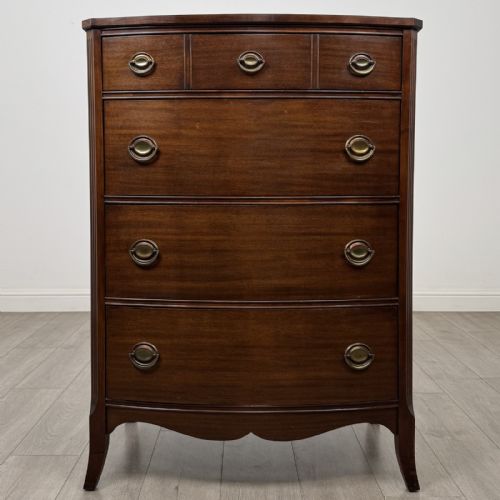
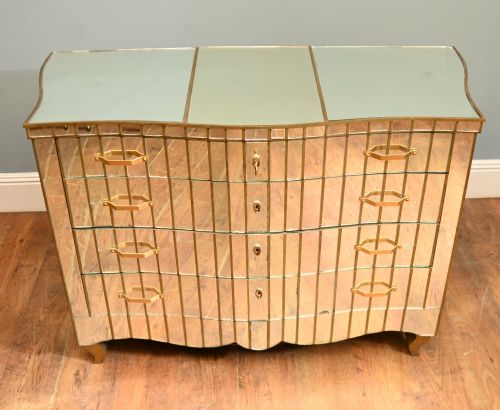
Most examples found on this page date from the regency period or the wider nineteenth century, though later revivals from the nineteen-twenties and nineteen-thirties also appear. Forms range from compact bedside tables and pot cupboards to tall four-drawer chests and side cabinets.
Beyond standard drawer units, the listings include occasional variants such as painted pine pieces, faux bamboo finishes, and earthenware commode-shaped teapots. Buyers are most likely to encounter mahogany bow-front chests supported on bracket feet.
Timber and Joinery
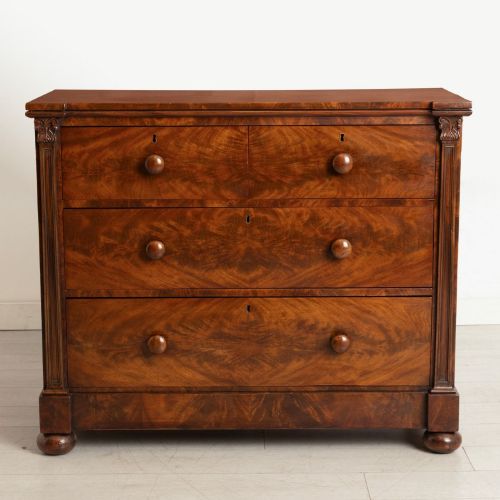
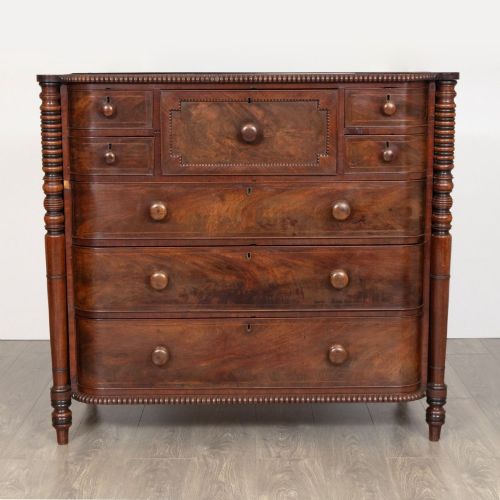
Makers relied heavily on solid and veneered mahogany, frequently selecting flame mahogany for drawer fronts to create deep grain patterns. Satinwood bands and lighter wood inlays provided sharp visual contrast against dark primary timbers.
Secondary woods such as oak and pine appear inside drawer linings and internal framing, demonstrating traditional joining methods. Brass handles and bracket feet completed the construction, anchoring the heavy timber frames.
Listings span multiple centuries, ranging from eighteenth-century Georgian examples through the nineteenth-century regency era up to nineteen-thirties Art Deco interpretations.
Judging Quality
Quality rests on the choice of timber veneer and the precision of the crossbanding, where skilled cabinetmakers matched grain patterns across curved drawer fronts. Finer pieces display careful proportioning in the bow front and neat execution of bracket feet or turned supports.
The integrity of secondary timbers like oak drawer linings and original brass hardware separates superior work from later adaptations or heavy restorations.
Gillows
The Regency Commode Glossary
- Bow Front
- A convex curved front that projects outward from the centre, common in nineteenth-century chest design.
- Caddy Top
- A raised, moulded table top resembling the lid of a tea caddy, often seen on small chests.
- Crossbanding
- A narrow strip of veneer laid across the grain of the primary timber to form a decorative border.
- Flame Mahogany
- Timber cut from the fork of the mahogany tree to produce a distinctive flickering flame pattern.
- Bracket Feet
- Simple architectural feet supporting the bottom corners of a cabinet or chest of drawers.
Regency Commode: Frequently Asked Questions
What is a regency commode?
A regency commode is a low storage chest or set of drawers produced during the early nineteenth century. These pieces were designed to hold clothing and domestic items in formal rooms.
They are characterised by curved bow fronts and rich mahogany veneers. The form evolved from French commodes into distinctively British chests of drawers.
How do I identify a regency period piece?
Check the secondary timbers inside the drawers, such as oak or pine, which indicate period construction methods. Look for hand-cut dovetails and genuine brass handles rather than modern replacements.
Proportions tend to be neat and architectural, often featuring satinwood banding and bracket feet. Pieces from this era weigh heavily due to solid timber construction.
Where were these chests placed?
These cabinets sat in bedrooms, dressing rooms, and formal hallways to provide concealed storage. Their finished tops also held decorative objects, mirrors, or lighting.
Compact versions functioned easily as bedside tables or pot cupboards. Larger four-drawer examples stood against principal chamber walls.
Are all these chests made of mahogany?
Mahogany is the dominant timber seen across these listings, often highlighted with satinwood inlay or flame grain veneers. However, other materials do occur in the selection.
Listings include painted pine, oak linings, and decorative elements in bone and brass. Some twentieth-century revival pieces also use alternative surface finishes.