
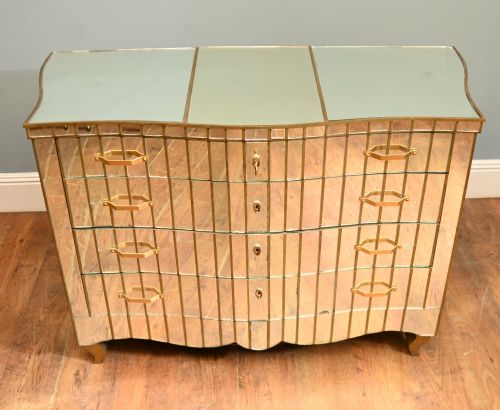
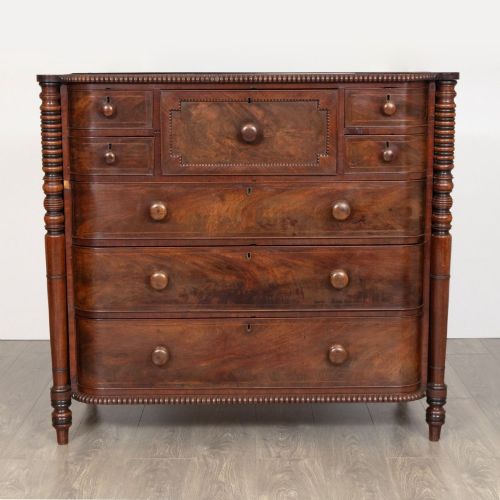
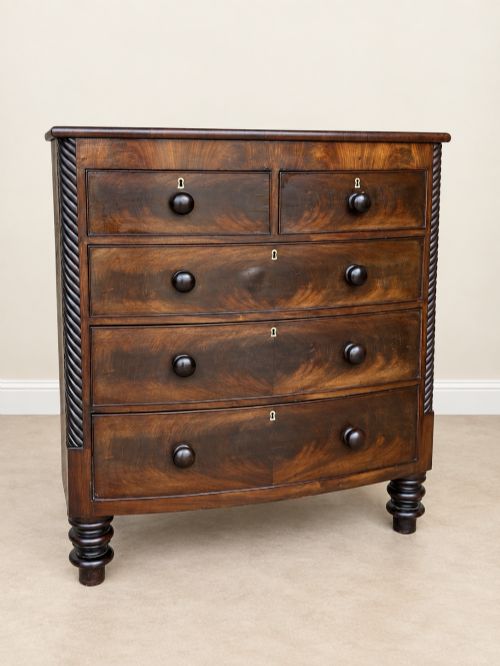
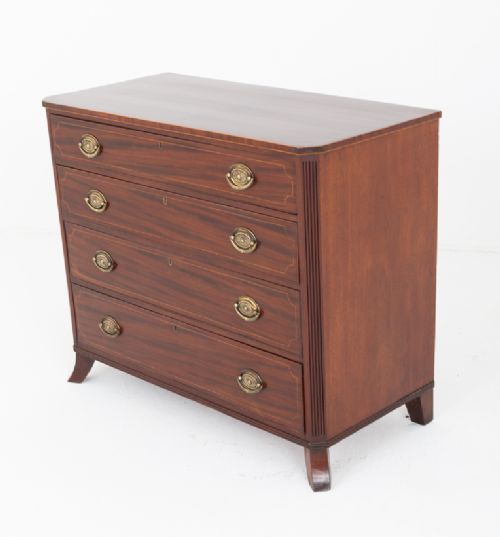

Regency Commode Drawers
Regency commode drawers bring architectural proportion and rich timber figure into a room.
Regency Commode Drawers
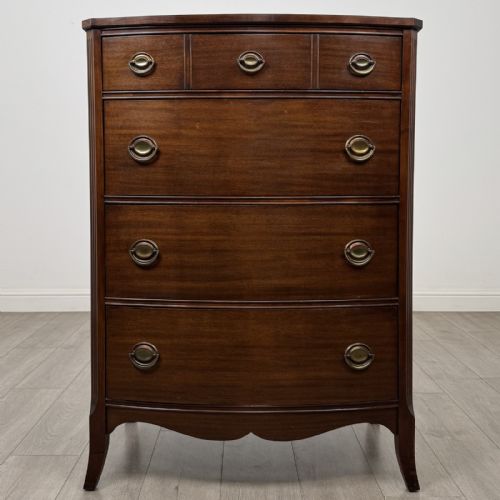
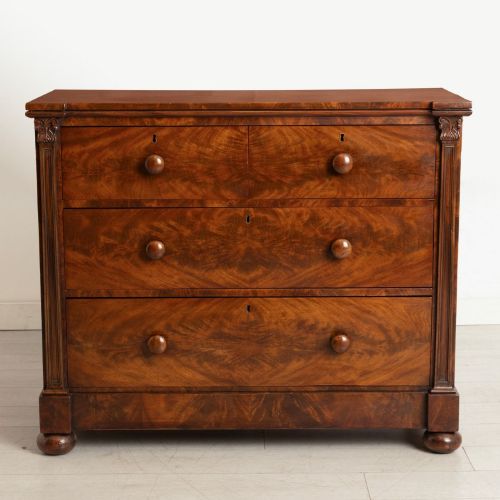
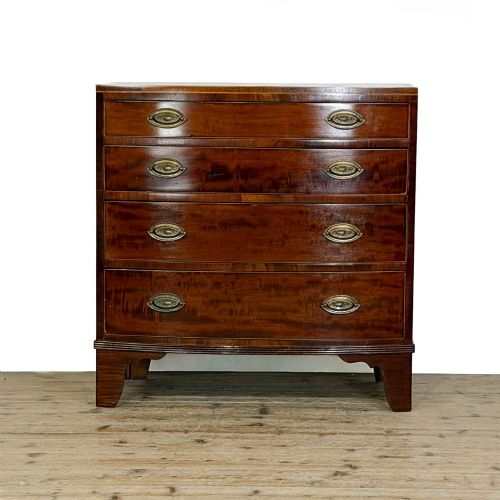
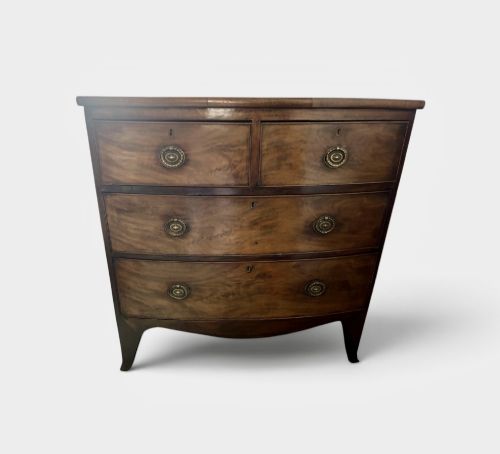
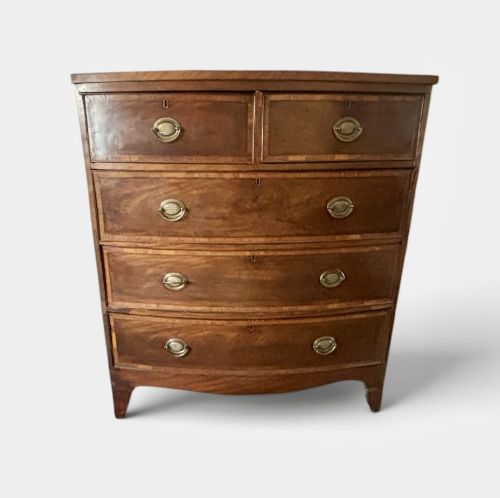
Regency commode drawers are formal storage pieces primarily constructed during the nineteenth century, encompassing Georgian, George IV, and William IV periods. These chests serve as statement furniture pieces designed for bedchambers and reception rooms, providing deep drawer capacity behind disciplined, symmetrical facades.
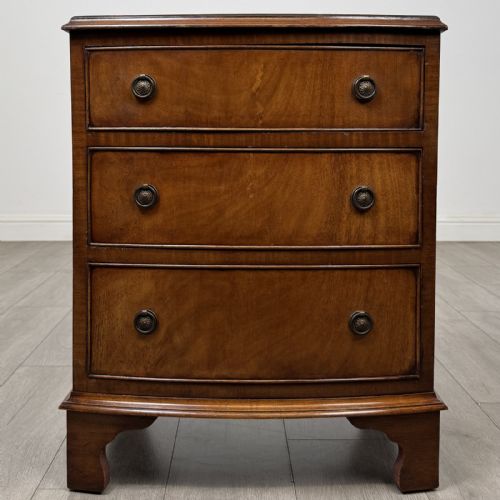
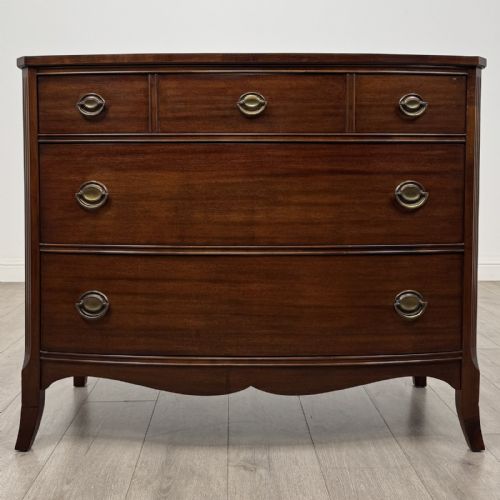
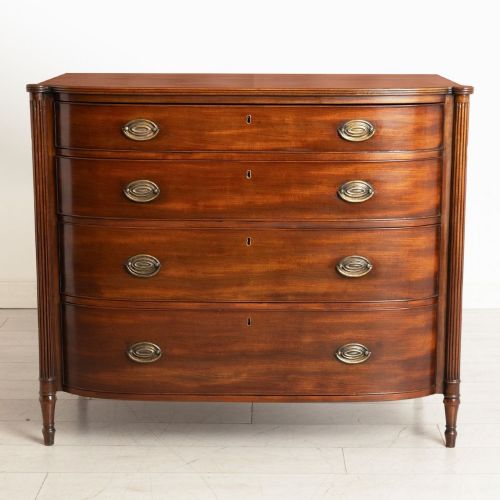
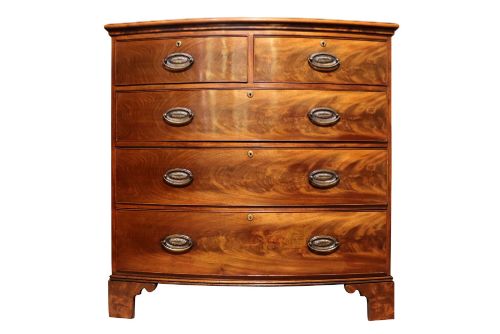
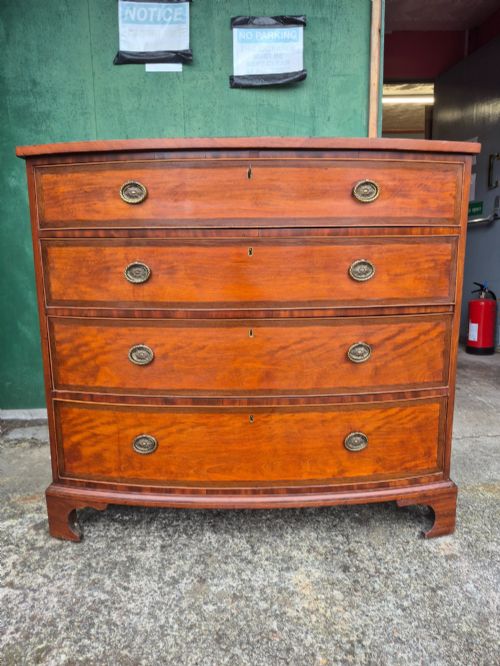
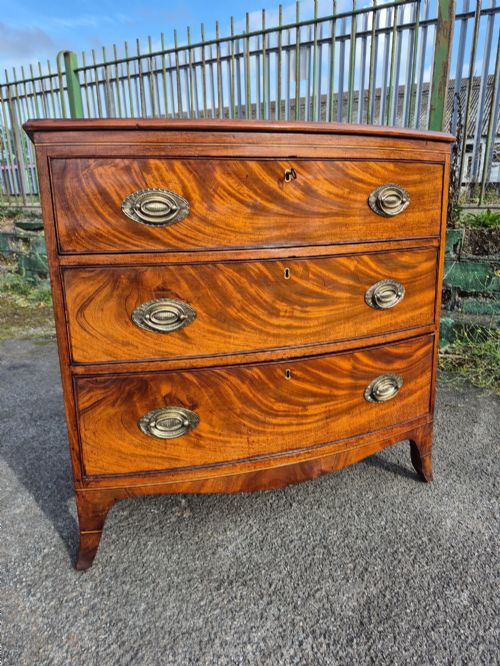
The pieces appearing most frequently on this page adopt the bow front configuration, where the front curves gently outward to catch the light. Alongside these rounded silhouettes, collectors encounter straight-front chests, small proportions suited for tighter spaces, and occasional painted pine examples.
Origins span English workshops alongside Scottish variants that often display distinctive timber selection and construction methods. The dominant material remains mahogany, frequently enhanced by contrasting veneers and banding that define the period aesthetic.
What varies in quality
Quality rests significantly upon the choice of timber figure and the precision of its application across the facade. Flame mahogany veneers matched symmetrically across multiple drawers represent a higher standard of cabinet work than plain, unfigured boards.
The refinement of proportion and subtlety of decorative banding distinguish exceptional pieces from standard utility items. Crispness in the execution of bow fronts, delicate crossbanding, and well-proportioned brass fittings separate superior examples from simpler regional output.
The Regency Commode Drawers Glossary
- Bow front
- A convex curved cabinet front that projects outward in a smooth arc. This shape became particularly popular during the Regency period to soften room geometry.
- Flame mahogany
- A veneer cut from the fork of the mahogany tree where branches join the trunk. The resulting grain creates a dramatic, flickering flame pattern highly prized by cabinetmakers.
- Caddy top
- A tabletop style featuring a raised, moulded edge resembling the lid of a tea caddy. It adds a sculptural profile to the upper surface of the chest.
- Crossbanding
- A narrow strip of veneer laid perpendicular to the grain of the surrounding surface. This technique creates a neat, contrasting border around drawer fronts and tabletops.
- Dovetail
- An interlocking woodworking joint formed by interlocking wedge-shaped fingers. Hand-cut dovetails indicate traditional period construction methods.
Regency Commode Drawers: Frequently Asked Questions
Where were these chests placed originally?
These chests occupied principal bedchambers and dressing rooms for storing linen and personal garments. Their finished appearance also suited them for placement in formal hallways and reception spaces.
Over time, owners repurposed them as living room storage or display surfaces beneath mirrors and artwork.
What is flame mahogany?
Flame mahogany is a decorative veneer harvested from the junction where branches meet the main tree trunk. The grain swirls in a distinct pattern resembling flickering flames.
Cabinetmakers reserved this prized timber for the most prominent surfaces on formal Regency furniture.
Are Scottish chests different from English ones?
Scottish chests frequently display bolder proportions and distinct timber selection, occasionally incorporating oak internal linings alongside rich flame mahogany facades. Regional workshops maintained independent traditions in moulding profiles and foot styles.
These variations help identify the geographical origin of unlabelled period pieces.