


Regency Column Stand
These pieces known as a regency column stand elevate lamps, plants and ornaments upon slender turned timber or brass shafts.
Regency Column Stand
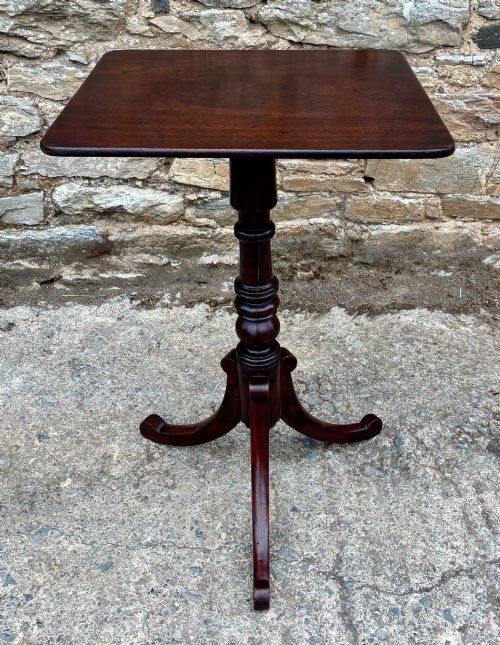
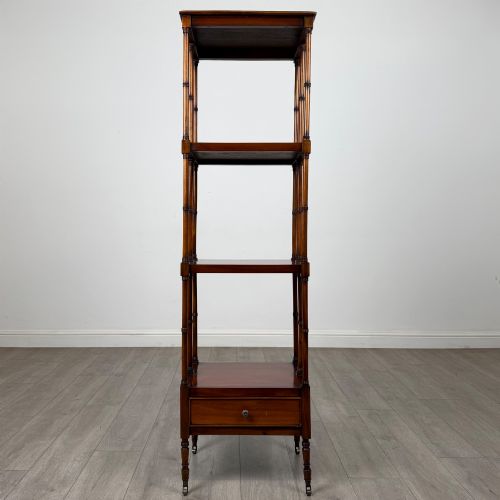
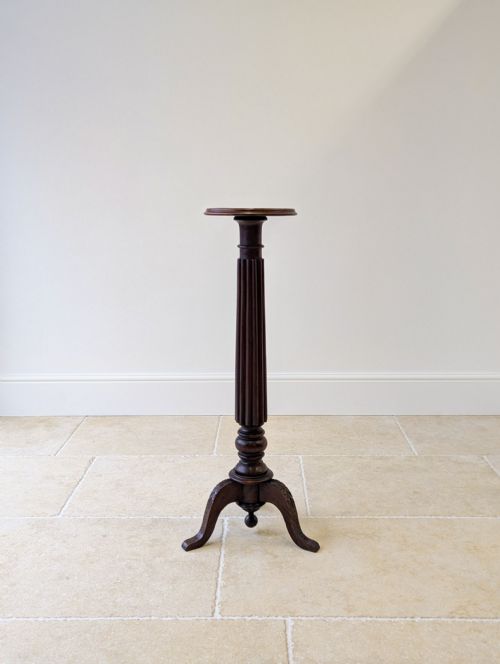
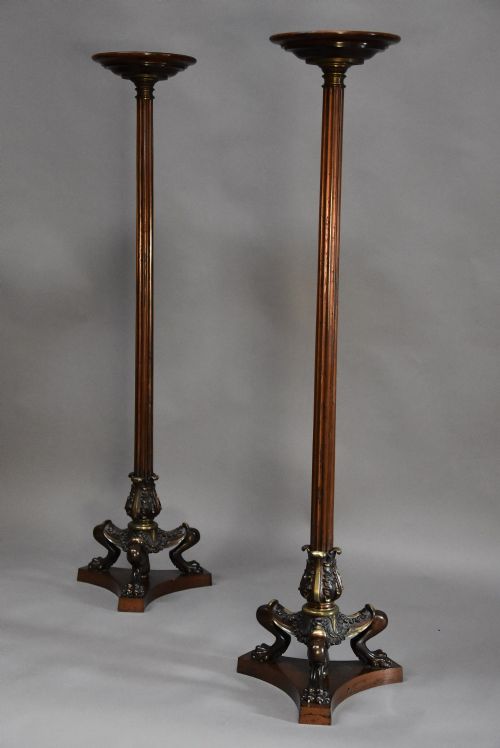
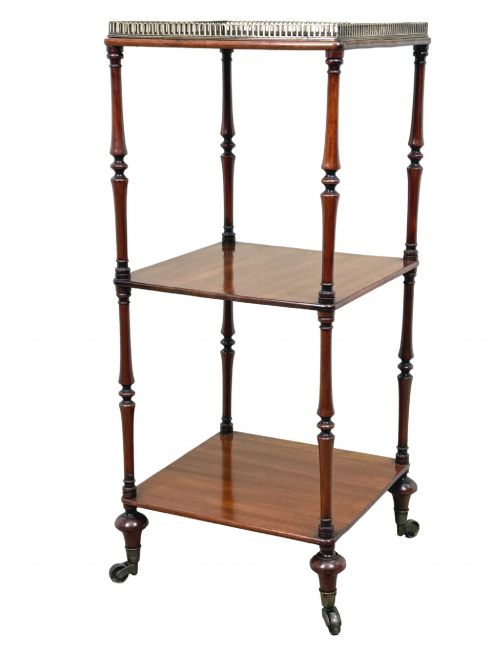
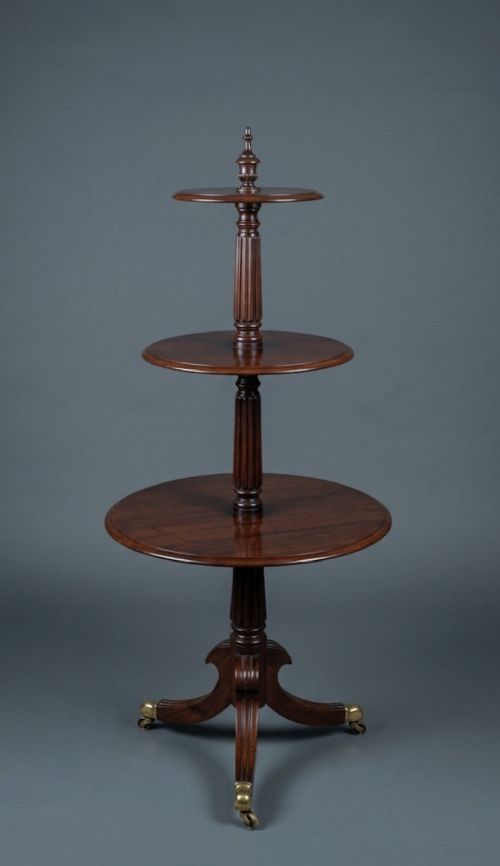
A regency column stand encompasses tall pedestals, torchere stands, tripods and multi-tiered etageres designed to hold objects off the floor. The examples seen here date predominantly from the nineteenth century, including the Regency and William IV periods, alongside later revival pieces.
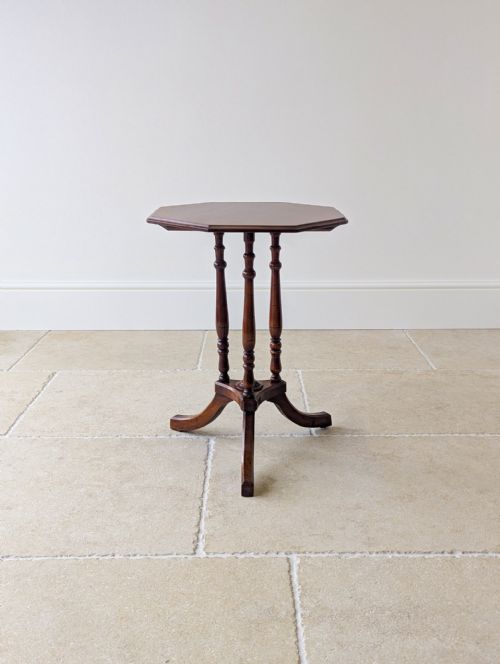
Most items take the form of slender wooden columns, tripod tables or brass candlesticks rather than heavy furniture. They serve as functional display pieces for corners, hallways and drawing rooms, lifting lamps, plants and decorative items to eye level.
How they were made
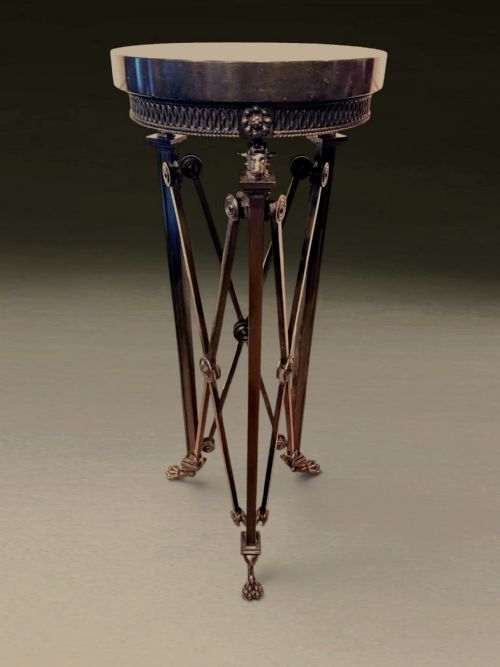
Cabinetmakers constructed these supports using dense timbers such as mahogany, rosewood, yew, burr maple and thuyawood, often turning the shafts on a lathe to create classical fluted or tapering columns. Many incorporate brass mounts, bronze details, boxwood stringing or faux marble finishes to emulate heavier architectural stone.
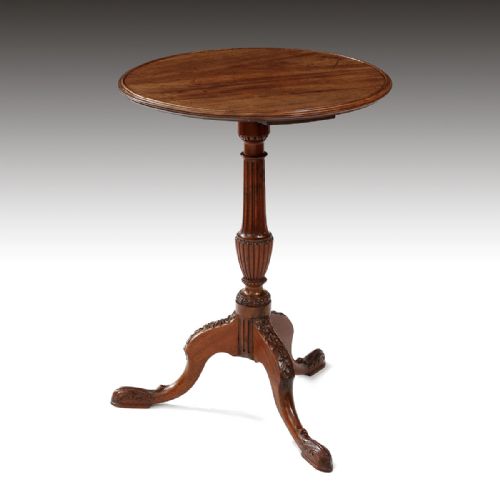
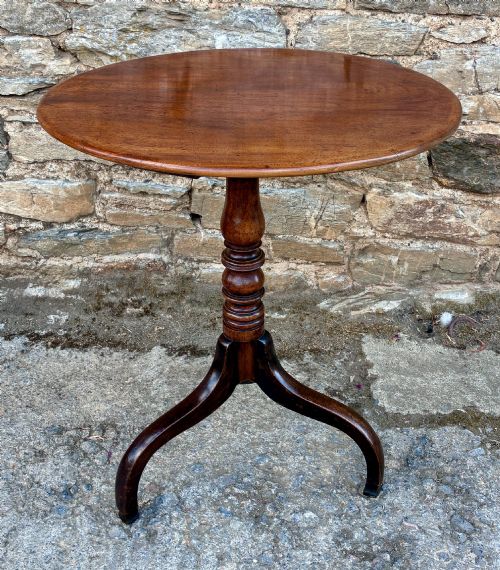
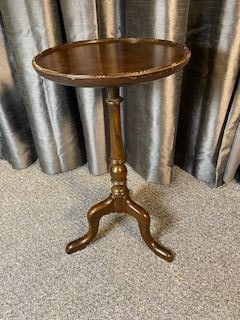
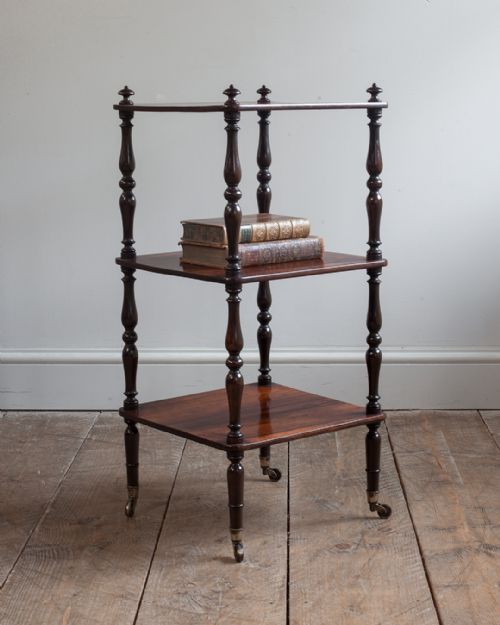
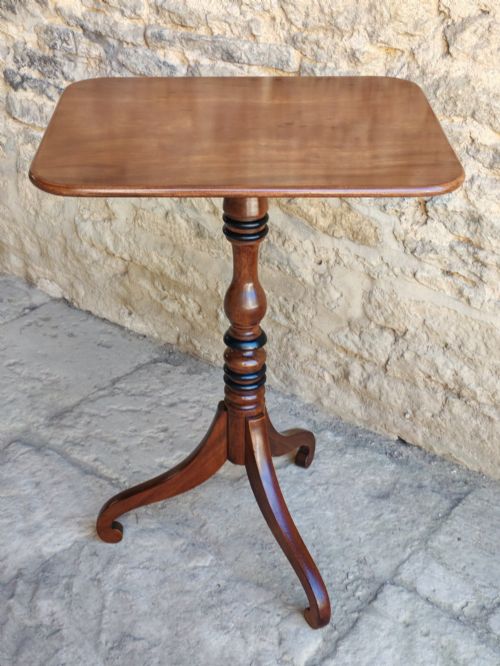
Tripod bases provide stability through three shaped legs curving outward from a central post, whilst multi-tiered versions utilise graduated shelves joined by turned supports. Joinery relies on traditional pegged joints, screws and turned threading to secure the upright columns to their heavy bases.
What varies in quality
The choice of timber grain and the precision of the turning set apart standard utility pieces from works attributed to prominent workshops. Well-figured mahogany, exotic veneers and crisply cast bronze or brass mounts indicate a higher tier of production.
Proportion and structural integrity dictate the overall merit of each piece, with finer examples maintaining a balanced weight between the top surface and the supporting base. Subtle details such as boxwood stringing, applied brass collars and original surface patination distinguish finer items from simpler utilitarian stands.
Gillow·Thomas Hope·George Smith·Humphrey Hopper
The Regency Column Stand Glossary
- Torchere
- A tall, slender stand designed specifically to support a lamp or candle. These pieces typically feature a small circular top supported by a single turned column and a tripod base.
- Etagere
- A set of open shelves for displaying small objects, often built with multiple tiers supported by slender upright posts. They appear frequently in nineteenth-century interiors.
- Tripod Table
- A small occasional table supported by a pillar resting on three spreading legs. This design prevents wobbling on uneven floors.
- Stringing
- Thin inlaid lines of contrasting timber, such as boxwood, used to outline the edges of tabletops and shelves. It adds subtle linear decoration to plain surfaces.
- Specimen Wood
- Furniture tops constructed from a mosaic of various decorative timbers arranged in geometric patterns. These showcase the distinct colours and grains of different woods.
Regency Column Stand: Frequently Asked Questions
What is a regency column stand used for?
These tall supports hold items like table lamps, bronze figures, flower pots and pocket watches off the floor. They bring smaller decorative objects into sharper focus within a room.
Historically, they illuminated dark corners with candles or displayed prized decorative arts. Today, they serve the same practical function whilst adding architectural height to interior schemes.
How do I tell a genuine period piece apart?
Examination of the timber, construction methods and wear patterns helps determine the age of a stand. Nineteenth-century items often show hand-turned tool marks and oxidation on internal wooden surfaces.
Revival pieces from later decades imitate these forms using machine-tooled joints and different secondary woods. Comparing the timber weight and brass casting quality clarifies the period of origin.
Are tripod stands stable enough for lamps?
The three splayed legs of a tripod base create a firm stance on flat floorboards, distributing weight evenly outward. They provide reliable support for standard table lamps and heavy bronze ornaments.
Care should be taken in high-traffic corridors where slender columns might be nudged. Most original designs balance this height with sufficient weight in the lower feet.
Where should I place a torchere stand?
These slender vertical pieces fit comfortably into empty corners, beside armchairs or flanking doorways. Their small footprint allows them to occupy awkward spaces that standard tables cannot reach.
Placing them away from direct sunlight protects vulnerable rosewood and mahogany finishes from fading. They work best when paired with objects that benefit from elevated viewing.