



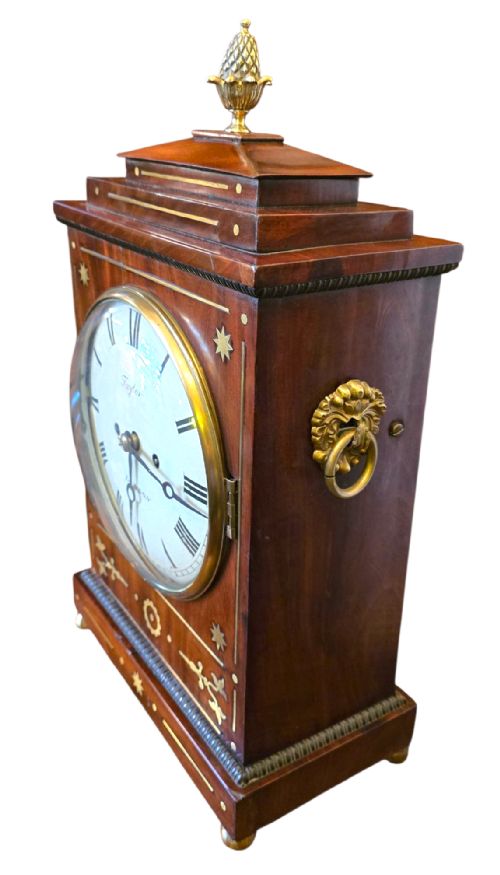


Regency Chiming Clock
A regency chiming clock brings precision engineering and substantial timber to the table, offering a commanding presence for any serious collector.
Regency Chiming Clock
A regency chiming clock typically appears as a bracket clock, mantel clock, or table clock designed to sit on furniture rather than hang upon a wall. These pieces span Georgian, Regency, William IV, and Victorian periods, often taking the form of robust wooden cases with distinct architectural silhouettes.
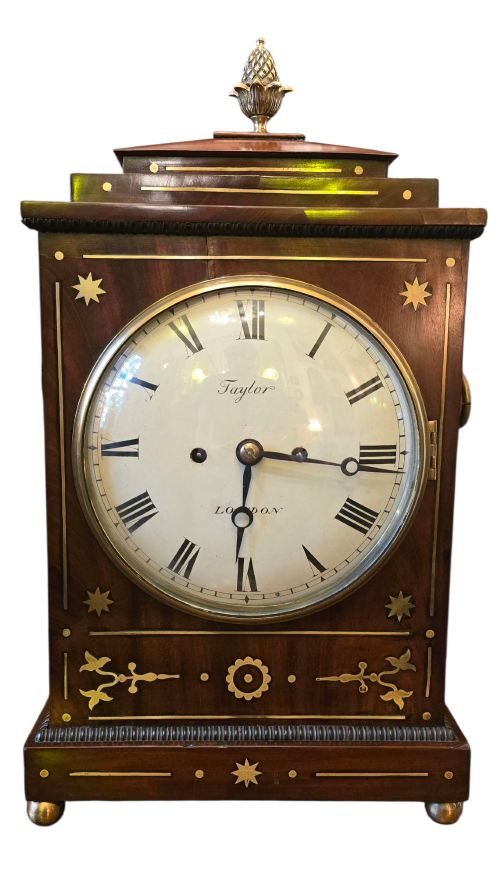
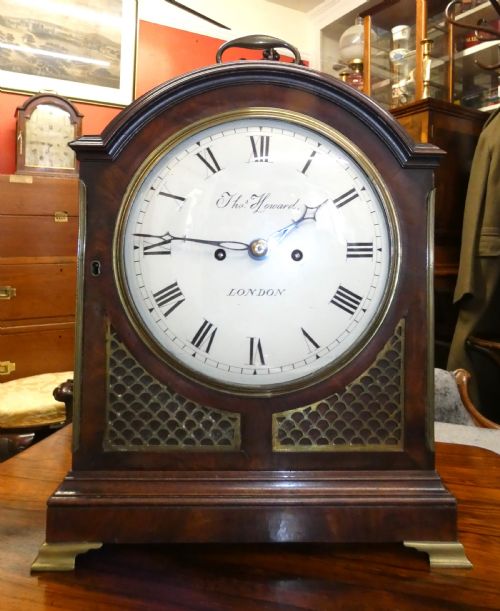
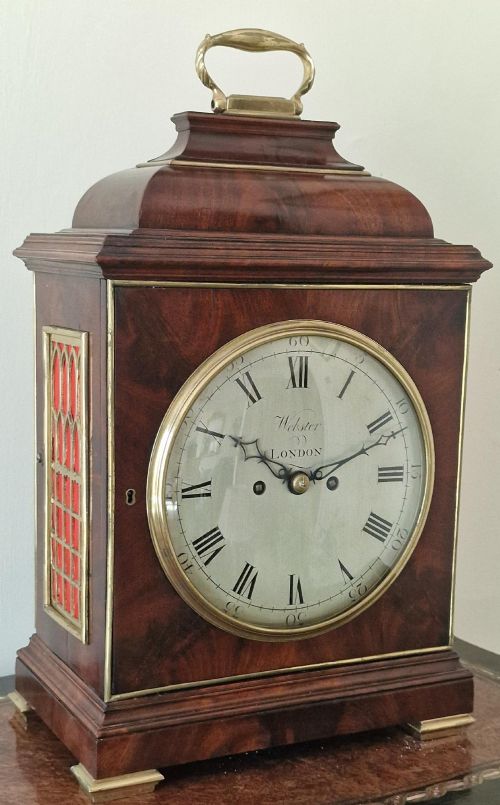
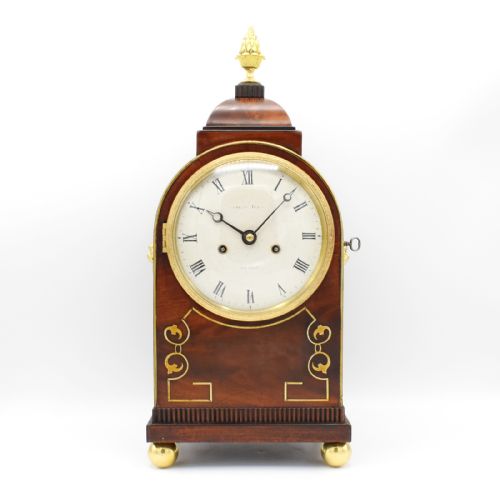
Makers such as Taylor of London, Thomas Howard, and Charles Pratt produced these timepieces during the height of British horology. The selection on this page shows various iterations including chamfer top designs, balloon bracket clocks, and models featuring brass inlay or visible pendulums.
Collectors encounter diverse regional origins and retailer signatures inscribed upon the dials, ranging from London workshops to provincial makers in Liverpool and Croydon. Each example reflects the prevailing tastes of its era, moving from Georgian mahogany restraint toward bolder 19th Century rosewood and ebonised timber treatments.
Materials and Construction
Makers constructed the exterior cabinetry using dense hardwoods like mahogany, rosewood, and ebonised timber, frequently embellished with brass inlay. These materials provided the necessary structural weight to house complex mechanical movements securely.
The dial components combine brass, silvered brass, glass, and enamel to create legible and decorative faces. Movements rely on fusee mechanisms and striking trains, sometimes incorporating double fusee setups and engraved backplates.
Regency Chiming Clock Retail Price Guide 2026
Typical asking prices for regency chiming clock among the pieces listed under this phrase on Sellingantiques today, from the lower quarter to the upper quarter. They describe what is for sale here now, not the wider market.
The inventory spans the Georgian, Regency, and Victorian eras, encompassing bracket, mantel, and table clock forms.
Evaluating Craftsmanship
Quality rests upon the complexity of the movement, distinguishing standard striking clocks from those featuring double fusee configurations, quarter striking capabilities, or repeating functions. Engraved movements and multi-pillar constructions indicate higher workshop standards.
The refinement of the cabinet work dictates the aesthetic tier of the piece. Selected timber grains, precise brass inlay, and sophisticated case shapes such as the chamfer top or balloon silhouette separate ordinary production from superior examples.
Taylor of London·Thomas Howard·Charles Pratt·Cording of London·J. Condliff Liverpool·Budgen Croydon·Frodsham and Baker London·Berguer of the Strand·William Smith London·Percy Webster·L. Donne Birchin Lane
The Regency Chiming Clock Glossary
- Bracket clock
- A portable spring-driven clock originally designed to sit on a wall bracket to aid acoustics and visibility. They evolved into substantial table and mantel pieces.
- Fusee
- A conical pulley connected to the mainspring by a cord or chain that equalises the pull of the spring as it unwinds. This mechanism ensures consistent timekeeping.
- Chamfer top
- A case design featuring bevelled or angled upper edges meeting at a central point or flat crown. It is a common feature on Georgian and Regency bracket clocks.
- Double fusee
- A movement incorporating two separate fusee mechanisms, one driving the timekeeping train and the other powering the strike or chime. This arrangement sustains accuracy across both functions.
- Silvered brass
- A brass dial surface treated with a silver compound to produce a pale, metallic finish that enhances the legibility of engraved numerals and maker signatures.
Regency Chiming Clock: Frequently Asked Questions
Where should I place a heavy wooden clock?
Position the clock on a stable, level surface such as a sturdy mantelpiece, sideboard, or dedicated table. This prevents vibrations that can interfere with the pendulum.
Keep the piece away from direct sunlight, exterior doors, and heat sources to protect the mahogany or rosewood case from warping.
What is a repeating mechanism?
A repeating mechanism allows the clock to strike the last hour or quarter hour on demand when a cord or lever is pulled. This was useful for telling time in the dark before electric lighting.
Many Regency bracket clocks include this feature as an indicator of higher workshop complexity.
How do I identify the period of a clock?
Examine the wood selection, dial materials, and case silhouette alongside any inscribed maker signatures or engraved movement details. Georgian and Regency pieces often favour mahogany and restrained brasswork.
Later 19th Century examples frequently utilise rosewood, ebonised timber, or more elaborate Gothic Revival styling.