
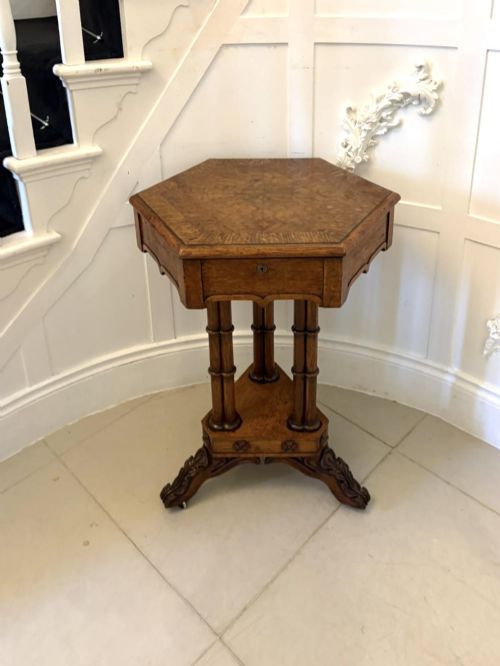
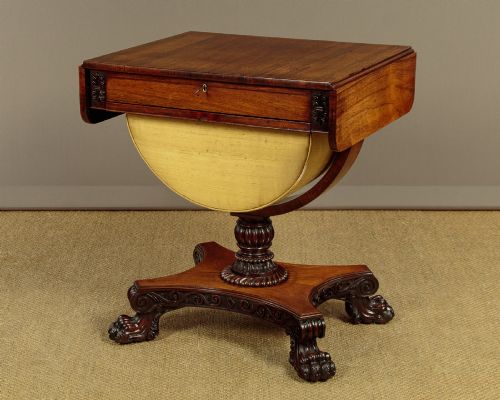
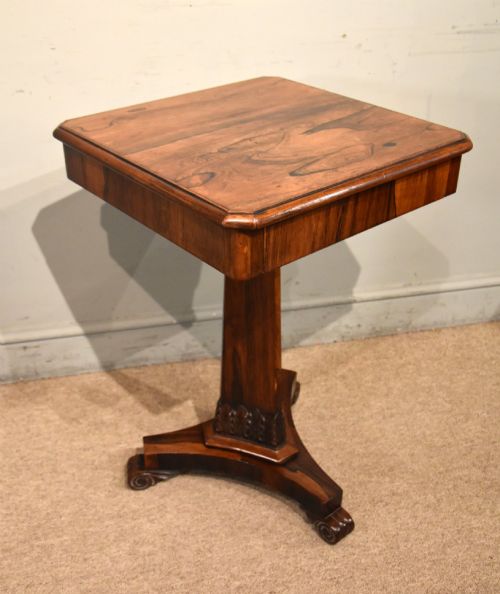
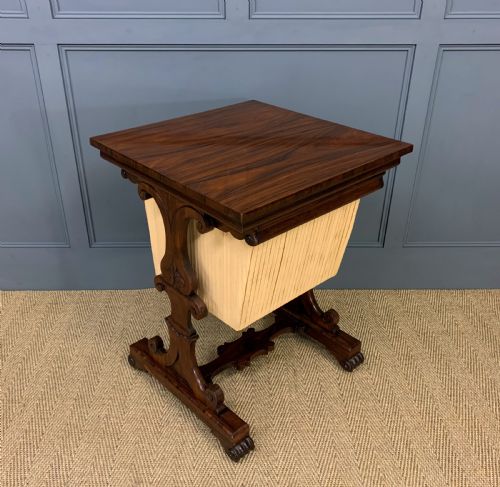



Regency Carved Work Table
A regency carved work table brings refined utility to a room, offering clever compartments for sewing and writing alongside sculptural timber forms.

Regency Carved Work Table
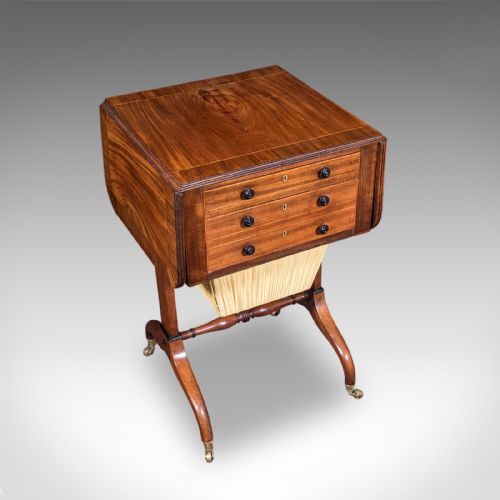
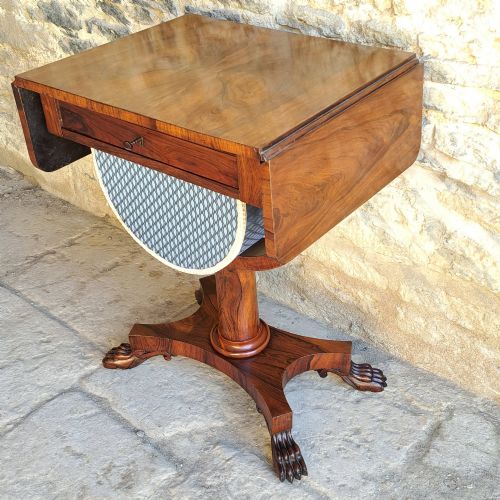
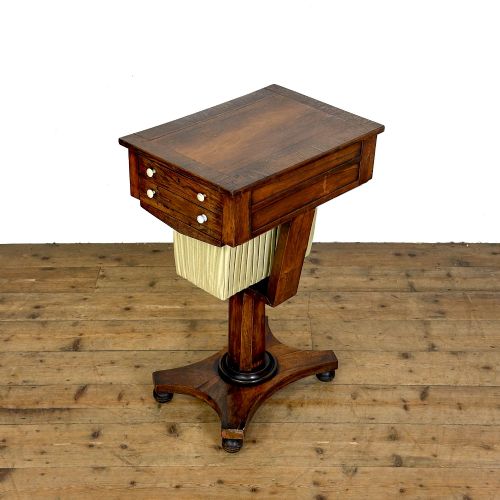
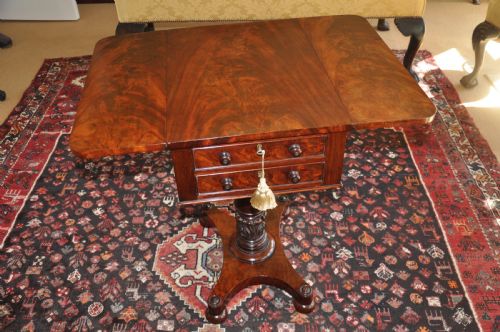
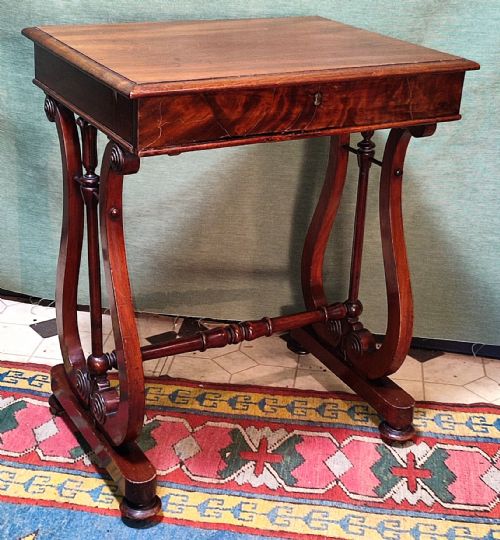
When you search for a regency carved work table, you encounter versatile pieces designed for needlework, writing and casual storage during the early nineteenth century. These items function as sewing tables, occasional tables and games tables, often fitted with drop leaves and internal compartments.
The versions you most likely meet on this page span the Regency, William IV and George IV periods, extending into early Victorian production. They appear frequently in mahogany, flame mahogany, pollard oak and rosewood, reflecting the cabinet-making standards of the era.
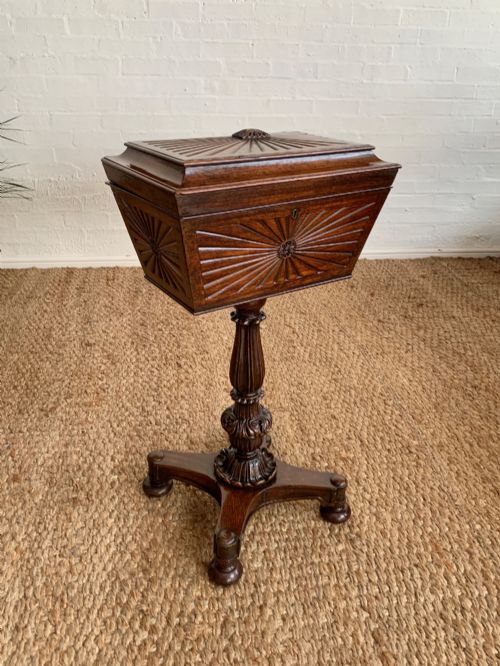
Makers of the period utilised structural dexterity, combining lift tops, caddy tops and drawers with pedestals and sunburst carving. The inclusion of fabric components alongside solid timber distinguishes these utilitarian yet elegant furnishings.
Materials and construction
Cabinet makers relied heavily on dense tropical hardwoods, shaping rosewood and solid or flame mahogany into smooth tabletops and pedestal bases. Pollard oak also appears, providing distinctive grain patterns across occasional and lamp tables.
Carving technique defines the ornamentation, with specific examples featuring sunburst motifs and gesso decoration applied to timber frameworks. Drop leaves operate via folding brackets, while drawers and sewing boxes incorporate integrated compartments for domestic tasks.
Listings feature items dated across the nineteenth century, encompassing Georgian, Regency, William IV and early Victorian periods in mahogany and rosewood.
Distinctions in quality
The refinement of the carved base separates standard examples from exceptional pieces attributed to prominent workshops like Gillows. Crisp detailing in sunburst carvings and secondary elements like caddy tops elevates certain tables above plain utilitarian designs.
Choice of primary timber strongly influences the stature of the piece, with richly figured flame mahogany and well-matched rosewood veneers indicating superior cabinet work. The integration of functional elements, such as smooth-running drawers and secure drop-leaf hinges, governs overall integrity.
Gillows·Barrett London·J Kingerley Manchester
The Regency Carved Work Table Glossary
- Work Table
- A small multi-purpose table designed for sewing, needlework and light writing tasks. These items typically feature internal compartments and fabric bags.
- Caddy Top
- A raised, stepped lid construction resembling a tea caddy, frequently found on the tops of sewing and work tables.
- Pembroke Table
- A small occasional table featuring two hinged drop leaves on opposing sides. It offers expandable surface space for various domestic uses.
- Flame Mahogany
- A veneer cut from timber where the branch meets the trunk, displaying a distinctive flamelike grain pattern. It was favoured for high-end Regency furniture.
- Pollard Oak
- Timber taken from trees that have been pollarded, producing a knotty and highly decorative grain. It appears on select occasional and lamp tables.
Regency Carved Work Table: Frequently Asked Questions
What is a regency carved work table used for?
These pieces served primarily for domestic needlework, sewing and writing. Interiors housed compartments for threads and implements while drop leaves provided flexible surface area.
Today, they function effectively as lamp tables or side tables in living spaces, maintaining their original utility while acting as decorative furniture.
How do I identify a William IV work table?
William IV examples typically date from the 1830s and display heavier proportions than earlier Regency pieces. Look for robust pedestal bases and dark tropical hardwoods.
Carving on these pieces often includes bolder motifs, such as sunbursts or scrolling foliage, paired with mahogany or rosewood construction.
What is the difference between a sewing table and a work table?
The terms are largely interchangeable within this period, both describing small tables equipped for domestic handwork. A sewing table often emphasises a hanging fabric bag beneath.
A work table may lean towards writing or general occasional use, incorporating solid box tops, drawers and caddy lids alongside sewing compartments.
What timbers were used for these tables?
Cabinet makers utilised dense exotic and native hardwoods, with rosewood and mahogany dominating the surviving examples. Flame mahogany and pollard oak provided highly figured decorative surfaces.
Secondary woods like oak appeared in drawer linings and internal framing, supporting the primary show timbers used for tops and pedestals.