
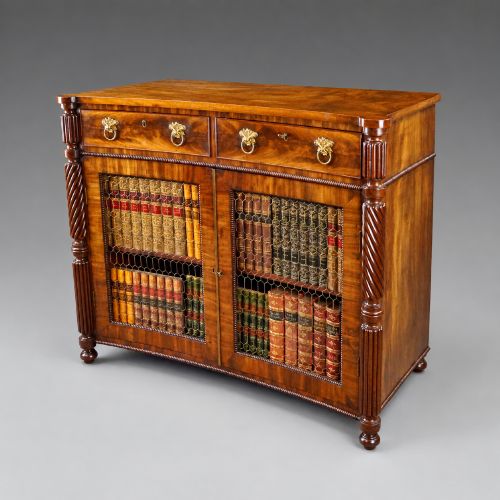
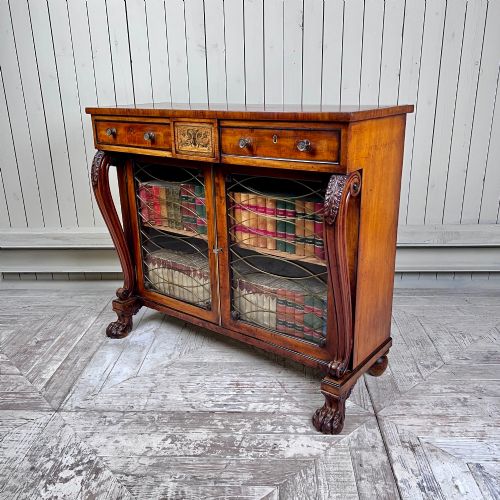
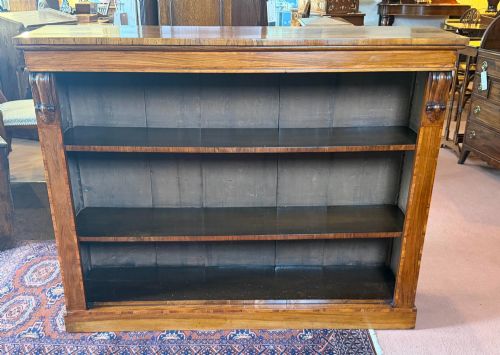
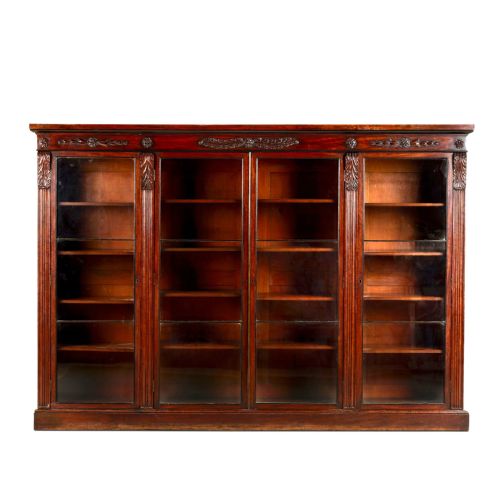
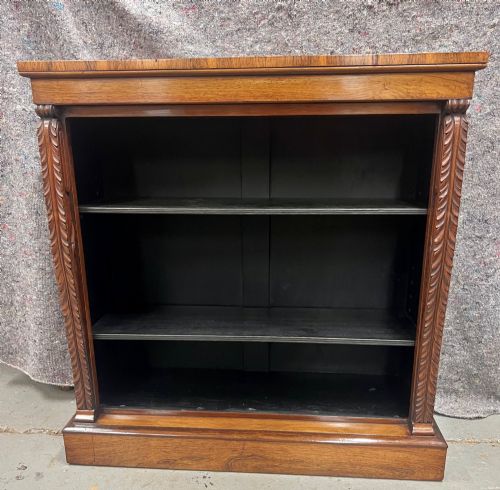

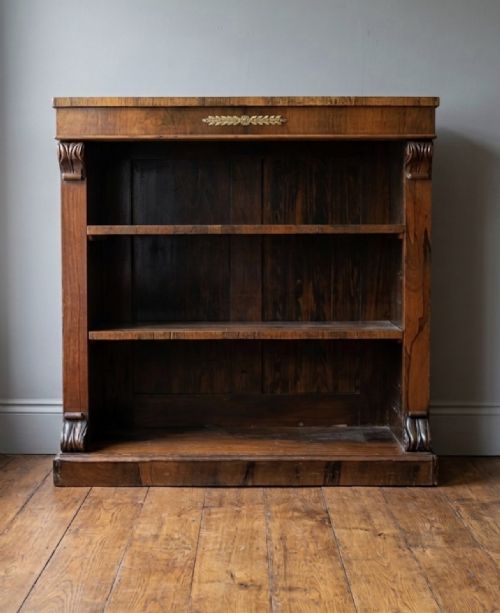

Regency Carved Low Cabinet
A regency carved low cabinet brings together rich timbers and classical proportions, offering a grounded storage piece for the modern interior.
Regency Carved Low Cabinet
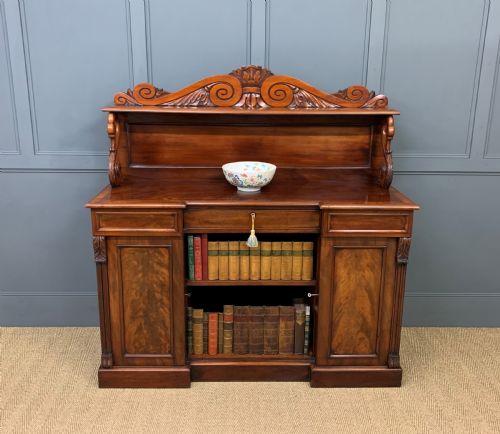
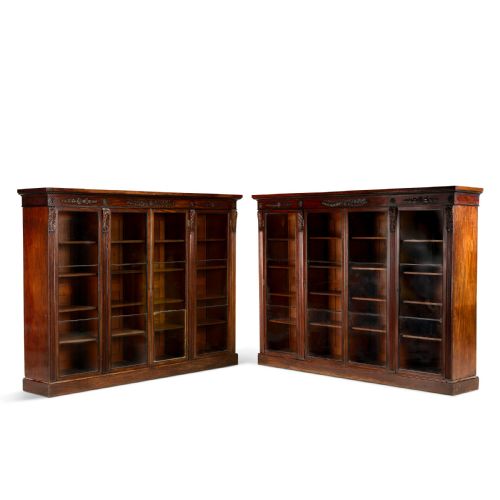
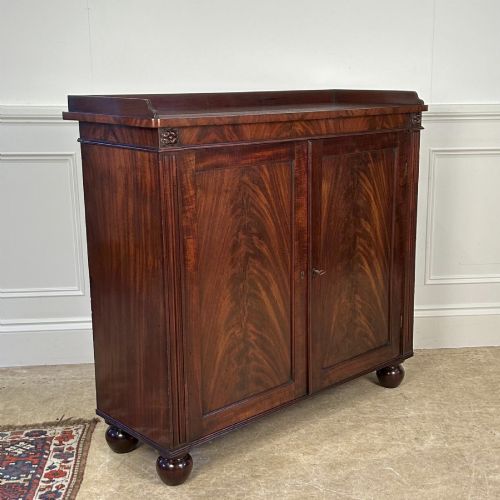
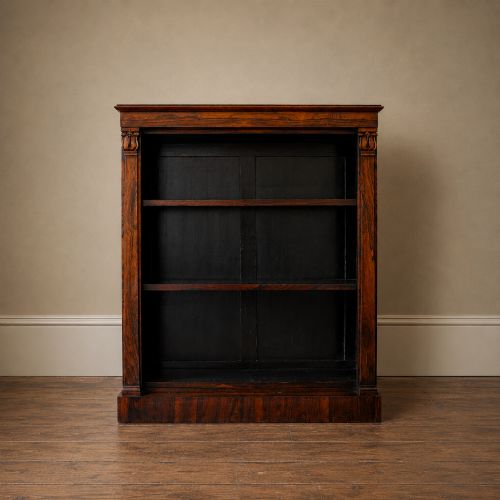
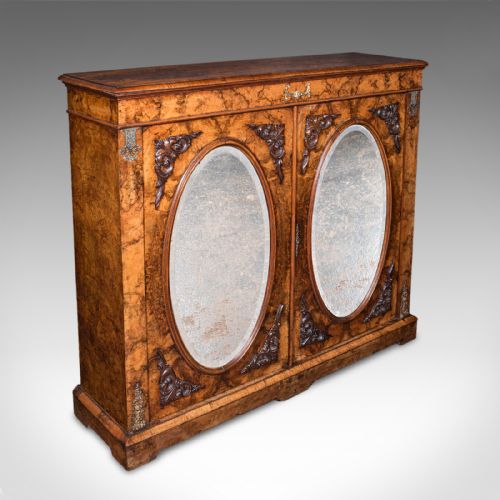
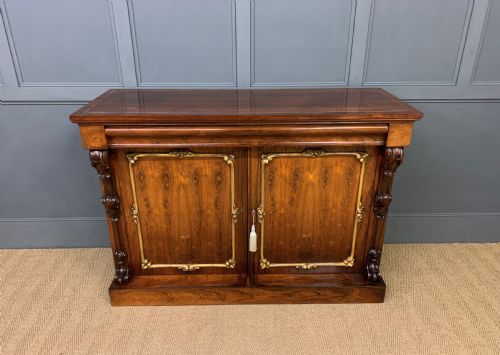
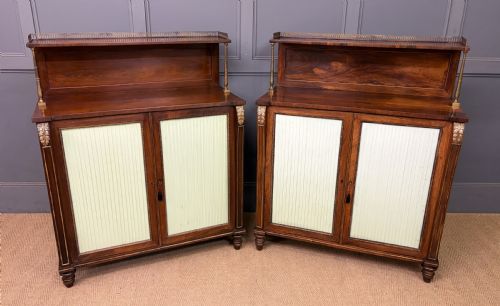
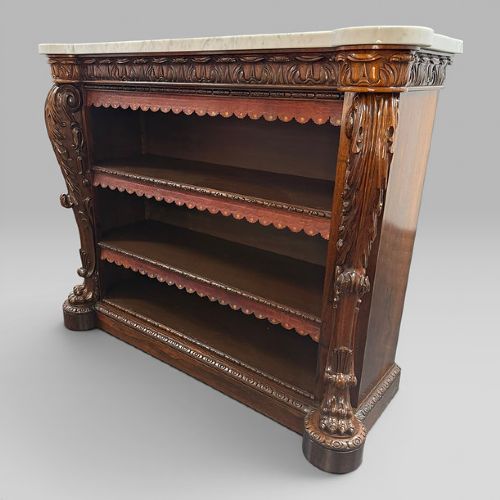
A regency carved low cabinet typically presents as a sideboard, chiffonier, or open bookcase designed with a reduced vertical profile. Buyers seeking a regency carved low cabinet encounter various timber grains and configurations, ranging from breakfront rosewood bookcases to mahogany side cabinets dated across the early nineteenth century.
The pieces grouped under this description span the Regency, George IV, and William IV eras, extending into mid-nineteenth-century Victorian interpretations. Makers and workshops of the period produced these low storage forms to fit beneath drawing room windows or against principal reception room walls.
Most examples function either as open shelving units for volumes or as enclosed cupboards with wooden or mirror-fronted doors. The low stature distinguishes them from taller towering bookcases, maintaining an open sightline across the room.
Materials and construction
Cabinet makers relied heavily on dense tropical hardwoods, fashioning carcases from solid mahogany, rosewood, and pollard or burr oak, often enhanced with flame mahogany veneer or exotic timbers like amboyna and gonçalo alves. These structural woods provided the stability needed for large breakfront bookcases and low side cabinets.
Surface enrichment involved precise brass inlay, ebony stringing, and classical carved motifs executed by hand. Tops frequently featured polished marble slabs, while glazed doors incorporated delicate wooden framing to protect the contents within.
The listings on this site show cabinet forms spanning the Regency, George IV, and William IV periods, constructed in rosewood, mahogany, pollard oak, and gonçalo alves.
Distinguishing quality in the range
Quality rests upon the selection of timber veneers and the crispness of the carved detail. Cabinets featuring highly figured flame mahogany, striking gonçalo alves, or matched rosewood display superior visual depth compared to plain, unfigured counterparts.
The sophistication of the joinery and attribution to notable workshops elevate certain pieces above standard vernacular output. Integrated brass mounts, adjustable shelving mechanisms, and well-executed secondary timbers separate ambitious commissions from simpler utilitarian items.
Gillows
The Regency Carved Low Cabinet Glossary
- Breakfront
- A cabinet design where the central section projects forward from the flanking wings. This architectural layout creates depth and shadow across the front elevation of large bookcases.
- Chiffonier
- A low sideboard or cabinet featuring enclosed cupboards below, sometimes surmounted by a small shelving tier or mirrored back. It evolved during the early nineteenth century as a versatile dining or drawing room piece.
- Gonçalo Alves
- A dense, highly figured exotic hardwood displaying contrasting dark brown and golden tones. Cabinet makers utilised its striking grain pattern for decorative veneering on select high-status furniture.
- Flame mahogany
- Timber cut from the branch junction where the grain pattern resembles flickering flames. It was prized for creating dramatic visual panels on door fronts and drawers.
- Palisander
- A term historical cabinet makers applied to various rich dark rosewoods. It denotes timbers possessing an oily lustre and pronounced dark streaking.
Regency Carved Low Cabinet: Frequently Asked Questions
What rooms suit a regency carved low cabinet?
These low storage pieces sit comfortably in living rooms, studies, and long hallways where taller furniture would block natural light or overwhelm the proportions of the space. Their reduced height allows them to sit beneath windows or display decorative objects on the upper surface.
The flat top surface provides an ideal platform for lamps, clocks, or sculptures without disrupting the sightlines of the room. Enclosed lower cupboards keep clutter concealed while open bookcase variants house book collections within easy reach.
How do I distinguish Regency from William IV furniture?
Regency pieces dating from the early part of the nineteenth century generally favor refined classical restraint, delicate brass inlay, and slender proportions influenced by ancient Greek and Roman design. Decoration remains crisp, elegant, and linear.
William IV pieces from the 1830s typically display heavier proportions, bolder carved scrollwork, and a preference for massive rosewood or mahogany surfaces. The transition reflects a shift toward more robust, solid forms before the early Victorian era took hold.
Were these cabinets originally used for books?
Many low cabinets served multiple functions in nineteenth-century interiors, acting as sideboards, chiffoniers, or open bookcases depending on the household requirements. Open shelving variants housed circulating library volumes, while cupboard versions stored ceramics, linens, or papers.
The inclusion of adjustable shelves in several examples demonstrates that owners could reconfigure the interior space to suit changing collections. Marble-topped variations often stood in morning rooms or reception spaces for general display.
How do I care for rosewood and mahogany surfaces?
Maintenance requires keeping these antique hardwoods away from direct sunlight and sudden temperature shifts that can cause timber to split or veneers to lift. Regular dusting with a soft, dry cloth preserves the polished finish without leaving chemical residues.
Application of traditional beeswax can nourish the timber periodically, maintaining the warm sheen characteristic of nineteenth-century cabinet work. Avoid placing damp items directly onto unsealed wooden tops to prevent water marking.