


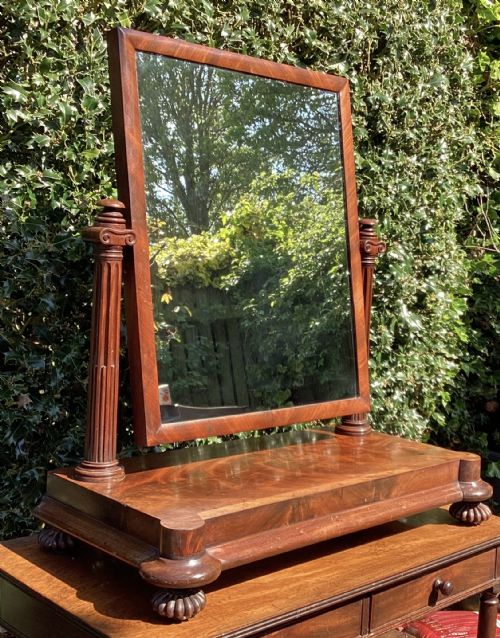


Regency Carved Dressing Glass
A regency carved dressing glass brings polished mahogany frames and swinging plates together to hold the light in a room.
Regency Carved Dressing Glass
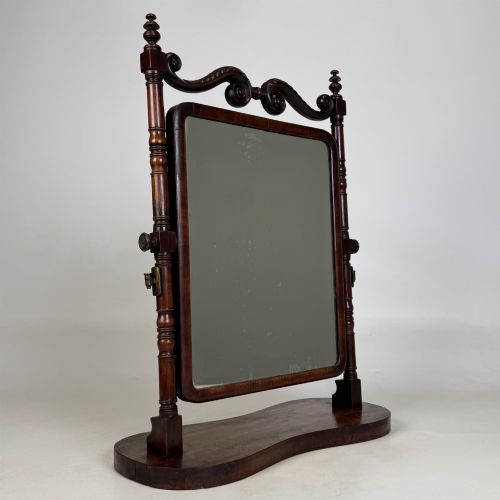
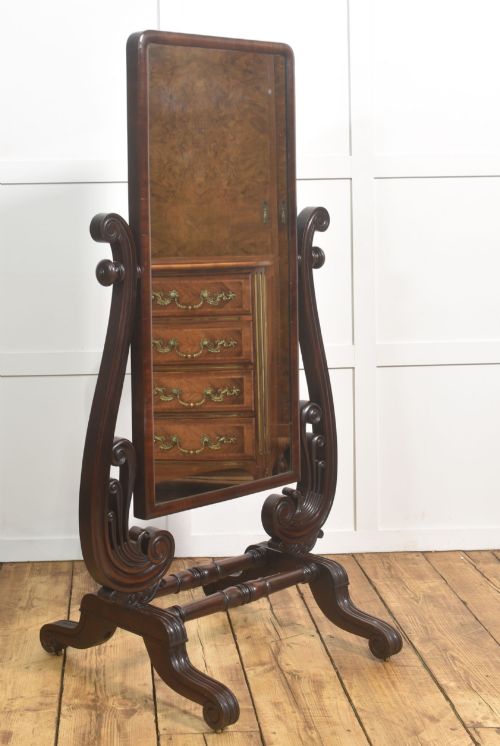
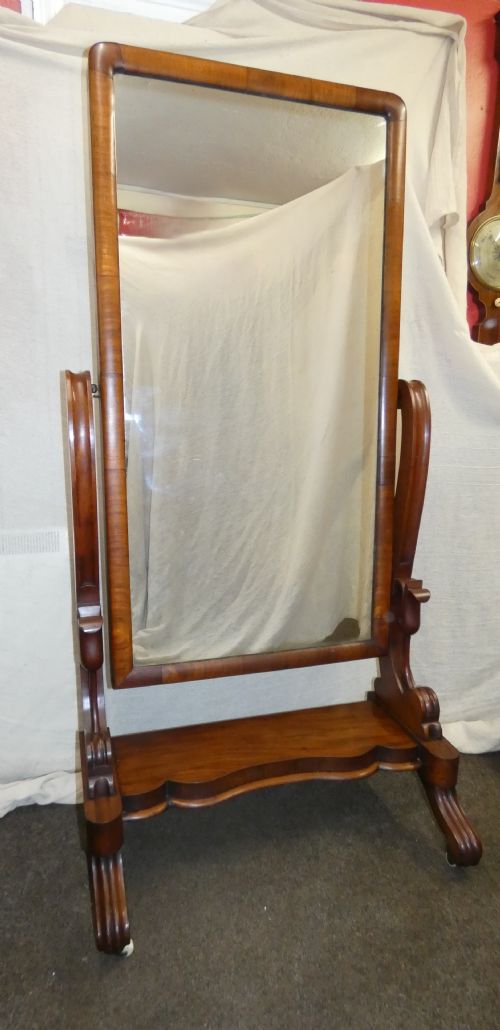
A regency carved dressing glass takes the form of table toilets, swinging mirrors, and larger cheval mirrors designed for the bedroom or dressing room. The pieces found here span the Regency, Georgian, and Victorian periods, with mahogany standing as the dominant timber alongside giltwood and padouk.
Buyers meet freestanding cheval mirrors alongside smaller toilet mirrors intended for placement on tables or chests. These objects share swivel frames that tilt the glass plate to catch the light from different angles.
The origins stretch across English workshops, including pieces attributed to Gillows alongside Anglo Indian variations. Forms range from simple swing mirrors on supports to large proportions with carved details.
Materials and construction
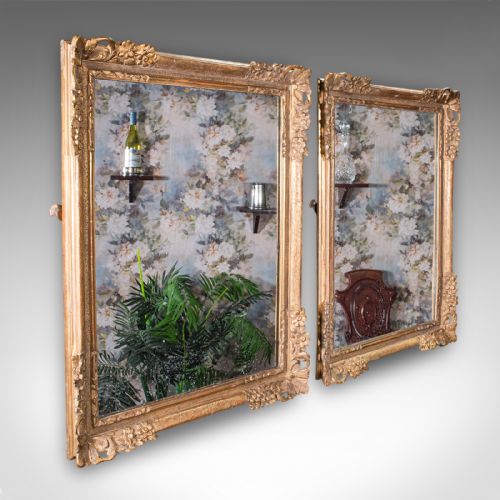
Makers utilised solid mahogany and padouk for the structural frames, often selecting timbers with rich grain patterns. Giltwood and composition elements appear on wall and pier mirrors to provide decorative surface enrichment.
Brass fittings secure the swinging plates within their upright supports, allowing the mirror glass to tilt smoothly on pivots. Mirror glass plates are held within rebated frames, backed by wooden panels to protect the silvering.
Listings include mahogany, giltwood, brass, composition, satinwood, and marble across pieces dated to the 19th century, Regency, Georgian, and Victorian eras.
Distinctions in quality
The weight of the timber and the crispness of the carved details separate standard utility pieces from fine cabinet work. Well executed frames display balanced proportions and precise joinery where the uprights meet the base.
The choice of secondary woods and the quality of the brass hardware indicate the original workshop standard. Superior examples retain their original mirror plates and functional swivel mechanisms without excessive play.
Gillows
The Regency Carved Dressing Glass Glossary
- Cheval mirror
- A large freestanding mirror supported on four legs and a frame that allows the glass to swing fully. These tall pieces were designed for full length viewing in dressing rooms.
- Toilet mirror
- A smaller dressing glass mounted on a box base or small frame designed to sit upon a dressing table. They often feature small drawers within the base for storage.
- Swivel mirror
- A glass plate hung on side pivots between two upright posts so it can tilt. This mechanism allows the user to adjust the angle of reflection.
- Giltwood
- Wood that has been coated with a thin layer of gold leaf or gesso preparation. It appears frequently on decorative Regency frames.
- Padouk
- A dense tropical hardwood with a reddish brown colour used in cabinet making. The evidence shows its use in Anglo Indian dressing mirrors.
Regency Carved Dressing Glass: Frequently Asked Questions
What is a dressing glass?
A dressing glass is a moveable mirror used for personal grooming and dressing. They are typically smaller than cheval mirrors and sit on top of tables.
These pieces were essential bedroom furnishings in period homes before fitted wardrobes with full length mirrors became common.
How do I use a cheval mirror?
A cheval mirror stands directly on the floor and pivots on a vertical axis within its frame. You tilt the glass plate to adjust the viewing angle.
Place the mirror in a bedroom or dressing area where natural light from a window can reflect across the room.
How do I date a mahogany mirror?
Dating relies on timber selection, construction methods, and the style of the carving on the frame. Regency and Georgian pieces often feature dense mahogany and hand cut joinery.
Later Victorian versions show different proportions and machine cut elements within the framework.
Where should I place a dressing mirror?
Table top dressing glasses require a sturdy chest of drawers or dressing table to support their weight. Freestanding cheval mirrors need clear floor space near adequate light.
Keep them away from direct sunlight to protect the mahogany finish and the silvering on the glass plate.