

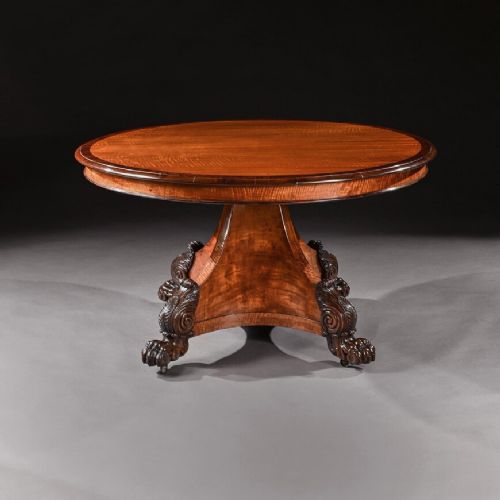
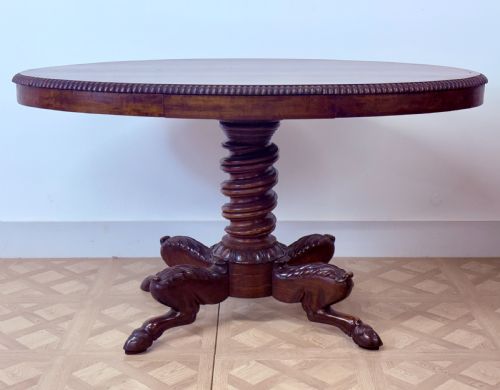
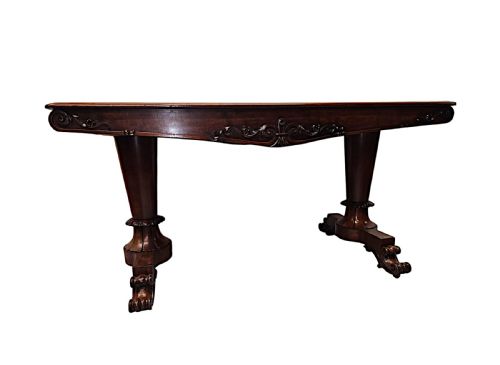
Regency Carved Centre Table
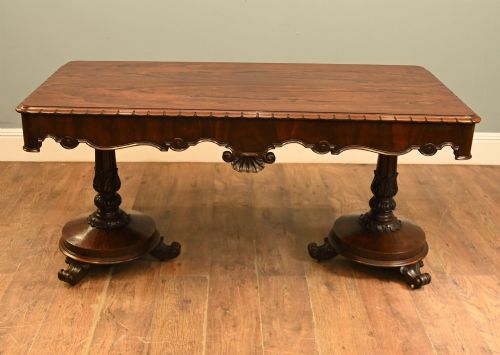
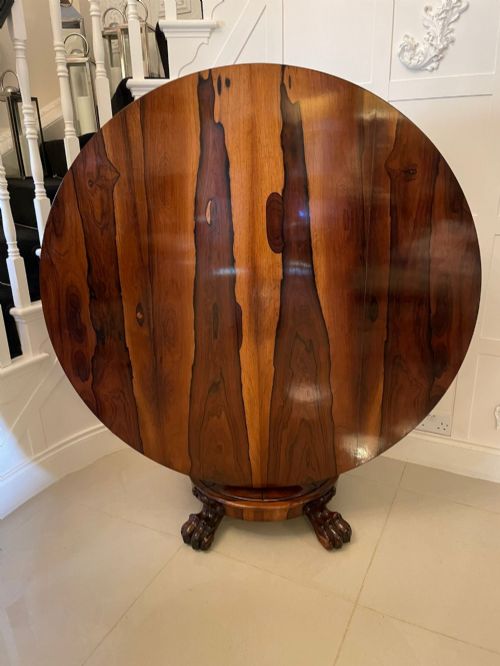
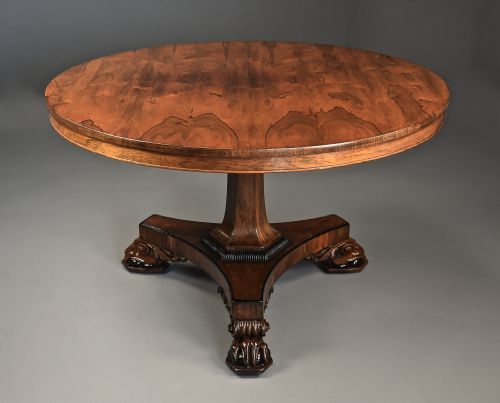
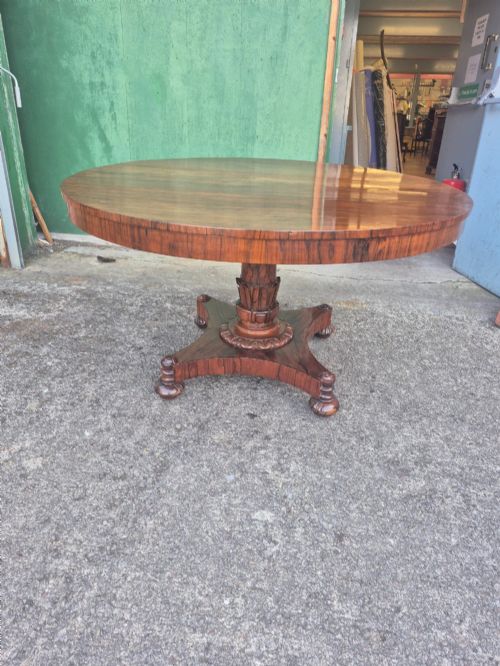
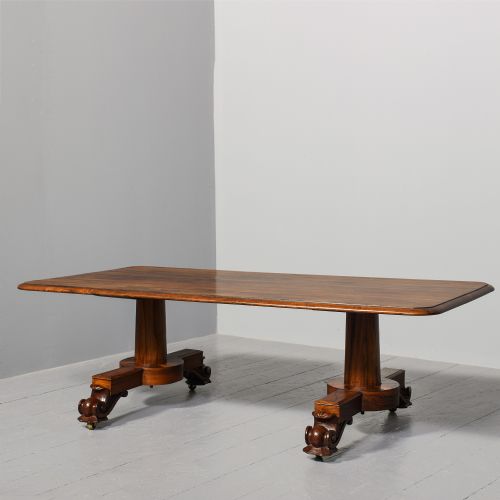
These pieces are a regency carved centre table, substantial freestanding focal points designed to anchor a principal room.
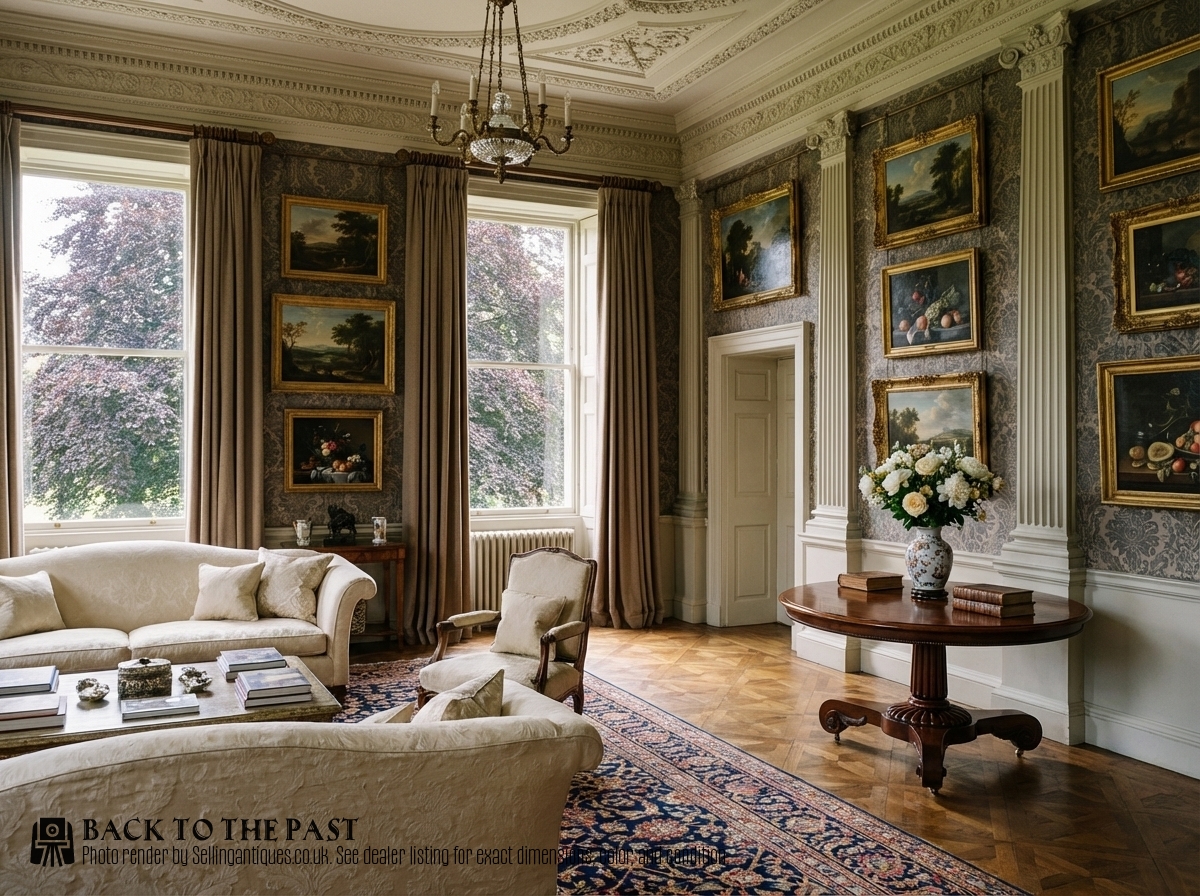
Regency Carved Centre Table
A regency carved centre table is designed to stand free in the middle of a room rather than against a wall. The selections span the nineteenth century, encompassing Georgian, Regency, and William IV eras.
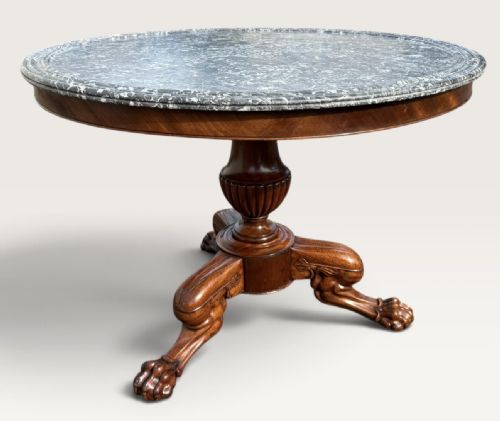
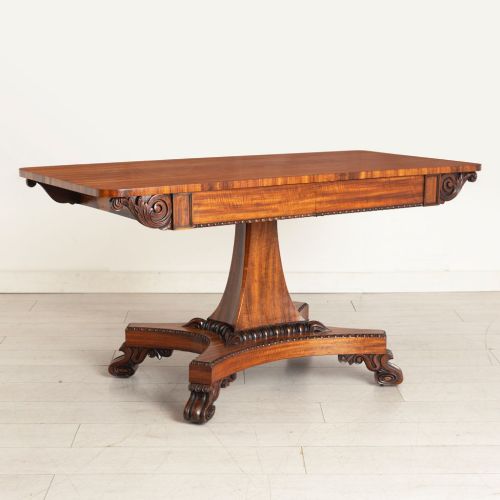
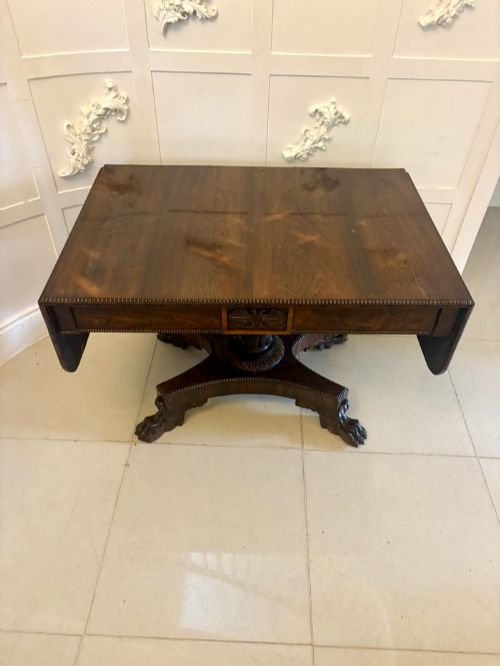
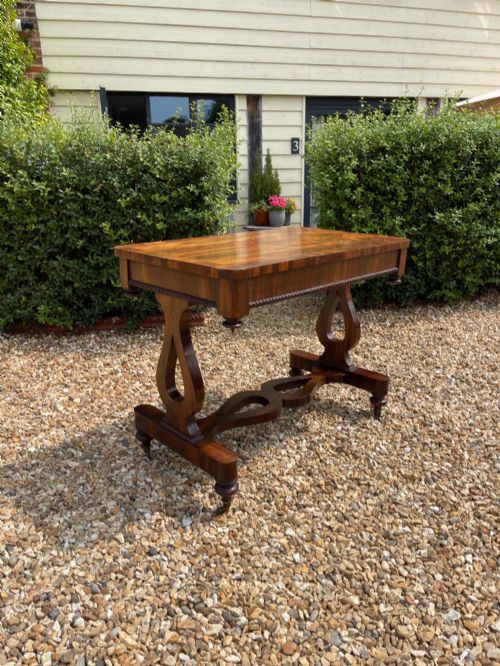
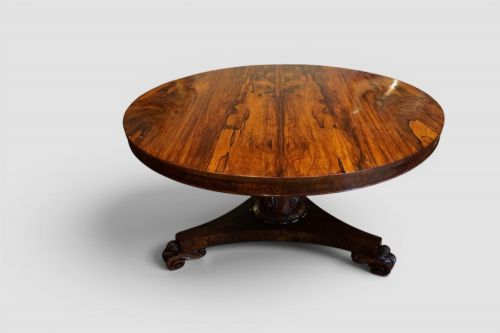
Forms include circular breakfast tables, library tables, and sofa tables, constructed from timber such as rosewood and mahogany.
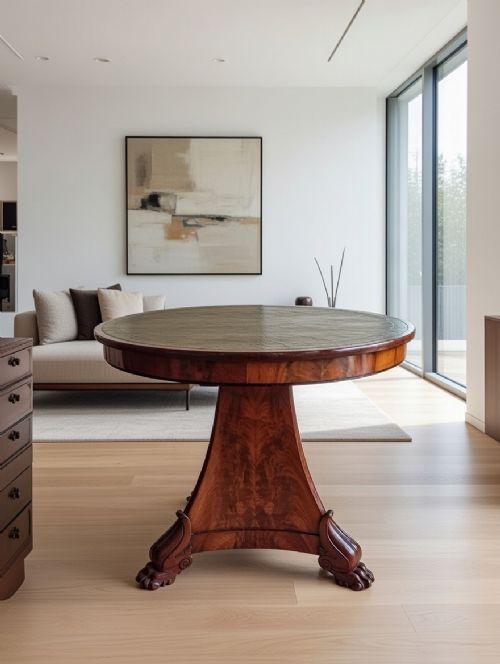
Makers utilised architectural bases, including triform pillars and carved pedestals, reflecting neoclassical and French Empire influences.
Materials and Technique
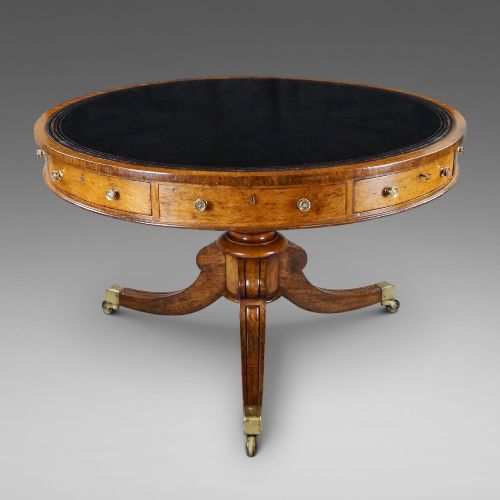
Cabinetmakers constructed these tables using solid timbers and decorative veneers like flame mahogany and burr walnut over secondary woods. Surfaces frequently incorporate inset leather, marble slabs, or intricate parcel gilding.
Structural stability was achieved through heavy central pillars, often octagonal or triform, resting on platforms with carved feet. Tilt-top mechanisms and secret drawers appear across many nineteenth-century examples.
Listings feature rosewood, mahogany, and oak across nineteenth-century periods including Regency and William IV.
Evaluating Execution
Quality rests in the selection of timber figures, such as highly grained rosewood or figured mahogany, and the crispness of the hand-carved details on pedestals and legs. Finer examples display meticulous joinery and substantial marble or leather inserts.
Proportion and stability dictate the upper tier, where heavy tops are supported by robust pillars without movement or sagging. Attribution to known workshops like Gillows elevates an item through documented craftsmanship.
Gillows·Williams and Gibton·Peters of Genoa·Thomas Hope
The Regency Carved Centre Table Glossary
- Triform base
- A three-sided platform or pedestal foot arrangement common on nineteenth-century tables. It provides stability for heavy circular tops.
- Tilt-top
- A hinged tabletop mechanism allowing the surface to fold vertically when not in use. This saved space in period interiors.
- Gueridon
- A small circular occasional table supported by a central column. Originating in France, it serves decorative and functional roles.
- Parcel gilt
- The practice of applying gold leaf selectively to specific carved details. It highlights architectural motifs against dark wood.
Regency Carved Centre Table: Frequently Asked Questions
Where should I place a centre table?
These tables are built to stand freestanding in the middle of a room rather than pushed against a perimeter wall. They function well beneath a central ceiling rose or chandelier where people can walk around them.
Because the design includes finished details on all sides, the piece commands attention from any angle in an interior.
What is a tilt-top table used for?
A tilt-top mechanism allows the heavy wooden surface to hinge into a vertical position. In historical homes, this enabled servants to move the furniture easily and store tables against walls when rooms needed to be cleared.
Today, the mechanism remains a useful feature for cleaning or repositioning the furniture within a space.
How do I distinguish Regency from William IV?
Regency pieces lean towards refined neoclassical lines, delicate parcel gilding, and lighter proportions inspired by ancient Greek and Roman forms. William IV furniture tends to be heavier and more robust, favouring massive rosewood pillars and bold architectural carvings.
Both styles overlap significantly during the early nineteenth century.
Can I use a library table for writing?
Many library and centre tables incorporate leather or wood tops suitable for writing and administrative tasks. The inclusion of drawers in various models provides practical storage for stationery.
Ensure the height matches your seating if you intend to use it as a regular desk.