


Regency Canterbury Holder
A regency canterbury holder is a distinctive piece designed to keep newspapers, magazines and sheet music neatly organised.
Regency Canterbury Holder
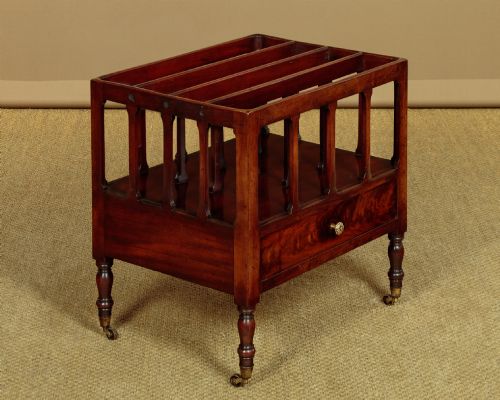
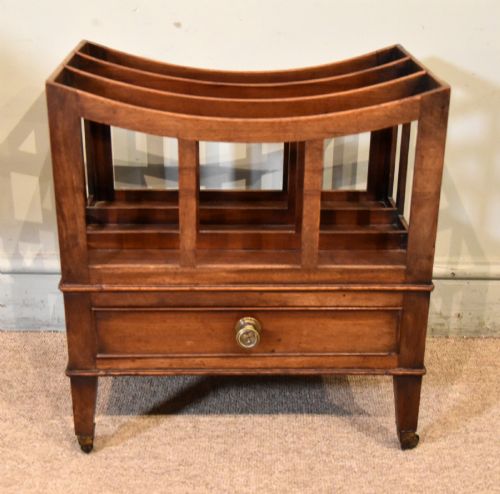
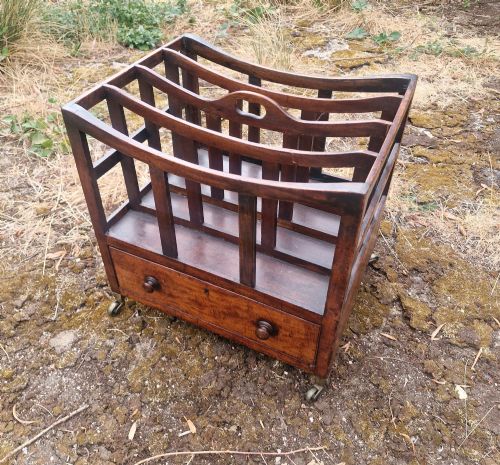
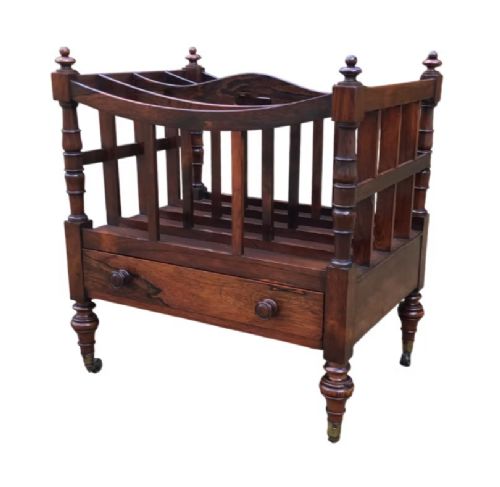
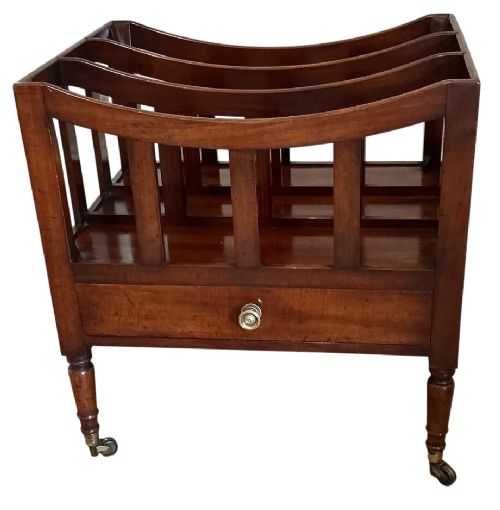
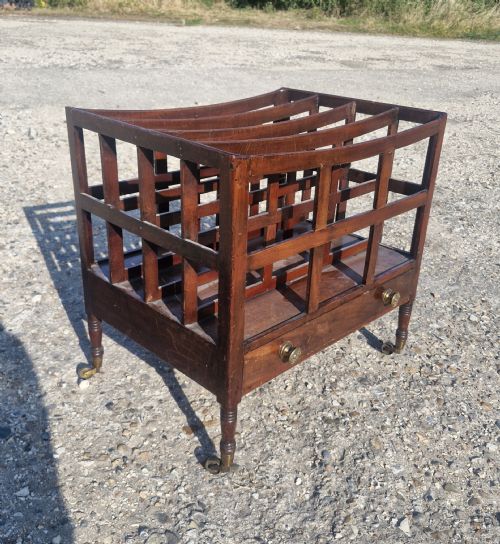
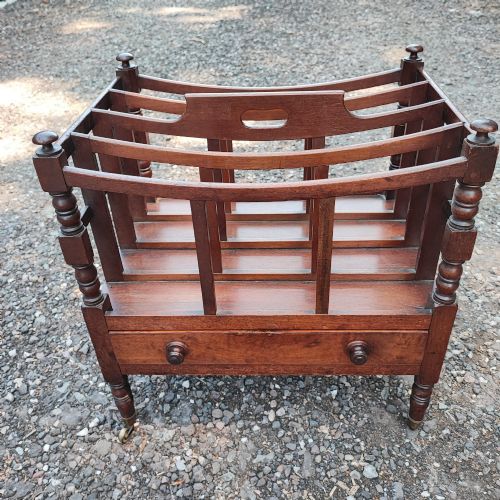
When you search for a regency canterbury holder, you find low, freestanding stands featuring vertical partitions that divide the top into multiple sections. These pieces typically include a low drawer beneath the slatted divisions and rest on turned legs fitted with castors.
The examples seen here date predominantly from the Regency period and the wider nineteenth century, constructed in traditional forms that also span the Georgian, William IV and Victorian eras.
Makers designed these items to sit beside seating areas in principal rooms, holding reading material and music scores close to hand for daily use.
How they were made
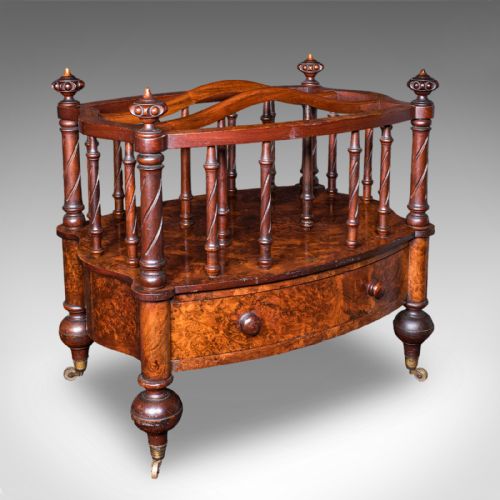
Cabinet makers utilised solid timbers and rich veneers, turning chiefly to mahogany, rosewood and burr walnut, often enhanced with contrasting ebony banding and fine inlay.
Structural elements involved turned wooden legs, often mounted with metal castors for mobility, alongside joined partitions and dovetailed drawer construction for stability.
Listings feature mahogany, rosewood, burr walnut and Cuban mahogany, spanning periods from George III through to the Victorian era.
What varies in quality
Quality rests in the selection of timber figures, such as highly grained rosewood or Cuban mahogany, and the crispness of turned details and carved elements like Prince of Wales feathers.
Finer pieces display balanced proportions, integrated lower drawers with clean internal construction, and refined joinery across the slatted divisions rather than plain utility framing.
The Regency Canterbury Holder Glossary
- Canterbury
- A low stand with vertical divisions used originally for sheet music, newspapers and magazines. It often incorporates a single drawer at the base.
- Boat Shaped
- A descriptive term for a Canterbury body with curved, sloping sides resembling the hull of a boat. This profile is characteristic of finer Regency designs.
- Division
- One of the vertical partitions forming the upper rack of the stand. These create individual slots to keep documents upright.
- Castor
- A small wheel fitted to the base of each leg. It allows the stand to be moved easily across carpets and flooring.
- Bandings
- Thin strips of contrasting wood inlaid around the edges of tabletops or drawers. This technique adds visual definition to mahogany and rosewood surfaces.
Regency Canterbury Holder: Frequently Asked Questions
What is a regency canterbury holder used for?
These stands were originally designed to hold sheet music, newspapers and unbound periodicals in the living spaces of period homes.
Today they serve the same function while acting as decorative furniture beside sofas and armchairs.
How do I identify a genuine period piece?
Look for traditional construction methods such as hand-cut dovetails in the drawer and authentic timber ageing under the finish.
Period items usually feature hand-turned wooden components and historical brass or iron castors.
Where should I place a canterbury in my home?
They fit naturally beside a sofa, desk or reading chair where periodicals and books tend to accumulate.
Because they are finished on all sides for freestanding placement, they work well near the centre of a room.
What is the difference between a canterbury and a magazine rack?
A traditional canterbury is a specific piece of furniture from the Georgian and Regency eras featuring turned legs and individual upright partitions.
Later magazine racks often adopt simpler, lighter structures without the characteristic base drawer of earlier forms.