



Regency Brass Marquetry Table
A regency brass marquetry table brings together dark woods and bright metallic inlay to define an interior with period elegance.
Regency Brass Marquetry Table
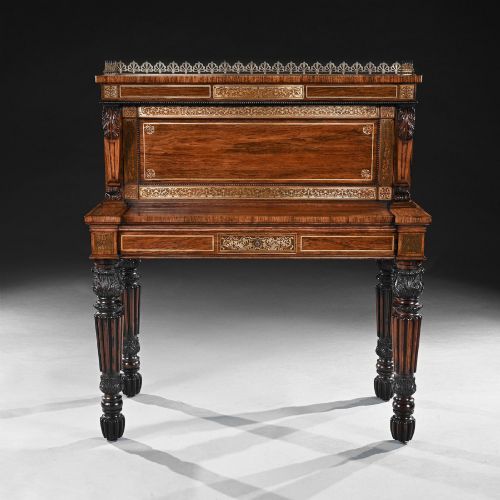
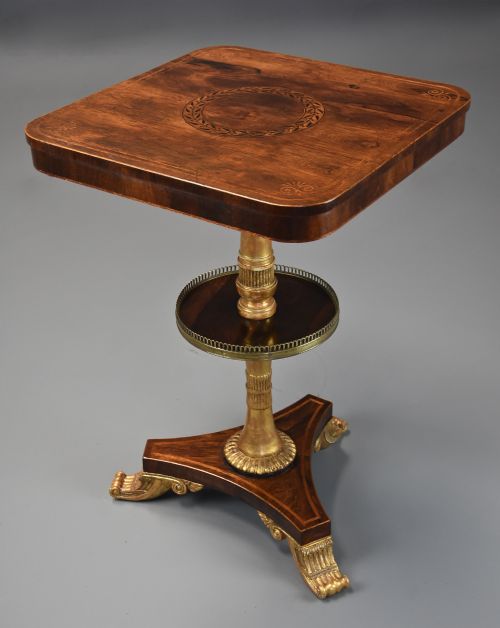
A regency brass marquetry table is a formal piece of furniture designed for drawing rooms and libraries during the early nineteenth century. These items include card tables, centre tables, sofa tables, and writing tables made from dense timbers.
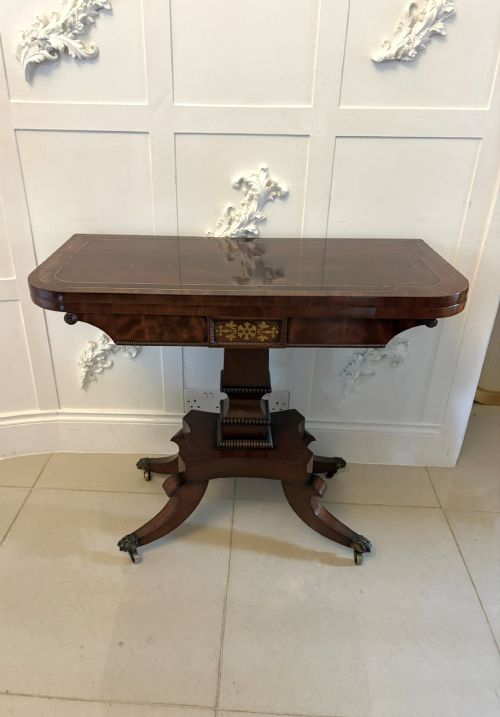
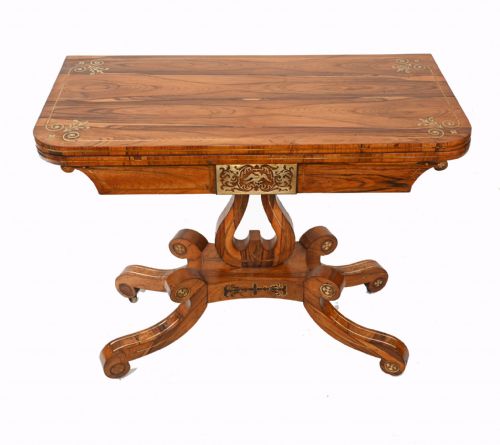
The version most commonly met on this page is the rosewood or mahogany card table featuring precise brass inlay along the top and edges. Such pieces date primarily from the Regency period proper, alongside later nineteenth century revivals.
Materials and Construction
Craftsmen built these tables using figured rosewood, flame mahogany, and occasionally satinwood or palisander over sturdy carcase timbers. They contrasted the dark grain of these exotic woods with bright brass inlay and brass handles.
Makers utilised precision sawing to cut delicate brass motifs and set them flush into the timber surfaces. Ormolu mounts and giltwood details frequently completed the decoration on higher status pieces.
Current listings feature rosewood, mahogany, and satinwood across card tables, centre tables, sofa tables, and mantel clocks.
Assessing Craftsmanship
Quality depends on the precision of the brass inlay work and the choice of timber veneer. Finer examples display tight, uniform botanical or geometric brass patterns embedded smoothly into highly figured rosewood.
The architectural proportions and the stability of folding mechanisms or pedestal bases distinguish superior workshop output from standard commercial production.
Gillows Oxford Street Workshop·George Bullock·Paul Philip Barraud·John MaClean·George Smith
The Regency Brass Marquetry Table Glossary
- Marquetry
- Decorative inlay using pieces of various materials fitted into a wood veneer to form patterns. On these tables, brass is the primary material set into wood.
- Card table
- A folding table designed for evening games with a top that opens to reveal a baize-lined surface. Many examples feature brass inlay along the frieze.
- Sofa table
- A long, narrow table traditionally placed in front of a sofa, typically fitted with small drop leaves and twin pedestals. These often incorporate brass stringing.
- Ormolu
- Gilded bronze used for decorative mounts and furniture feet. It provides a bright metallic accent alongside brass inlay.
- Fusee
- A conical pulley used in clock movements to maintain even power as the mainspring unwinds. This mechanism appears in mantel clocks listed alongside the tables.
Regency Brass Marquetry Table: Frequently Asked Questions
How were these tables used?
These tables served specific social functions in Regency rooms, acting as surfaces for card games, writing, or displaying ornaments. Centre tables stood free in the middle of a room, while card tables folded flat against a wall when not in use.
Sofa tables sat conveniently near seating, and work tables held sewing materials. Their diverse forms meant each room had a designated surface for polite domestic activities.
How do I spot a revival piece?
Revival pieces date from later periods such as the late nineteenth or early twentieth century, mimicking the earlier Regency aesthetic. They often utilise different secondary timbers and display machine-cut precision in their brass work.
Examining the construction methods underneath and the wear patterns on the wood helps distinguish an original Regency example from a later copy.
How do I care for brass inlay?
Brass inlay requires stable room humidity to prevent the surrounding wood from expanding or contracting and loosening the metal. Dust the surface regularly with a soft, dry cloth rather than using harsh liquid polishes.
Avoid placing these tables in direct sunlight or near heat sources, which can dry out the rosewood veneer and cause the brass to lift.
What woods were used?
Makers favoured dense, richly coloured timbers that provided a strong visual contrast to bright brass inlay. Rosewood and flame mahogany dominate the listings, offering deep grain patterns and varied figuring.
Occasional pieces utilise satinwood or palisander, reflecting the diverse global materials imported into Britain during the early nineteenth century.