



Round Brass Inlaid Table
A round brass inlaid table brings polished timbers and gleaming metalwork together in a compact form.
Round Brass Inlaid Table
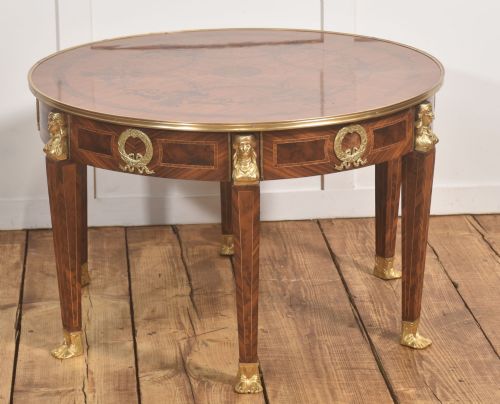
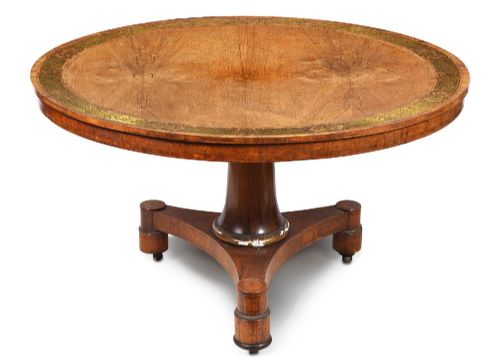
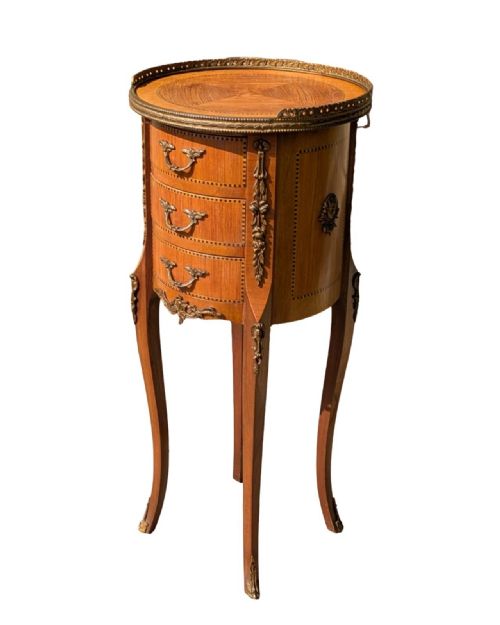
A round brass inlaid table spans centre tables, side tables, and occasional pieces originating across the nineteenth and early twentieth centuries. These tables frequently appear in styles such as Regency, French Neoclassical, and Victorian, showing circular tops supported by various timber structures.
The materials recorded across these examples include rosewood, mahogany, walnut, satinwood, and kingwood paired with brass. Pieces from the Regency period sit alongside later revivals and early twentieth-century interpretations.
Buyers will encounter forms ranging from breakfast tables and drum tables to small gueridons and games tables. Each version serves as a functional surface that highlights decorative timber veneers and metallic ornamentation.
How they were made
Cabinet makers utilised dense hardwoods like rosewood, mahogany, and walnut as the primary structural bodies for these pieces. Veneers and crossbanding in satinwood, kingwood, and lacewood were applied to timber bases to create patterned top surfaces.
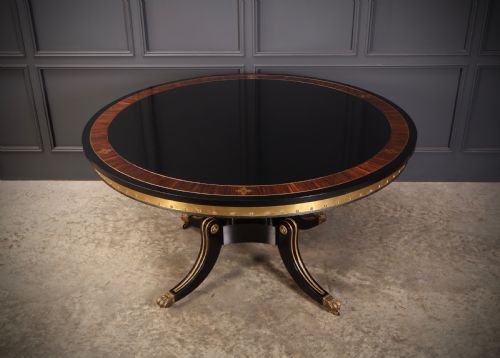
Craftsmen inlaid fine brass strips and motifs directly into the wooden surfaces, often following geometric or classical paths. Ebonised wood was also employed to contrast sharply against the bright metallic inlay.
Listings for a round brass inlaid table span the nineteenth century, the Edwardian era, and the nineteen-twenties, incorporating rosewood, mahogany, and ebonised wood.
What varies in quality
The refinement of the brass inlay work separates standard examples from superior ones. Tightly fitted metal lines and precise hand-cut motifs indicate greater skill in the workshop.
The choice and figuring of the timber veneers heavily influence the character of the piece. Richly grained rosewood, mahogany, and specimen woods combined with careful crossbanding elevate the overall presence of the table.
The Round Brass Inlaid Table Glossary
- Gueridon
- A small French round table supported by a central column or legs. These tables often feature decorative inlaid tops and served various functional purposes in domestic rooms.
- Crossbanding
- A border technique where thin strips of veneer are laid perpendicular to the grain of the central panel. This frames the top surface of the table with a contrasting timber grain.
- Ebonised
- Wood treated with a dark finish to imitate ebony. This dark surface creates a strong visual contrast against polished brass inlay.
- Bijouterie table
- A glass-topped display table designed for showing small valuable items. These pieces typically feature hinged glazed lids and lined interiors.
- Drum table
- A circular library table with a deep top resembling a drum. They often incorporate drawers around the perimeter and stand on a central pillar.
Round Brass Inlaid Table: Frequently Asked Questions
Where should I place a round brass inlaid table?
These pieces suit reception rooms, hallways, or drawing rooms where their circular tops can be viewed from all sides.
They function well as centre tables or occasional surfaces positioned away from walls to showcase the inlaid details.
How do I care for the timber and brass?
Maintain the wood with appropriate furniture waxes and avoid placing the table in direct sunlight.
Keep brass inlay clean using dry cloths and gentle polishing methods that do not disturb the surrounding timber.
What periods do these tables represent?
The selection includes genuine nineteenth-century pieces alongside later Regency revival models and early twentieth-century examples.
Stylistic influences stretch from French Neoclassical and Louis XVI designs to traditional English cabinet making.
Are all round brass inlaid tables antique?
The available pieces span from the early nineteenth century through to the early twentieth century.
Dates range across the Regency period, Victorian era, Edwardian period, and later twentieth-century revivals.