

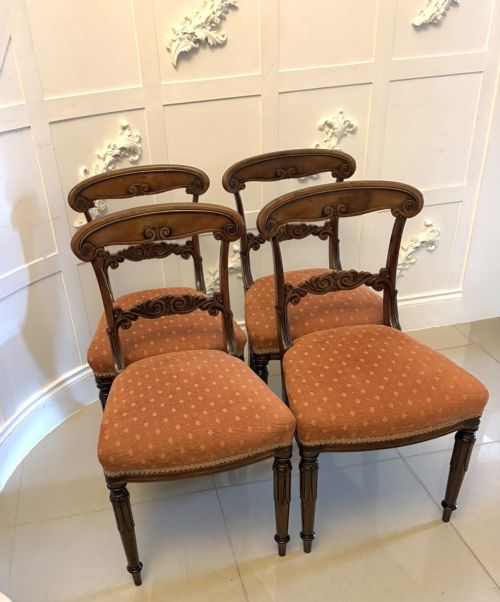
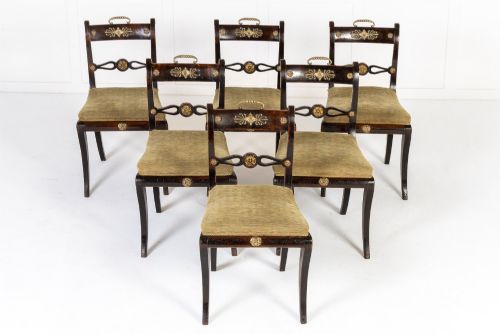
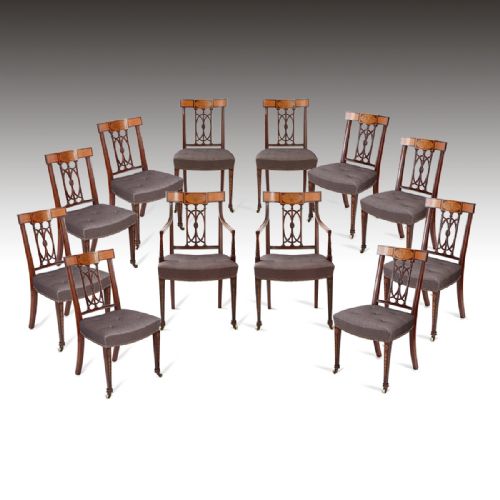

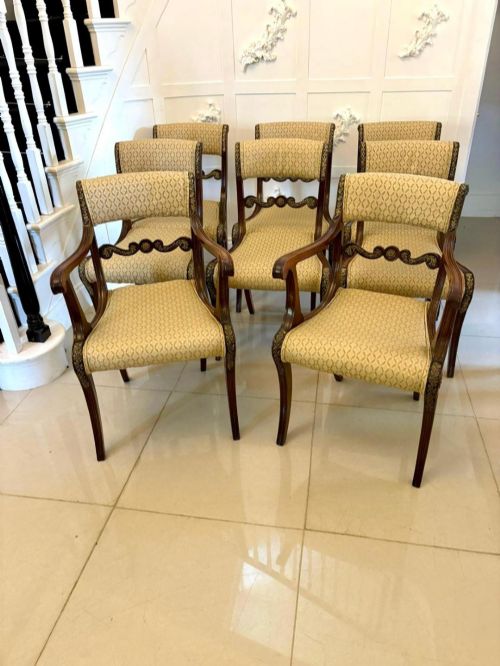
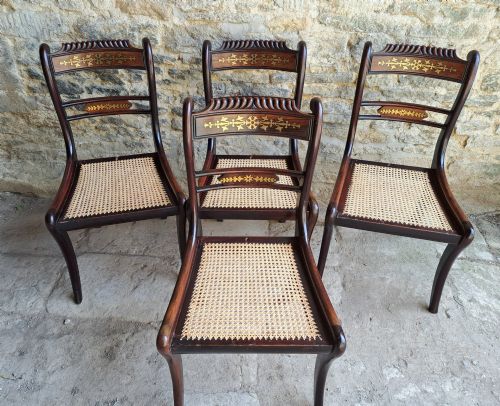


Regency Brass Inlaid Dining Chairs
Regency brass inlaid dining chairs bring striking classical elegance to a room through crisp brasswork set into rich rosewood or mahogany.
Regency Brass Inlaid Dining Chairs
Regency brass inlaid dining chairs are formal seating options originating from the early nineteenth century, encompassing distinct periods such as the Regency and Georgian eras. You will most frequently encounter sets of side chairs and elbow chairs constructed from woods like rosewood, mahogany, and satinwood.
The typical forms include sets ranging from pairs up to twelve chairs, designed to suit traditional dining spaces. These pieces combine classic silhouettes with decorative metalwork to create a refined appearance.
How they were made
Cabinetmakers utilised dense timbers such as mahogany, rosewood, and satinwood as the primary foundation for these chairs. Artisans then routed precise channels into the wooden surface to embed fine brass inlay.
Many examples incorporate upholstery and fabric finishes on the seats to provide comfort alongside decorative appeal. Faux rosewood graining also appears on specific frames to emulate exotic timbers.
Regency Brass Inlaid Dining Chairs Retail Price Guide 2026
Typical asking prices for regency brass inlaid dining chairs among the pieces listed under this phrase on Sellingantiques today, from the lower quarter to the upper quarter. They describe what is for sale here now, not the wider market.
The documented periods span the Regency era, Georgian period, and the nineteenth century.
What varies in quality
The sophistication of the brass inlay work and the choice of primary timber define the standard of execution. Pieces utilising richly grained rosewood or satinwood often represent higher levels of craftsmanship.
The completeness of matching sets and the precision of the joinery further distinguish the upper tier of these chairs from simpler variants.
JOHN GEE
The Regency Brass Inlaid Dining Chairs Glossary
- Regency
- A stylistic period spanning the early nineteenth century defined by classical restraint and archaeological influence. It draws heavily upon Greek, Roman, and Egyptian design motifs.
- Brass Inlay
- A decorative technique where thin strips of brass are fitted flush into carved channels within the wood. This method creates geometric or floral patterns across the surface of the timber.
- Rosewood
- A heavy, dark timber featuring pronounced figuring, prized for high-status furniture during the nineteenth century. Its rich natural grain enhances the visual impact of metal inlay.
- Elbow Chair
- A seating piece featuring supportive arms, often used as a companion to side chairs at the ends of a dining table. These are sometimes referred to as armchairs.
- Satinwood
- A pale, lustrous hardwood used for fine cabinetmaking and decorative inlay work. It provides a contrasting background for darker elements in classical furniture.
Regency Brass Inlaid Dining Chairs: Frequently Asked Questions
How were regency dining chairs used originally?
These chairs furnished formal dining rooms in wealthy households during the early nineteenth century. They were arranged around large dining tables for hosting guests at dinner.
Elbow chairs sat typically at the heads of the table for the host, while side chairs lined the sides. Their decorative brass inlay reflected candlelight during evening meals.
What woods are common in these chairs?
Mahogany and rosewood appear most frequently across the listed pieces, providing dark and durable frames. Satinwood and faux rosewood also feature in specific examples.
Cabinetmakers selected these dense timbers to support intricate brass inlay without splitting. The natural grain of the wood complements the polished metal details.
How do I care for brass inlaid chairs?
Keep wooden surfaces clean using a soft, dry cloth to remove dust. Avoid harsh chemical polishes that might loosen the brass inlay over time.
Maintain stable humidity levels in the room to prevent the timber from expanding or contracting. This protects both the wood and the embedded metalwork from shifting.
Are these chairs suitable for daily use?
These pieces function well for regular dining provided they receive gentle treatment. Their sturdy timber construction supports everyday seating requirements.
Consider the condition of the upholstery and joints before putting antique chairs into heavy service. Lighter use helps preserve the delicate brass details on older frames.