



Regency Brass Hearth Guard
These regency brass hearth guard pieces offer substantial metalwork and period character to domestic fireplaces, keeping hearths contained and refined.
Regency Brass Hearth Guard
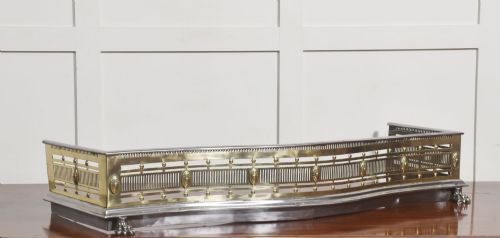
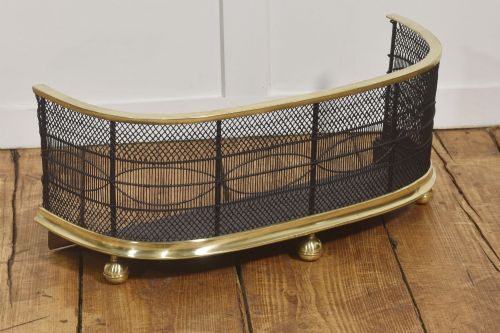
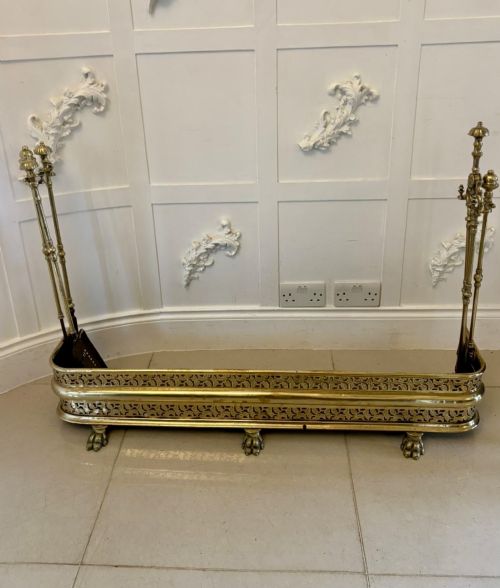
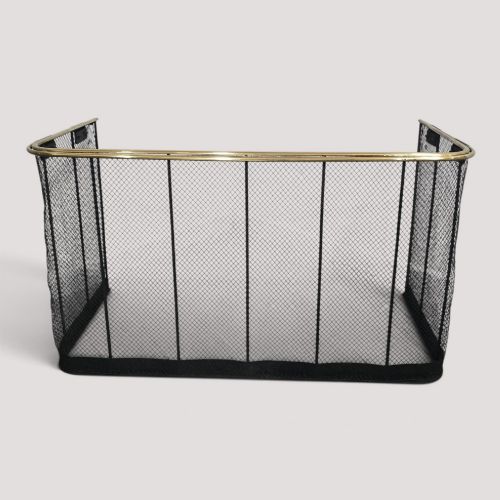
A regency brass hearth guard encompasses items associated with fireplace safety and decoration, including fenders, curbs, fireguards, and screens. These objects sit directly on the floor around the hearth to protect flooring from sparks and to frame the fireplace opening.
The versions most commonly met on this page span the 19th century, featuring predominantly brass and steel construction. Many examples incorporate woven iron wire, bronze, and sometimes rosewood or needlework panels, reflecting the broader scope of fireplace accessories from the period.
Stylistic influences range across Regency, Georgian, Victorian, William IV, and Neoclassical designs. Pieces often display specific decorative elements such as lions, brass garlands, and curved profiles designed to fit hearth spaces precisely.
How they were made
Makers utilised heavy cast brass, polished brass, and sheet metals combined with steel and iron wire to build robust frames. Metalwork techniques involved casting decorative components like garlands or animal figures and mounting them onto curved or straight structural bases.
Secondary materials such as rosewood appeared in pole screens, alongside woven iron wire for protective mesh barriers. Detailed metal elements demonstrate period manufacturing methods focused on durability and visual refinement around domestic fires.
Regency Brass Hearth Guard Retail Price Guide 2026
Typical asking prices for regency brass hearth guard among the pieces listed under this phrase on Sellingantiques today, from the lower quarter to the upper quarter. They describe what is for sale here now, not the wider market.
Listings feature items spanning the 19th century, incorporating brass, steel, iron, and rosewood.
What varies in quality
The distinction between standard examples and superior pieces rests on the weight of the metal and the crispness of the casting. Heavier brass structures with detailed ornamentation, such as lions or cast garlands, indicate higher standards of production.
Integration of secondary materials, including original fire irons or finely worked needlework panels, separates ordinary guards from exceptional items. The integrity of the original construction and the survival of secondary components define the tier of each piece.
The Regency Brass Hearth Guard Glossary
- Regency
- A British design period spanning the early 19th century, known for classical restraint and Neoclassical motifs. Pieces from this era often feature clean architectural lines and refined metalwork.
- Fender
- A low metal guard placed on the floor around the hearth. It prevents hot coals and sparks from rolling out onto the room's flooring.
- Curb
- An alternative term for a fender that forms a low barrier around the fireplace opening. These often sit directly on the hearthstone.
- Pole screen
- A standing screen with an adjustable panel mounted on a vertical pole. It was used to shield a person's face from the radiant heat of the fire.
- Wirework
- Metal mesh or woven wire constructed into panels for fireguards. This technique allowed heat to pass through while containing sparks.
Regency Brass Hearth Guard: Frequently Asked Questions
What is a regency brass hearth guard?
A regency brass hearth guard is a protective metal barrier placed in front of a fireplace to catch sparks and contain coal. These items include low floor fenders, curbs, and standing mesh guards.
They combine functional protection with decorative metalwork characteristic of nineteenth-century domestic interiors.
How were these metal guards used?
These guards were positioned directly on the hearthstone to create a boundary between open fires and the room. They prevented stray embers from damaging rugs and wooden floors.
Some variations, such as pole screens, were positioned to protect the face from intense radiant heat.
How do I identify a Regency period piece?
Regency pieces often display Neoclassical motifs, clean geometric shapes, and specific material combinations like polished brass and steel. Design cues include curved profiles and cast brass details.
Proportions tend to reflect classical architectural principles popular during the early nineteenth century.
How do I care for antique brass?
Antique brass requires gentle dusting and occasional cleaning with appropriate non-abrasive metal cleaners. Preserving the surface metal keeps the original patina intact.
Avoid harsh chemical dips that strip away the aged character accumulated over centuries.