



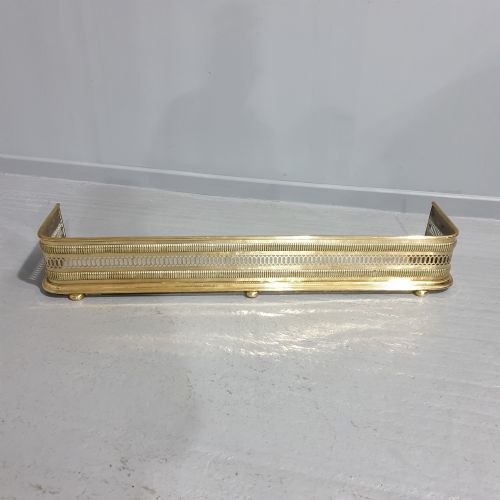
Regency Brass Hearth Fender
A regency brass hearth fender anchors the hearth with crisp neoclassical metalwork, shielding the room from falling embers while framing the fire.
Regency Brass Hearth Fender
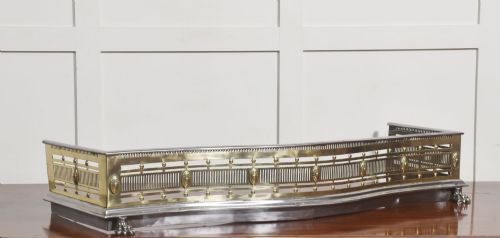
A regency brass hearth fender sits on the floor before an open fireplace, keeping stray coals contained within the hearth. These metal guards appear across nineteenth century, Georgian, and William IV periods, executed in brass, cast brass, bronze, and polished steel.
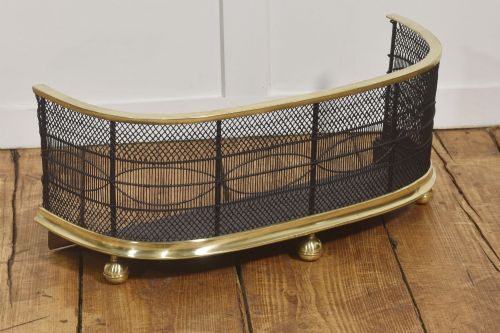
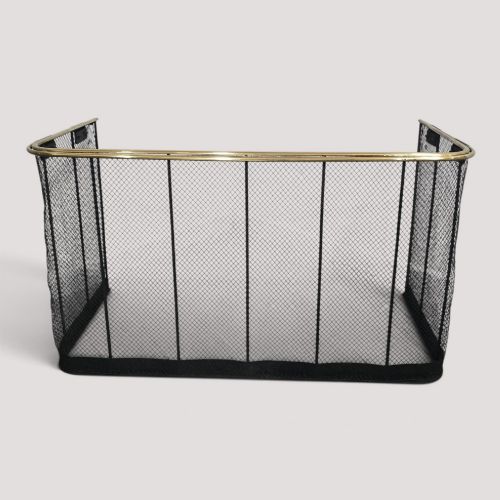
The versions most commonly met on this page span the nineteenth century and the Regency period itself, often taking curved forms or incorporating woven iron wire. Makers combined steel, iron, and brass to build sturdy kerb guards that stood up to daily fireside use.
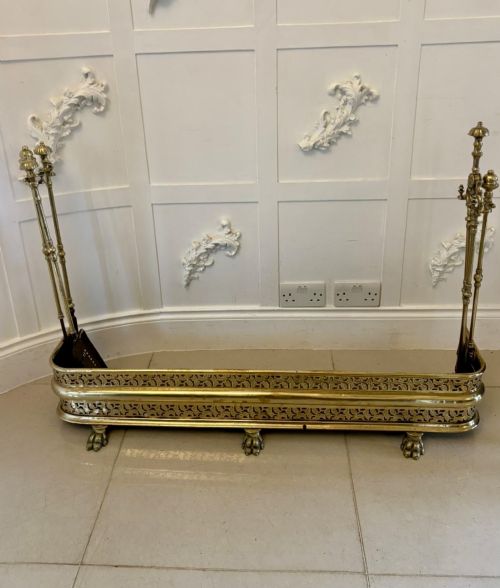
Certain pieces adopt neoclassical or grand Regency styling, whilst others feature decorative elements such as lions or brass garlands. The object types range from standard fireplace fenders to low fire guards designed for nineteenth century drawing rooms.
Materials and construction
Smiths constructed these fenders using solid brass, cast brass, and polished steel, frequently combining them with iron frames or woven iron wire panels. The heavy metal components were cast, hammered, and polished to create durable hearth boundaries.
Makers integrated bronze and gilt bronze mounts alongside steel structures, applying decorative garlands and cast lions to the primary brass framework. Woven wirework techniques allowed artisans to form flexible yet sturdy fire guards.
Regency Brass Hearth Fender Retail Price Guide 2026
Typical asking prices for regency brass hearth fender among the pieces listed under this phrase on Sellingantiques today, from the lower quarter to the upper quarter. They describe what is for sale here now, not the wider market.
Materials across the selection include brass, cast brass, iron, steel, polished steel, bronze, gilt bronze, and woven iron wire.
Assessing quality and craftsmanship
The distinction between ordinary and superior pieces lies in the crispness of the cast brass details and the heft of the metal. Heavier brass fenders with deeply chased garlands or well-defined lions demonstrate a higher grade of nineteenth century craftsmanship.
The integration of mixed metals, such as polished steel paired with bright brass, signals careful workshop assembly. Simpler wirework guards rely on neat joins and robust iron frames to maintain their shape over decades of use.
The Regency Brass Hearth Fender Glossary
- Kerb fender
- A low metal barrier that sits directly on the hearth stone around the perimeter of an open fire. It prevents hot coals from rolling onto the floorboards.
- Woven iron wire
- Metal strands interlaced to form a mesh screen panel. This technique created lighter fire guards that still blocked flying sparks.
- Polished steel
- Iron alloy treated and burnished to a bright, reflective finish. It provides a stark contrast against warm yellow brass components.
- Neoclassical
- A design style inspired by classical Greek and Roman art. It manifests in these fenders through symmetrical geometry and classical motifs.
- Gilt bronze
- Bronze metal coated with a thin layer of gold or gold-coloured alloy. It adds a rich, uniform metallic lustre to decorative mounts.
Regency Brass Hearth Fender: Frequently Asked Questions
What is a regency brass hearth fender used for?
These metal guards sit on the hearth stone around an open fireplace to contain burning embers and rolling logs. They protect carpets and floorboards from stray sparks while completing the decorative arrangement of the fireplace.
In nineteenth century rooms, they also served as a physical boundary that kept furniture at a safe distance from the active heat of the fire.
How do I measure for a hearth fender?
Measure the width and depth of your fireplace opening and hearth stone to ensure the metal kerb fits comfortably within the space. Allow sufficient clearance for fire irons and ash pans if they sit inside the boundary.
Curved and straight fenders require careful floor measurements so the ends align properly with the brickwork or marble of the fireplace surround.
How do I clean and polish an antique brass fender?
Dust the metal regularly with a dry cloth and apply a mild, non-abrasive brass cleaner sparingly if tarnish builds up. Avoid aggressive scouring pads that can scratch the original surface patina of nineteenth century brass.
Steel components require separate attention with a light oil or dry protectant to prevent rust from forming in damp rooms.
How can I tell a Regency fender from a Victorian one?
Regency and Georgian pieces typically display restrained neoclassical lines, crisp casting, and harmonious material pairings like brass and polished steel. Victorian examples often introduce heavier ornamentation, such as cast lions and elaborate garlands.
Examining the construction methods, such as hand-cut joinery versus later mass-produced casting, helps clarify the period of manufacture.