




Regency Brass Armchair
A regency brass armchair brings classical proportion and striking metalwork into a room, combining the warmth of mahogany or rosewood with fine inlay.
Regency Brass Armchair
A regency brass armchair is a formal seating piece defined by the neoclassical lines of the early nineteenth century. Buyers searching this phrase meet library armchairs, bergères, and elbow chairs constructed during the Regency, George IV, and William IV periods.
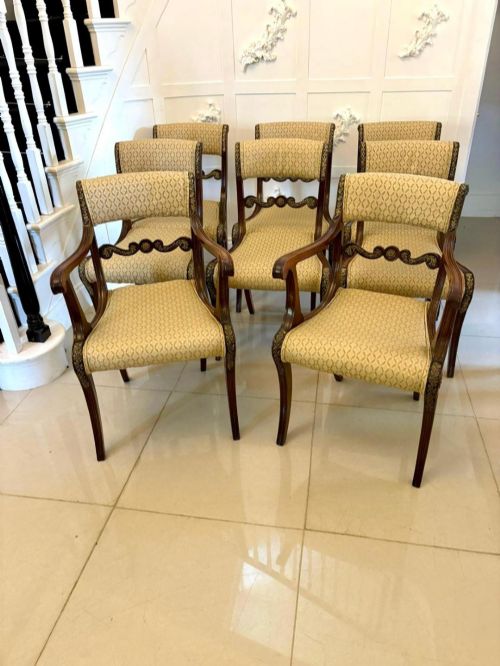
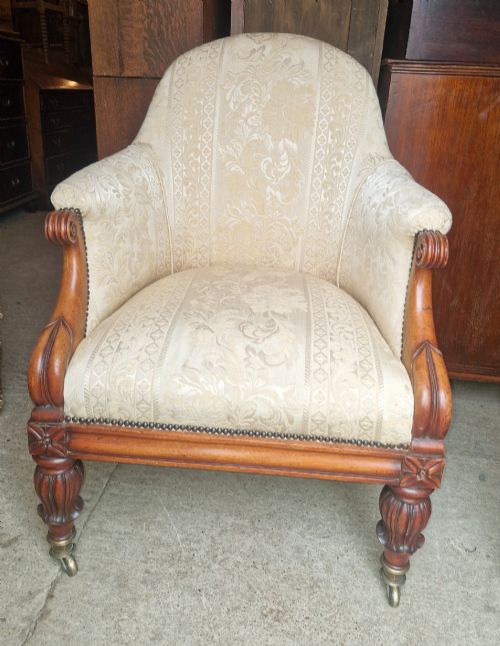
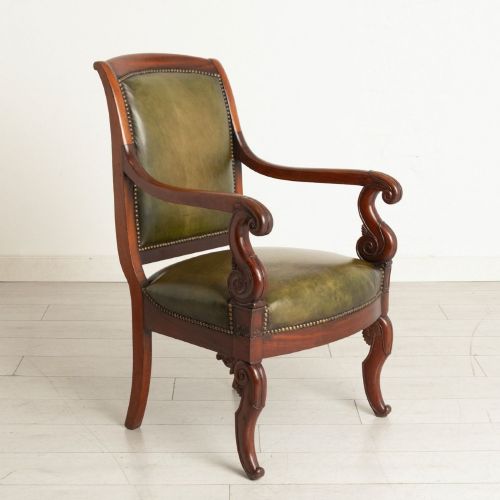
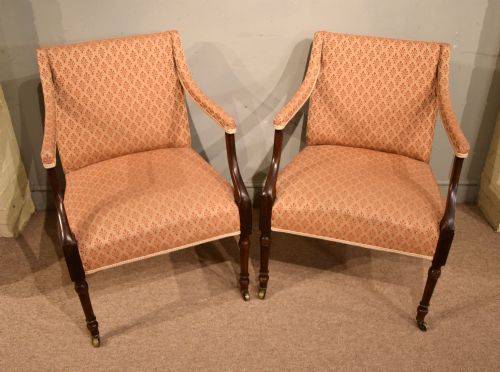
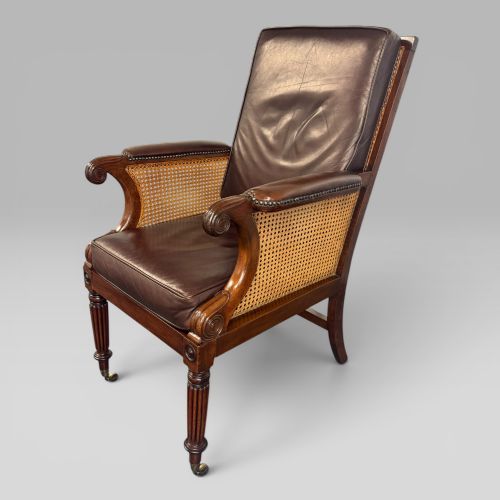
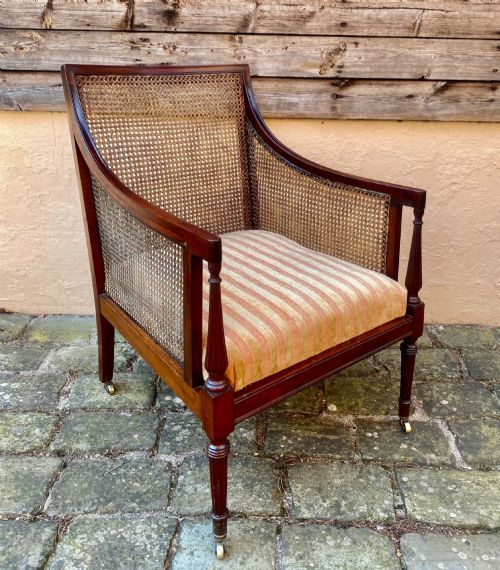
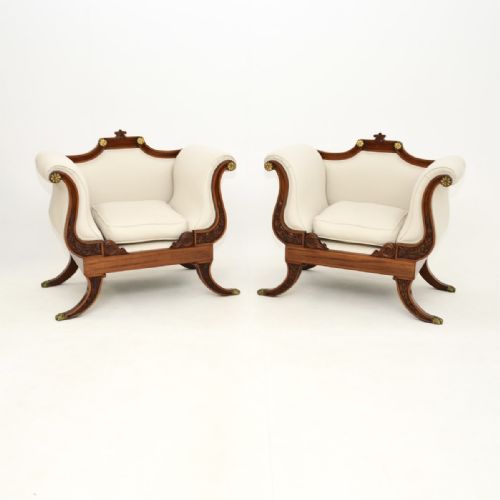
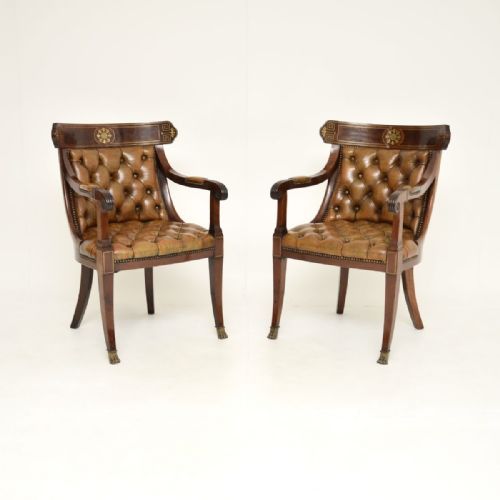
The primary forms found in these listings include library chairs with leather pads, caned bergères designed for sitting with loose cushions, and open elbow chairs intended for desks or occasional use. Mahogany dominates the selection, accompanied by examples in rosewood and satinwood.
Most pieces date from the nineteenth century, though the archive and current listings also hold later interpretations from the twentieth century built in the Regency style. Makers such as Gillows, Daws, and Miles & Edwards appear alongside unsigned workshop pieces.
How They Were Made
Cabinetmakers built these frames from dense tropical hardwoods like mahogany and rosewood, often turning to satinwood for lighter contrasting veneers. Timber selection provided a stable foundation capable of supporting slender reeded legs and curved arms.
Brass formed an integral decorative vocabulary through finely cast mounts, rosettes, and inlaid stringing channels cut directly into the wood surfaces. Metal inlay followed classical motifs such as anthemia, lines, and scrollwork across the top rails and splats.
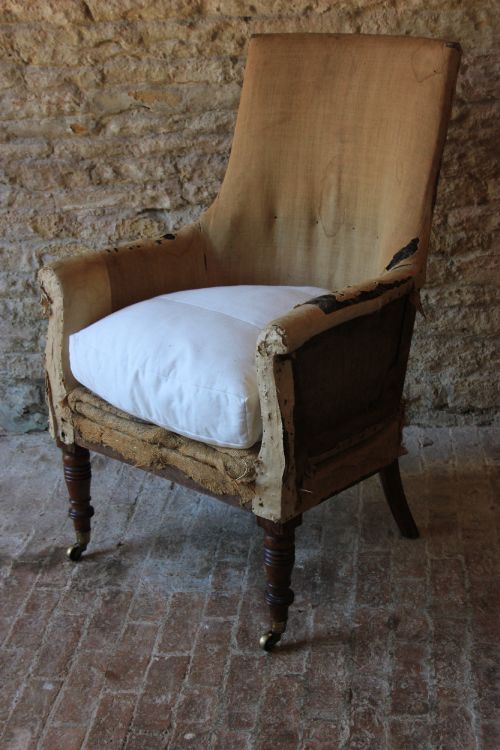
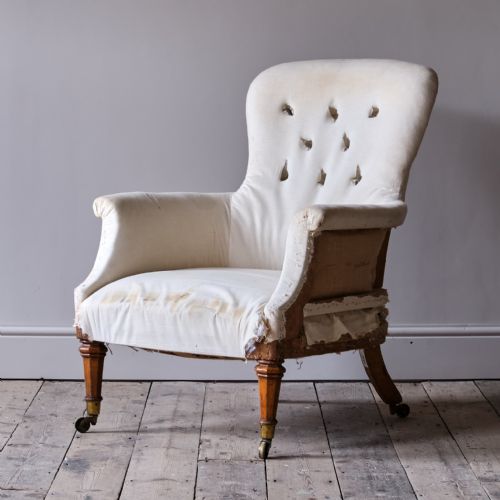
Upholstery relied on traditional stuffing techniques using materials like horsehair beneath leather, velvet, calico, or hessian covers. Caning was woven tightly through drilled frame margins to create supportive seats and backs for bergère models.
Listings for this phrase feature pieces spanning the 19th century alongside later 20th century interpretations in mahogany, rosewood, and satinwood.
What Varies in Quality
Carving depth and sharpness define the architectural detailing on arms, reeded legs, and lyre fronts. Crisp hand-chased mounts and finely turned wooden components indicate workshop standards closer to prominent makers like Gillows.
Structural integrity depends on the original joinery remaining tight within the hardwood frame. Chairs retaining their early or primary timber surfaces without heavy structural alteration hold greater integrity.
Gillows·Daws·Miles & Edward’s
The Regency Brass Armchair Glossary
- Bergère
- An enclosed upholstered armchair with caned back and sides, commonly fitted with loose down cushions. This form offered lighter seating during the Regency period.
- Reeded
- A decorative moulding formed of parallel convex semicircular rows resembling bundled reeds. Cabinetmakers used this detail extensively on chair legs and arm supports.
- Trafalgar chair
- A distinctive chair type featuring a sabre leg and often a panel back incorporating naval or classical motifs. These models frequently display brass inlay.
- Lyre front
- An open chair arm support or splat shaped in the profile of a classical stringed musical instrument. This motif appears frequently on library and desk armchairs.
- Simulated rosewood
- A painted or stained surface treatment applied to a cheaper timber such as beech or birch to imitate expensive rosewood grain. Artisans used this method to achieve rich dark tones.
Regency Brass Armchair: Frequently Asked Questions
Where were these armchairs placed?
These armchairs served primarily in formal rooms like libraries, studies, and drawing rooms where reading and conversation took place. Library bergères provided comfortable seating for long hours of study, while lighter elbow chairs served at desks or dressing tables.
Their decorative backs and inlaid brass work meant they looked correct viewed from any angle in an open room. They functioned as both practical seating and architectural statements of wealth.
How do I care for leather and wood?
Maintenance requires keeping leather conditioned with appropriate wax or balm to prevent cracking while avoiding direct sunlight that fades mahogany and rosewood. Gentle dusting with a dry cloth preserves the polished surface without harming the brass inlay.
Harsh chemical cleaners should stay away from both the wood polish and the metal components. Maintaining stable room humidity protects the timber joints from loosening over time.
Are these chairs comfortable for daily use?
Many examples offer surprising support, particularly bergères designed with sprung or webbed seats meant for extended sitting. Original padding relied on horsehair which tends to feel firmer than modern foam.
Library armchairs with leather upholstery provide a sturdy, upright seat suited to desk work or reading. Comfort depends largely on the condition of the internal webbing and padding.
How can I tell a regency piece from later copies?
Early nineteenth-century pieces display hand-cut joinery, old timber shrinkage patterns, and brass inlay set flush by hand into individual channels. Construction methods utilised solid mahogany or rosewood frames rather than modern engineered woods.
Later Victorian or twentieth-century revivals often show machine precision in their brass channels and different secondary woods underneath. Examining the underside and joint construction reveals the true age of the frame.