



Regency Bottle Cooler
A regency bottle cooler stands ready to chill wine at the dining table, combining rich timber and metal liners for formal hospitality.
Regency Bottle Cooler
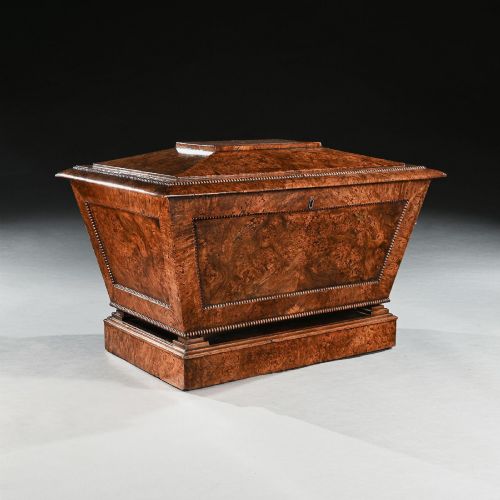
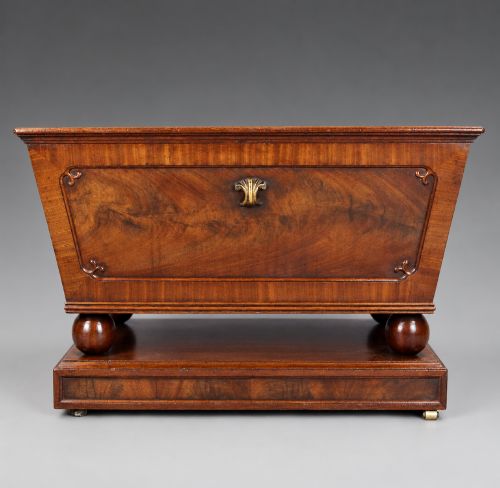
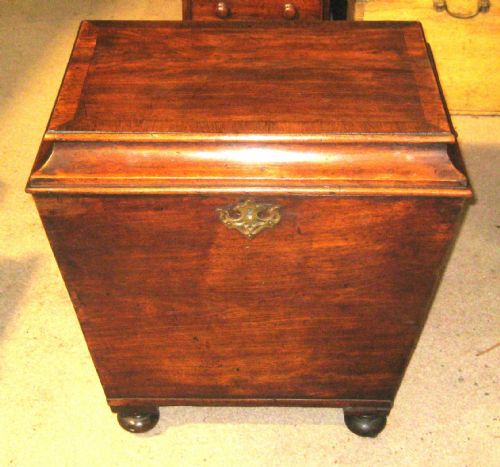
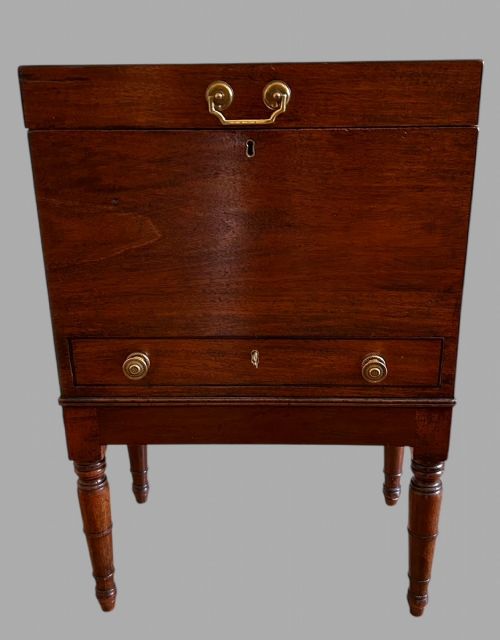
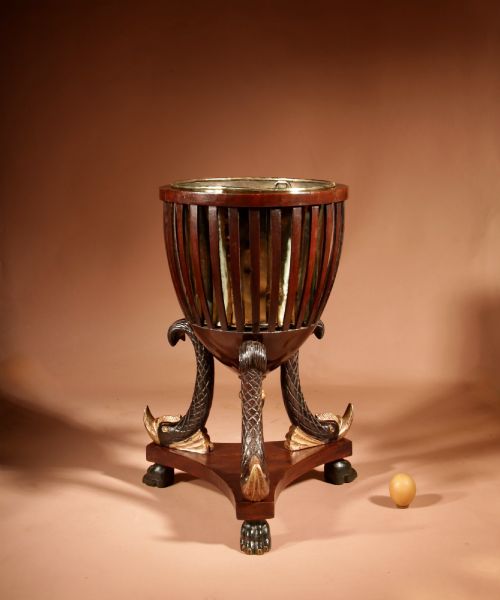
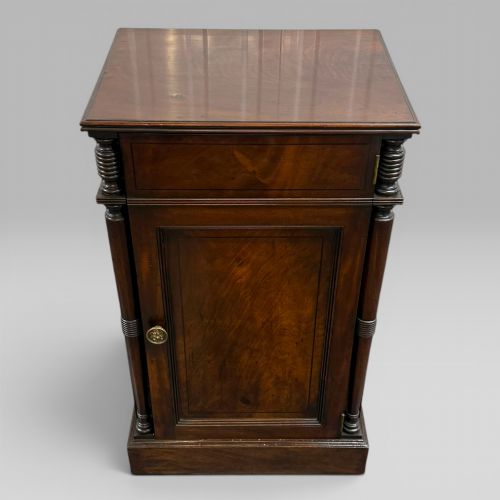
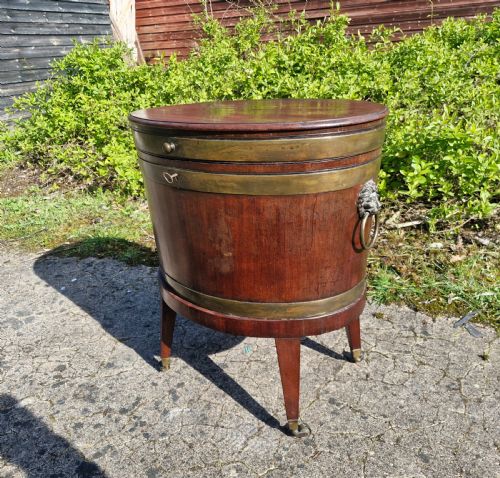
A regency bottle cooler serves to chill wine and hold bottles during formal dining occasions. The pieces available combine forms such as the sarcophagus shape, oval champagne buckets, and box cellarettes.
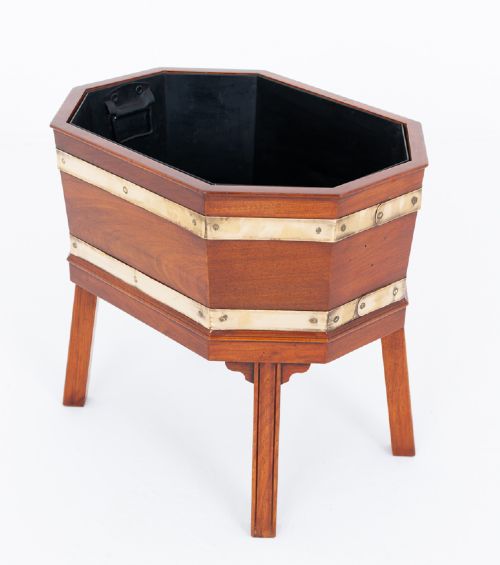
Makers of the period drew upon Georgian and French Empire styles, employing proportions suited to grand dining rooms. Mahogany dominates the selection, frequently paired with brass bands and zinc or copper linings.
Materials and Technique
Cabinet makers utilised solid mahogany and flame mahogany veneers over secondary timbers, often accenting the construction with brass mounts, handles, and binding. Pollard oak and ebonised wood also appear among the examples.
Internal compartments required metal linings in copper, zinc, or Old Sheffield plate to hold ice and water safely without damaging the surrounding woodwork. Japanned tin-ware represents alternative metalworking traditions used for these vessels.
Regency Bottle Cooler Retail Price Guide 2026
Typical asking prices for regency bottle cooler among the pieces listed under this phrase on Sellingantiques today, from the lower quarter to the upper quarter. They describe what is for sale here now, not the wider market.
Some nineteenth-century drinkers needed a sturdy brass-bound box just to keep their claret from turning warm.
Judging Quality
Excellence rests upon the figure of the mahogany veneer, the crispness of brass detailing, and the integrity of the internal metal liner. Patina developed across the timber over centuries signals proper age and care.
Proportion and structural harmony separate superior pieces from simpler boxes. Attribution to known makers like Gillows elevates the standing of specific examples.
Gillows·Maples and Co·Charles Heathcote Tatham
The Regency Bottle Cooler Glossary
- Cellarette
- A cabinet or box designed to hold bottles of wine near the dining table. They frequently feature internal divisions or metal liners.
- Sarcophagus
- A coffin-shaped box form popular during the Regency period for wine coolers and cellarettes, often featuring paw feet and carved details.
- Old Sheffield Plated
- A composite material made by fusing a layer of silver to a copper base, common in early wine cooling equipment.
- Japanned
- A European imitation of East Asian lacquerwork, applied as a decorative finish on tin-ware wine coolers.
- Flame Mahogany
- Timber cut from the fork of the mahogany tree to produce a distinctive flickering flame pattern in the grain.
Regency Bottle Cooler: Frequently Asked Questions
What is a regency bottle cooler?
A regency bottle cooler is a specialised container built to keep wine bottles chilled at the dining table during the nineteenth century. These vessels combined fine cabinet-making with functional waterproof interiors.
Craftsmen shaped them as sarcophagi, oval buckets, or pedestal boxes using dense hardwoods and metal liners. They allowed hosts to serve wine at the correct temperature without leaving the dining room.
How were cellarettes used?
Cellarettes stood beneath sideboards or beside dining tables to store wine bottles before they were served to guests. The interior compartments held ice alongside the bottles to maintain low temperatures.
Servants retrieved the wine as needed during long meals, keeping the dining procedure smooth and formal. Their sturdy construction supported the heavy weight of wet ice and glass bottles.
How do I identify a Regency period piece?
Regency pieces display neoclassical design influences, including architectural motifs, brass lion paw feet, and heavy brass ring handles. The timber choice leans heavily towards figured mahogany and flame mahogany veneer.
Construction methods such as hand-cut dovetails and original metal liners help confirm the period. Makers often incorporated classical geometry into the sarcophagus or box forms.
Can I still use an antique wine cooler?
Antique wine coolers can hold bottles for display, though original metal linings may develop leaks over time if filled directly with loose ice. Placing a modern waterproof container inside protects the historic timber.
Careful placement away from direct heat sources preserves the polish and prevents the mahogany from splitting. Regular waxing maintains the patina built up over generations.