



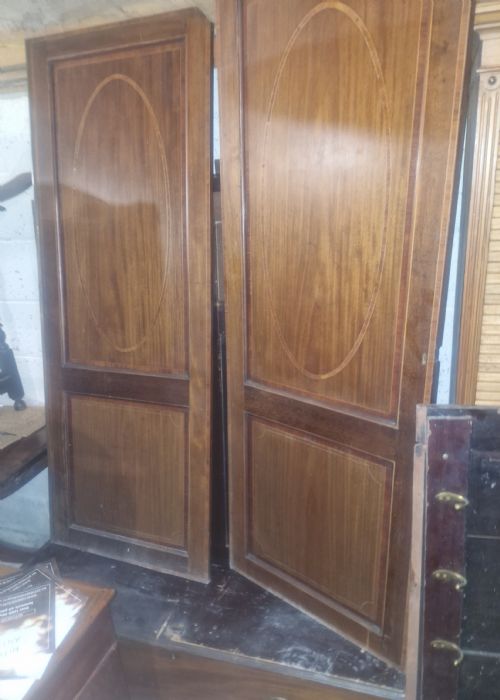
Regency Armoire
A regency armoire brings architectural dignity and deep timber grain to a bedroom, offering substantial storage disguised as classic furniture.
Regency Armoire
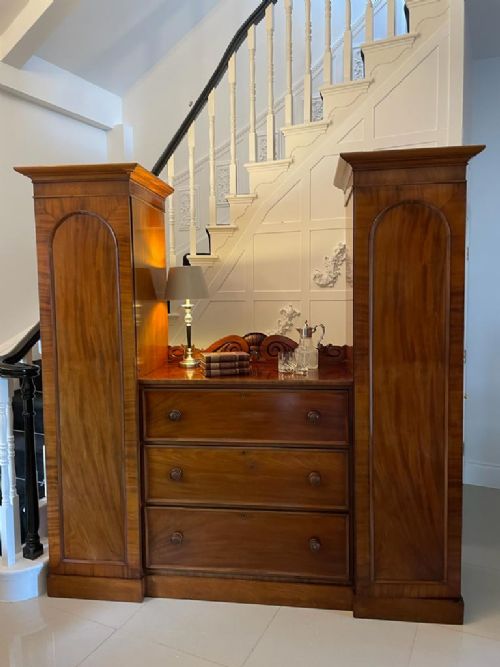
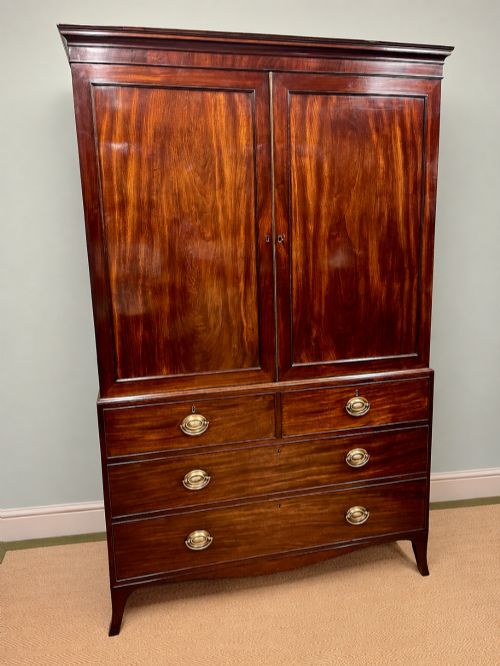
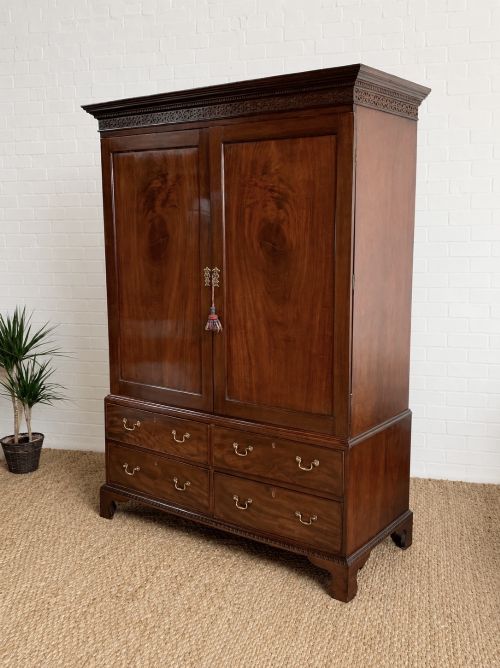
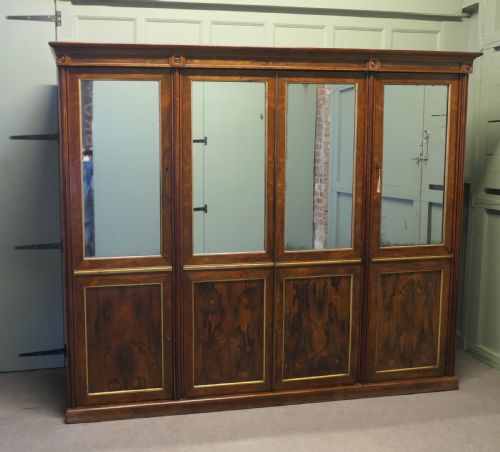
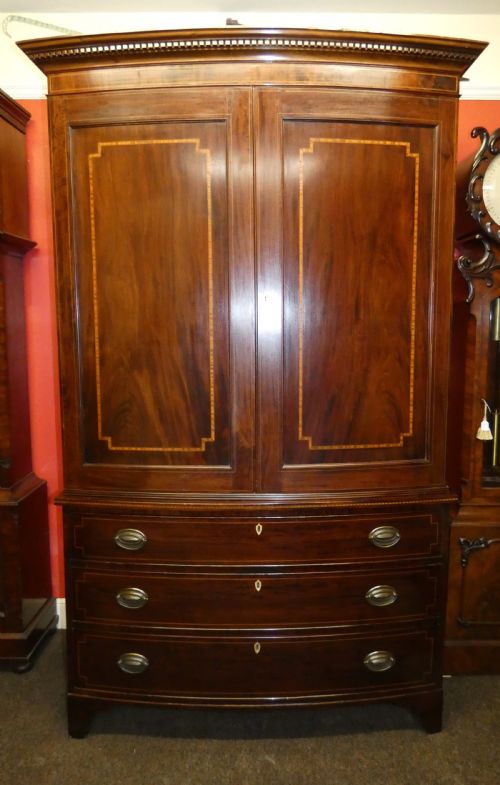
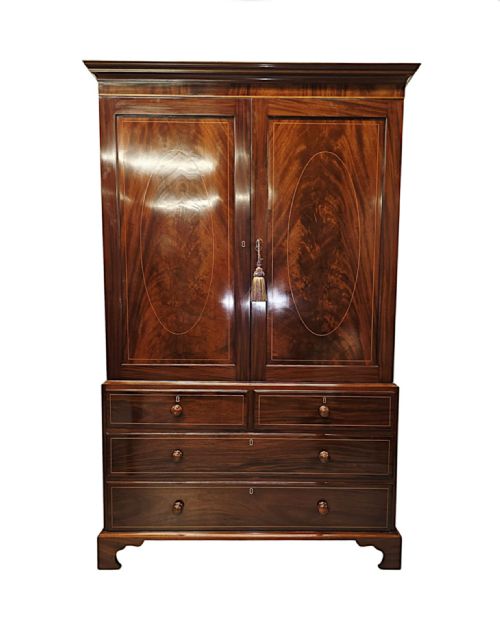
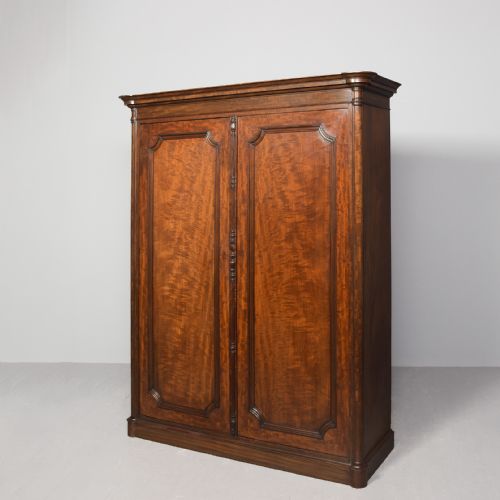
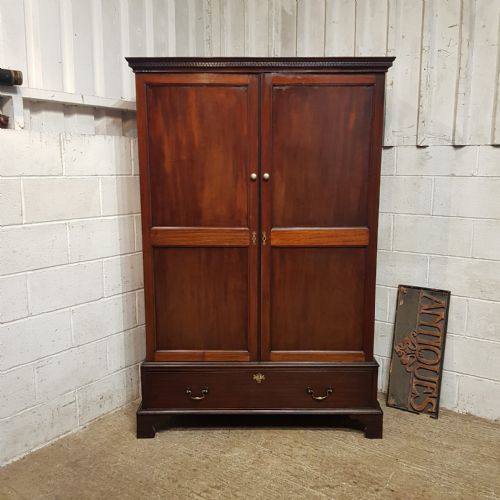
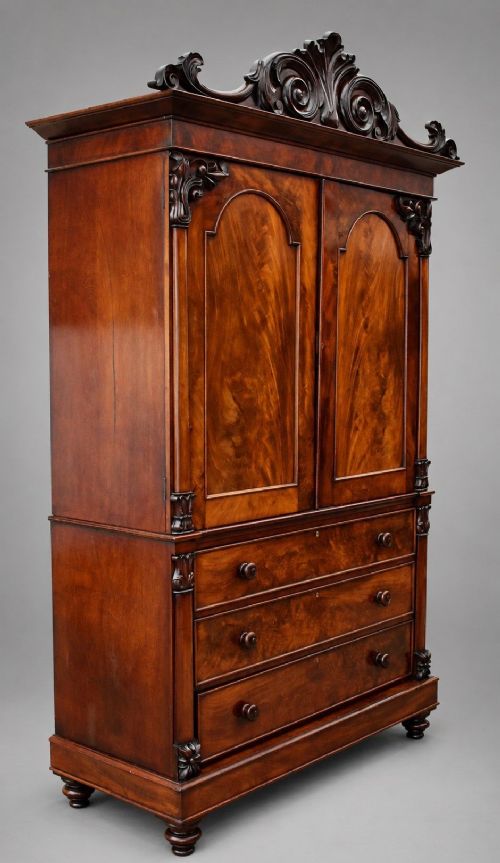
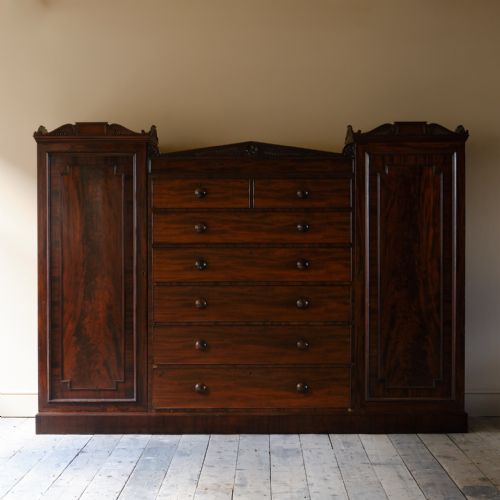
When searching for a regency armoire, buyers encounter grand case pieces designed for serious clothing storage, most frequently appearing as mahogany linen presses, compactums, and double wardrobes from the nineteenth century.
The pieces on this page span the Georgian, Regency, William IV, and George IV periods, featuring substantial timber carcases that often combine hanging space with linen slides behind panelled doors.
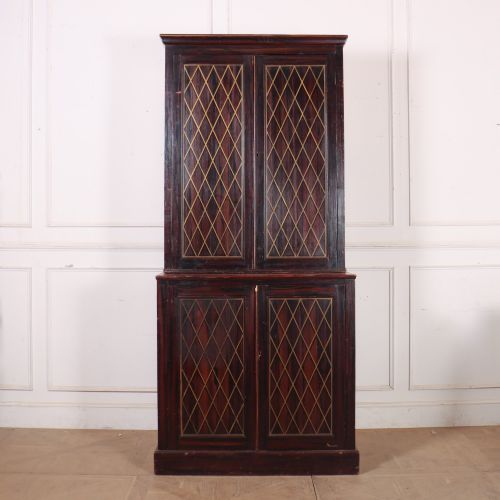
Regional variations emerge across the selection, from country house pieces to Channel Island hall wardrobes and Irish interpretations, reflecting the breadth of nineteenth-century cabinet making.
Materials and construction
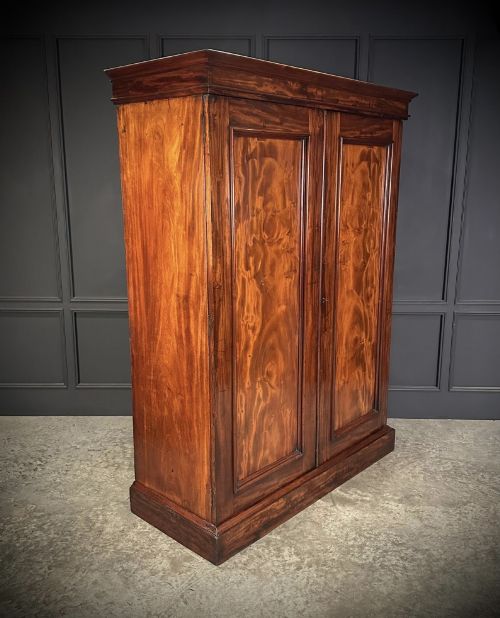
Cabinet makers relied primarily on solid mahogany and flame mahogany veneer, selecting figured timber for maximum visual impact on the primary doors and drawer fronts.
Secondary timbers such as pine and oak form the internal drawer linings and structural carcases, while brass fittings provide functional hardware and decorative detail.
Inlay work in satinwood and fine stringing punctuates the dark mahogany surfaces, demonstrating precise joinery and attention to surface ornament.
Regency Armoire Retail Price Guide 2026
Typical asking prices for regency armoire among the pieces listed under this phrase on Sellingantiques today, from the lower quarter to the upper quarter. They describe what is for sale here now, not the wider market.
Some gentlemen's wardrobes from this era include clever internal compartments designed to store top hats safely out of harm's way.
Quality variations
The distinction between standard and exceptional pieces rests upon the selection of the mahogany veneer, with symmetrical flame patterns commanding greater visual presence than plain boards.
Refinement in architectural details, such as blind fretwork cornices and crisp inlay, separates ordinary utility cupboards from pieces commissioned for prominent country houses.
S and H Jewell
The Regency Armoire Glossary
- Linen press
- A tall piece of furniture featuring upper doors enclosing sliding trays for folded textiles, placed above a chest of drawers.
- Compactum
- A multi-compartment wardrobe designed to offer hanging space, drawers, and linen shelves within a single integrated carcase.
- Flame mahogany
- Timber cut from the fork of the mahogany tree to produce a dramatic, flickering grain pattern across wide door panels.
- Blind fretwork
- Carved ornamentation applied to a flat surface in geometric or interlaced patterns without piercing right through the wood.
- Breakfront
- A piece of furniture where the central section projects forward from the flanking outer wings to create architectural depth.
Regency Armoire: Frequently Asked Questions
What is a regency armoire used for?
These pieces serve primarily as substantial bedroom wardrobes and linen storage units, combining hanging space with internal drawers or sliding shelves.
They offer a practical solution for modern clothing storage while retaining the imposing architectural presence of the nineteenth century.
What timber was used for these cabinets?
Mahogany is the dominant timber, frequently utilised as flame mahogany veneer to create striking decorative patterns on the main exterior surfaces.
Secondary woods like oak and pine appear inside drawer carcases and structural frames, accompanied by satinwood inlay and brass hardware.
How do I fit a large armoire into a modern bedroom?
Measure ceiling height and floor space carefully, remembering that these pieces often dismantle into a cornice, base, and central carcase for transport.
Position them away from direct heat sources to protect the mahogany timber and historical veneer work.