
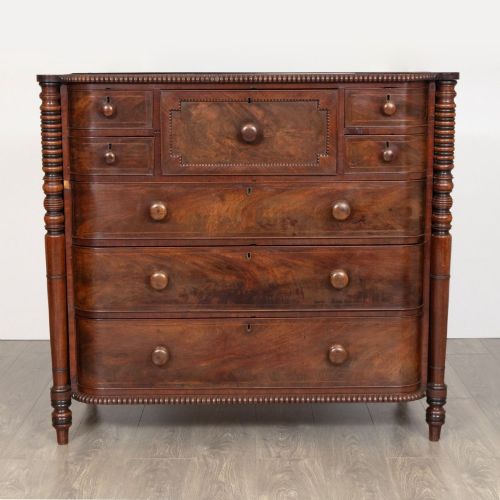
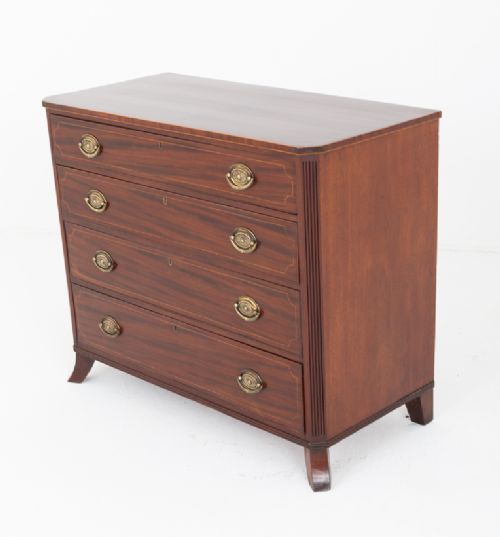


Reeded Mahogany Dresser
A reeded mahogany dresser offers refined lines and rich timber, bringing practical storage and distinct period character to any interior.
Reeded Mahogany Dresser
A reeded mahogany dresser typically presents as a chest of drawers or a library desk dating from the Georgian, Regency, or Victorian eras. These forms showcase the rich figuring of mahogany and flame mahogany veneer, often enhanced by finely turned brass hardware and oak secondary timbers.
Buyers encountering this search phrase will most frequently find traditional chests of drawers featuring bow fronts and linear reeding. Pieces range from formal Regency designs to Scottish Regency and Edwardian interpretations, reflecting enduring domestic utility.
Materials and construction
Cabinetmakers utilised solid mahogany and flame mahogany veneers over sturdy oak drawer linings and carcases. The characteristic reeding was meticulously carved directly into the solid timber framing or applied as delicate mouldings.
Metalwork played a key role, with cast brass handles and escutcheons fitted to secure the drawers. Expert joinery techniques, including dovetail construction, ensured structural longevity across decades of daily use.
The current listings demonstrate a strong representation of Regency and Edwardian periods, utilising solid mahogany, oak, and leather.
Judging the standard
Superior examples display exceptional selection in flame mahogany veneers, where grain patterns mirror symmetrically across the drawer fronts. The crispness of the reeded carving and the tightness of the dovetail joints indicate the skill of the original workshop.
Lower tiers often show simpler secondary timbers, worn veneer surfaces, or replacement hardware that disrupts the period integrity. The overall harmony of proportions and the weight of the timber separate standard utility items from higher status examples.
Gillow & Co.·Morison & Co
The Reeded Mahogany Dresser Glossary
- Reeding
- Parallel, convex mouldings carved into wood to create a textured, decorative surface. This technique adds vertical or horizontal linear emphasis to furniture frames and drawer surrounds.
- Flame mahogany veneer
- A thin slice of timber cut from the fork of the mahogany tree, prized for its dramatic, flickering grain pattern. Cabinetmakers laid this veneer over stable secondary woods to create decorative facades.
- Bow front
- A convex, outwardly curved front elevation typical of many period chests of drawers. This curved profile softens the boxy geometry of case furniture.
- Secondary wood
- The internal timber used for drawer linings, backboards, and carcase framing where appearance matters less than stability. Oak and pine frequently served this structural purpose in British cabinetmaking.
Reeded Mahogany Dresser: Frequently Asked Questions
What is a reeded mahogany dresser?
A reeded mahogany dresser refers to case furniture featuring textured carved mouldings and rich mahogany surfaces. The listings for this search term primarily comprise chests of drawers and library desks.
These pieces combine decorative reeding with practical storage compartments, serving as functional focal points in bedrooms and studies alike.
How do I date a mahogany chest?
Dating relies on examining construction methods, hardware styles, and overall aesthetic proportions. Regency and Georgian pieces often display hand-cut dovetails and specific bracket feet.
Later Edwardian and Victorian interpretations may incorporate machine-sawn elements alongside traditional joinery techniques, reflecting the manufacturing standards of their era.
Where were these pieces used?
These items originated in domestic bedrooms, formal dressing rooms, and libraries across Britain. They provided secure storage for garments, linens, and personal documents.
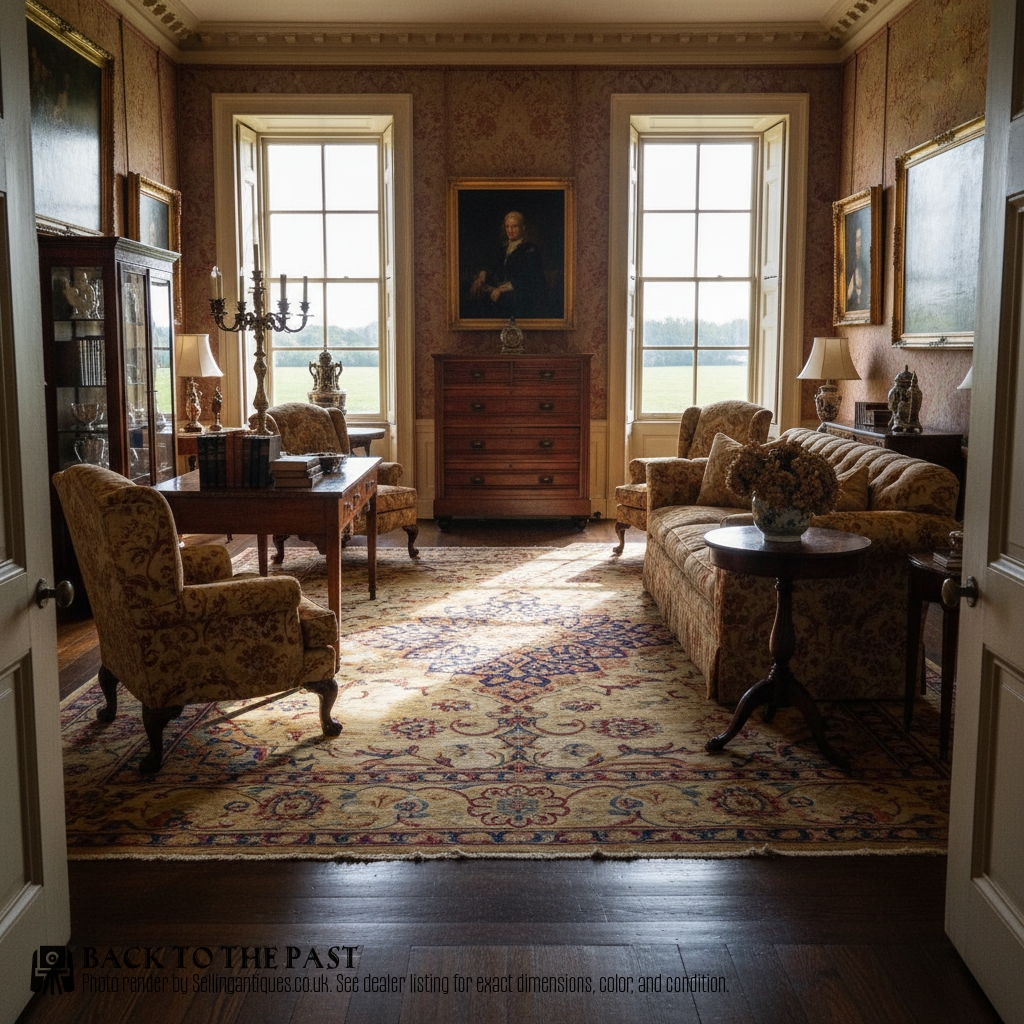
Today, they transition easily into modern hallways, living rooms, and bedrooms, offering surface display space alongside deep drawer storage.
How do I care for mahogany furniture?
Maintenance involves keeping the timber away from direct sunlight and rapid temperature fluctuations to prevent veneer cracking. Regular dusting with a soft, dry cloth preserves the polished finish.
Occasional application of appropriate wax nourishes the timber and maintains the natural lustre of the flame mahogany grain without building up heavy residue.