


Reeded Mahogany Carver
A reeded mahogany carver brings architectural lines and rich timber tones to a dining table or desk.
Reeded Mahogany Carver
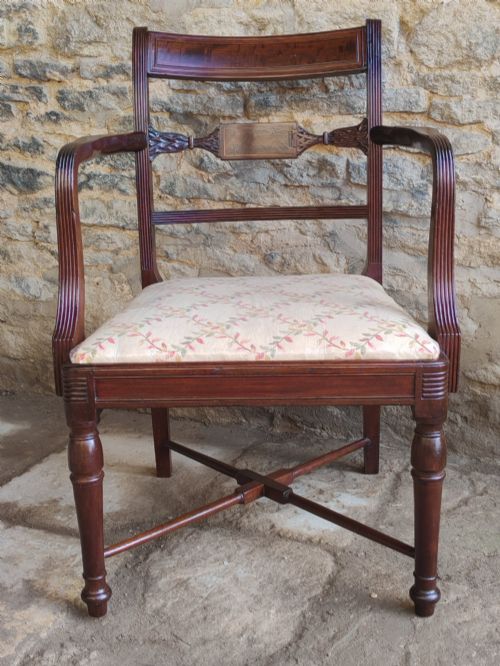
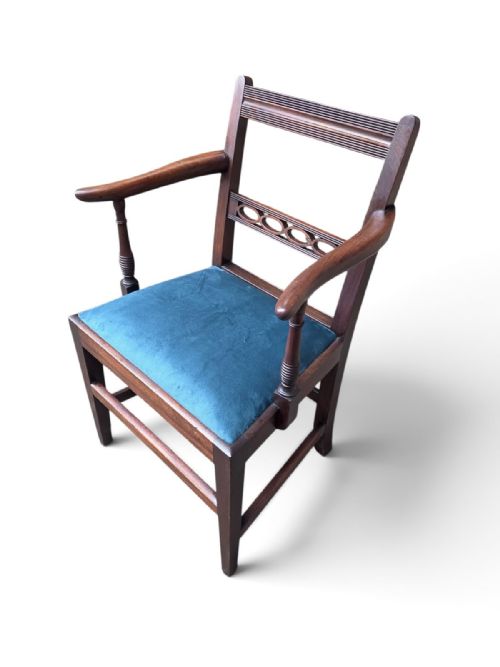
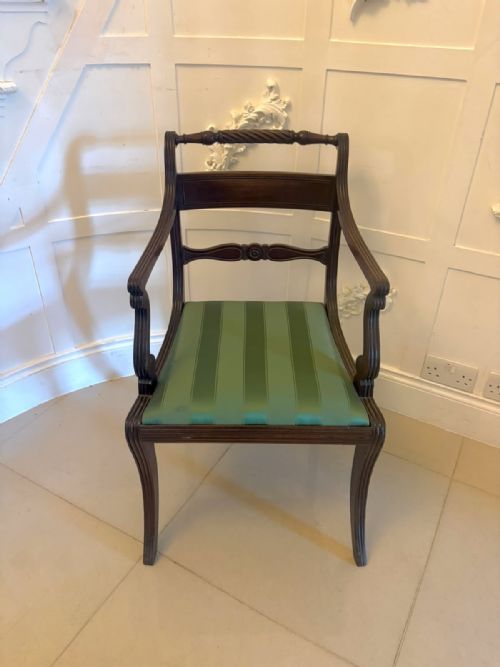
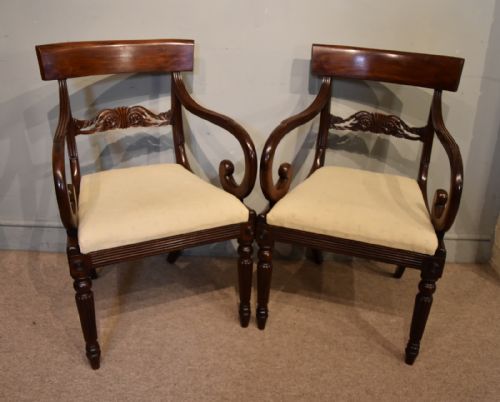
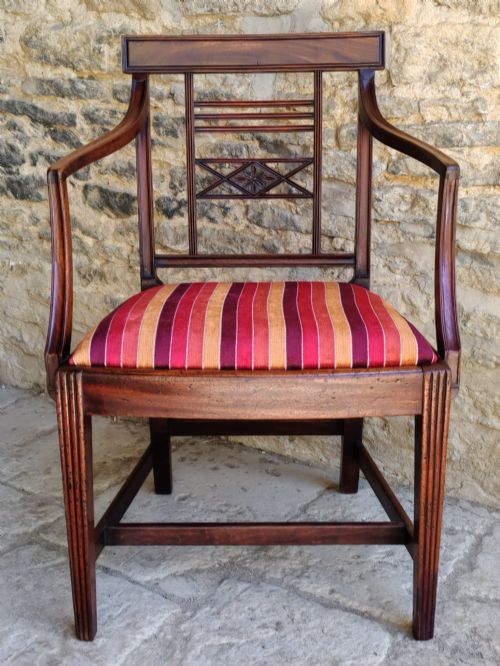
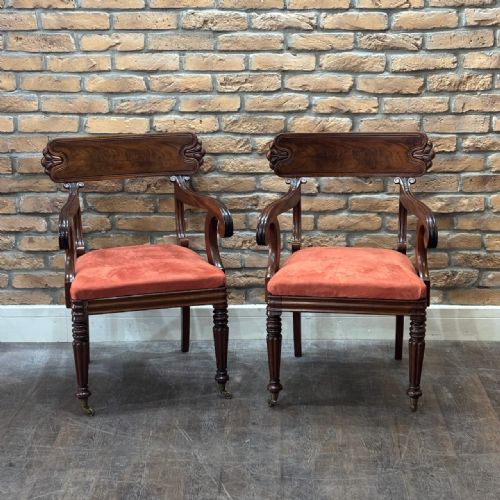
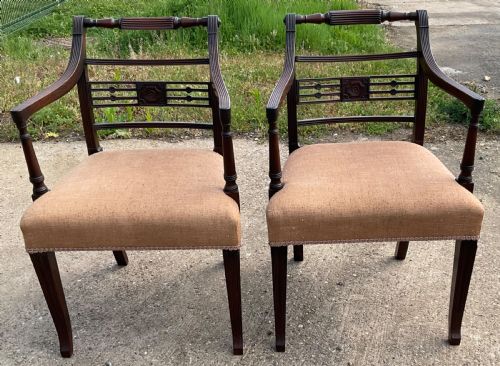
A reeded mahogany carver is an armchair designed to stand at the head of a dining table or function as a desk chair. These seats feature shaped arms and sturdy timber frames that distinguish them from standard dining chairs. When searching this phrase, a buyer meets examples primarily originating from the Georgian, Regency, and Victorian periods.
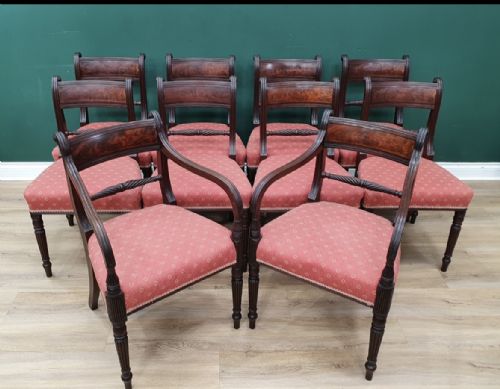
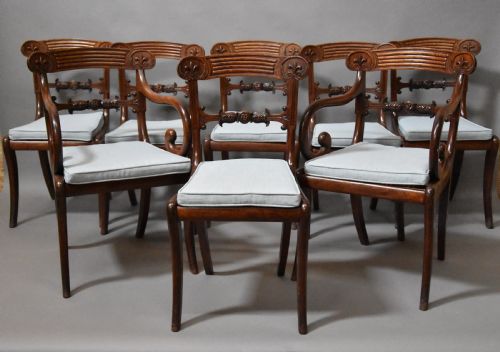
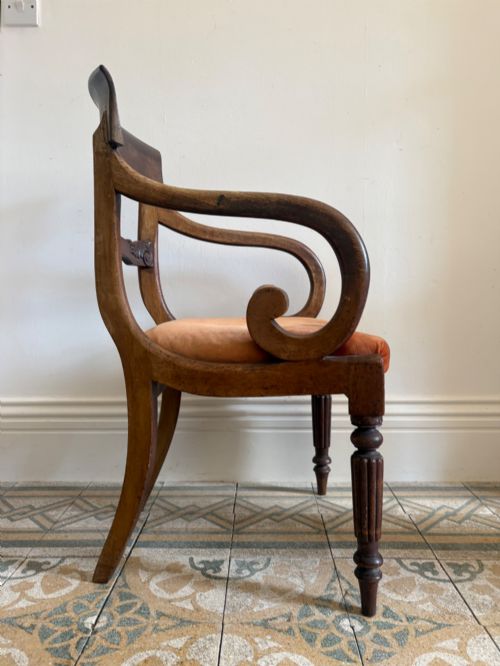
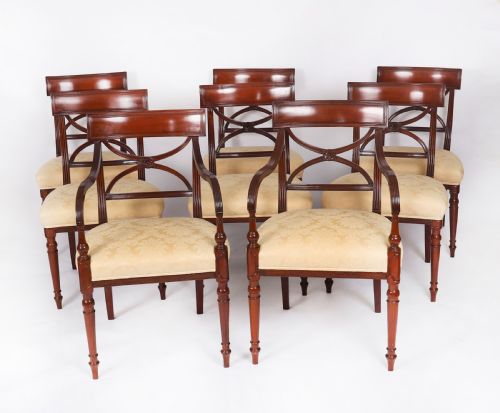
The pieces appearing here span the late eighteenth century through to the early twentieth century, encompassing George III, George IV, and William IV eras. Most specimens survive as single items, pairs, or matched components within larger sets of dining chairs. Forms range from open armchairs and scroll arm designs to dedicated desk chairs with leather or drop-in fabric seats.
Materials and construction
Cabinetmakers constructed these chairs using solid mahogany timber, prized for its dense grain and deep colour. Artisans shaped the wood by hand, carving linear reeding into the legs, arm supports, or back rails to catch the light and create subtle texture.
Upholstery materials include leather, velvet, damask, and standard fabric, secured over drop-in frames or padded foundations sometimes finished with brass studs. Joinery relied on traditional mortise and tenon techniques to ensure the arm joints withstood daily sitting.
The listings span from eighteenth-century George III items through Regency and Victorian eras, demonstrating enduring demand for mahogany carvers.
Quality differences
The distinction between standard examples and the finest pieces lies in the crispness of the timber carving and the elegance of the proportions. Superior specimens display sharp, evenly spaced reeding channels and carefully selected mahogany with rich figuring.
The structural integrity of the arm joints and the authenticity of the period elements also determine the standing of a chair. Pieces that retain their original timber surfaces and authentic upholstery materials command greater appreciation among collectors.
The Reeded Mahogany Carver Glossary
- Carver
- An armchair, traditionally placed at the head of a dining table to match a set of single chairs. These seats feature supportive arms designed to accommodate formal attire.
- Reeding
- Parallel convex moulding carved into the timber surface to resemble bound reeds. This decorative technique adds texture and linear detail to legs and rails.
- Drop-in seat
- A removable upholstered wooden frame that drops into a recess within the chair seat rails. This construction method allowed easy re-covering over the centuries.
- Sabre leg
- A concave sweeping leg that tapers towards the foot, popular during the Regency period. This form provides both stability and a sense of dynamic movement.
- Scroll arm
- An armrest curved outward in a tight spiral reminiscent of a scroll. This shape offers ergonomic support while defining the silhouette of the chair.
Reeded Mahogany Carver: Frequently Asked Questions
How do I spot a Regency carver?
Regency carvers typically exhibit classical lines, sabre legs, and scroll arms inspired by ancient Greek and Roman furniture. Makers of this era favoured dark mahogany with minimal carving, letting the proportion and form define the piece.
Look for refined reeding along the top rail or seat frame, which distinguishes these chairs from heavier Georgian models. They frequently appear as pairs or desk chairs suited to studies.
Can I use these at a modern dining table?
These armchairs function effectively at modern dining tables, provided you check the height of the arms against the underside of your table surface. Carver chairs were originally built to sit slightly higher or wider than side chairs to accommodate formal clothing.
Pairing a pair of carvers with simpler side chairs creates a balanced look at the ends of a table. Their sturdy mahogany construction makes them durable for daily seating.
What is the difference between a desk chair and a dining carver?
Desk chairs and dining carvers share similar mahogany frames and reeded details, but desk variants often feature lower backs or swivel mechanisms suited to writing. A dining carver prioritises upright posture and arm clearance for a dining setting.
Many listings describe similar armchairs as both desk or elbow chairs due to their versatile proportions. Examining the seat height and depth clarifies their original intended use.
How should I care for mahogany and leather?
Mahogany timber benefits from occasional application of quality wax to nourish the grain and preserve the deep natural colour. Avoid placing antique chairs in direct sunlight or near heat sources to prevent the wood from drying out.
Leather seats require gentle cleaning with a damp cloth followed by a suitable leather conditioner to maintain suppleness. Upholstered fabric seats should be vacuumed lightly using a soft brush attachment.