
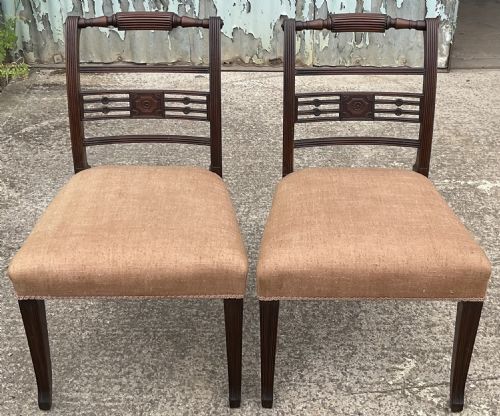
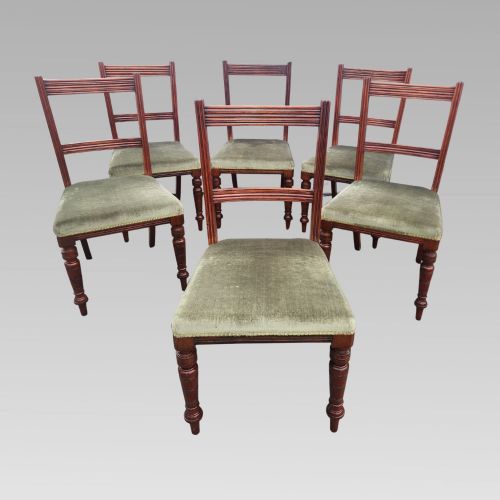


Reeded Back Dining Chairs
Reeded back dining chairs bring linear elegance to the table, combining structural support with crisp turned detailing.
Reeded Back Dining Chairs
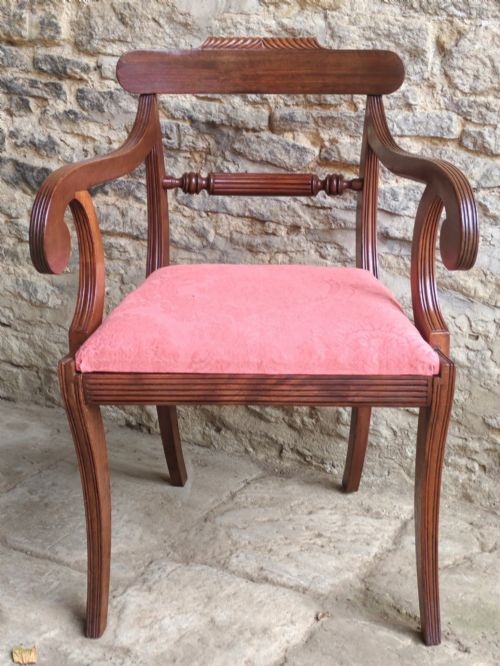
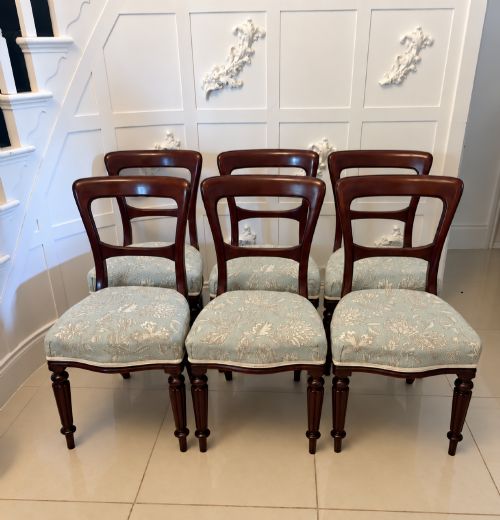
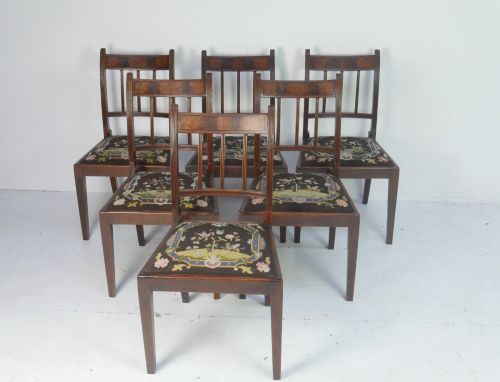
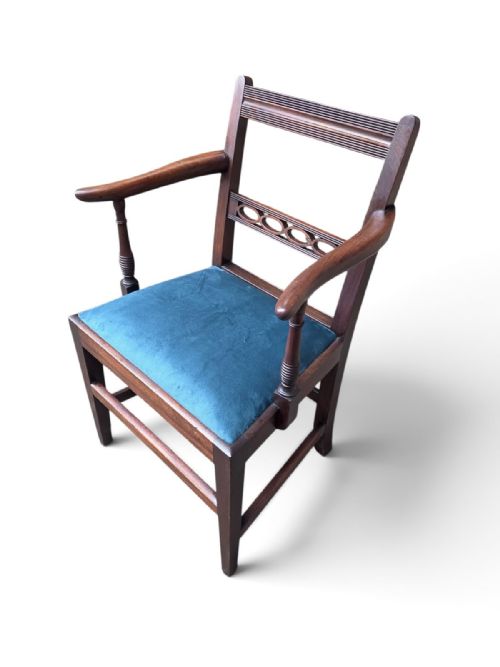
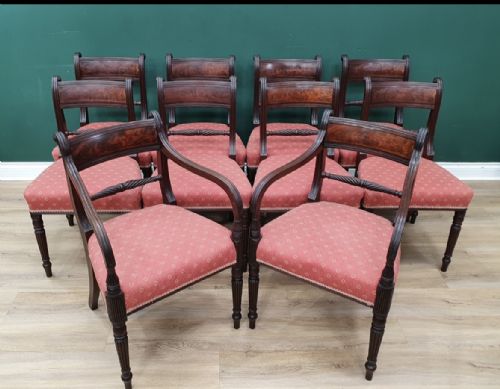
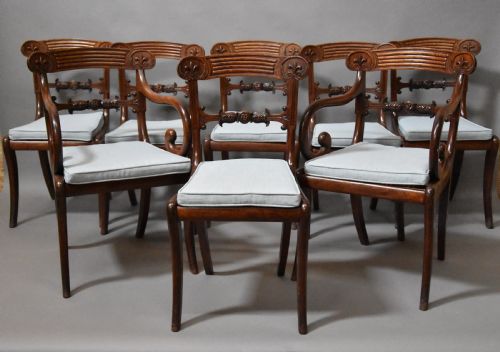
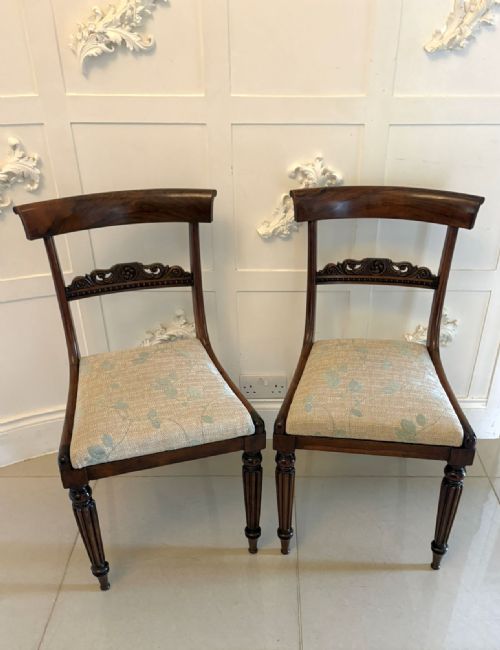
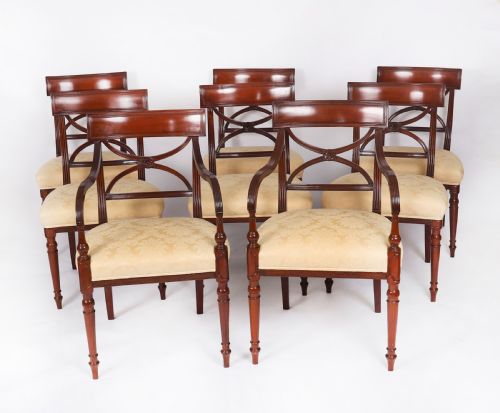
When you search for reeded back dining chairs, you encounter seating primarily shaped during the Regency, Georgian, and Victorian periods. The selection spans single side chairs, open armchairs, and carvers, often found in matched sets ranging from pairs up to fifteen pieces.
The dominant material across these listings is mahogany, alongside examples in rosewood, beech, and timber. Sets frequently retain traditional upholstery fabrics such as velvet, damask, or general textile coverings over drop-in or overstuffed seats.
How they were made
Cabinet makers constructed these seats predominantly from dense hardwoods like mahogany and rosewood, utilising natural timber grains to lend structural integrity and visual depth. Joinery relied on traditional mortise and tenon methods to withstand the daily rigours of the dining room.
The characteristic reeding was achieved by carving parallel, convex half-round mouldings directly into the solid wood of the chair backs, legs, or rails. Upholstery was built up using traditional webbing and stuffing techniques before securing the final fabric layer with decorative tacks.
Listings feature mahogany predominantly, complemented by rosewood and beech across Regency, Victorian, and Edwardian periods.
What varies in quality
Quality reveals itself in the crispness of the carved reeding and the integrity of the timber framing. Sharply defined parallel grooves demonstrate superior tool control by the original maker, whereas softened or worn lines indicate heavy use or over-zealous restoration.
The scale and uniformity of a matched set heavily influence its standing. Sets that retain their original timber colour, stable joinery, and matching grain patterns across every chair command greater appreciation than assembled groups with mismatched components.
Gillows
The Reeded Back Dining Chairs Glossary
- Reeding
- A decorative moulding consisting of parallel convex rows that project from the surface. This technique contrasts directly with fluting, which sinks into the timber.
- Bar back
- A horizontal cross-member forming the upper portion of a chair back. These rails often incorporate reeded decoration or carved centre tablets.
- Carver
- An armchair designed to sit at the head of a dining table. They share matching design motifs with the smaller side chairs in a set.
- Overstuffed
- An upholstery style where the fabric covers the entire seat frame completely. This hides the wooden rails beneath the padding and textile.
Reeded Back Dining Chairs: Frequently Asked Questions
Are these chairs comfortable for daily dining?
Most examples offer firm support through traditional stuffed or drop-in seats designed for upright posture during long meals. Their open back designs encourage standard dining ergonomics.
Comfort levels can vary depending on the depth of the padding and the specific rake of the backrest. Many period sets benefit from professional reupholstery using modern interior cushioning while maintaining the historic exterior presentation.
How do I spot a matched set versus assembled chairs?
Examine the timber grain, colour variation, and exact dimensions across each piece in the group. Original matched sets share identical turning proportions and wood selection from the same workshop batch.
Assembled sets often show subtle discrepancies in height, back rail shaping, or carving depth upon close inspection. Dealers frequently compile these larger sets over time from single chairs sharing similar Regency or Victorian characteristics.
What is the difference between side chairs and carvers?
Side chairs are armless and compact, designed to fit neatly in numbers around the sides of a dining table. Carvers feature integrated armrests to provide a more commanding seat at the table ends.
Traditional dining suites usually combine a larger number of side chairs with a pair of matching carvers. Both chair types maintain identical leg styling and back motifs to ensure visual cohesion across the room.
How should I care for antique mahogany dining chairs?
Keep timber surfaces away from direct sunlight and steady heat sources to prevent the wood from drying out or splitting. Regular dusting with a soft, dry cloth preserves the polished finish without building up heavy wax residues.
Check the stability of the leg joints periodically, as dining chairs experience frequent movement and weight shifts. Avoid using harsh chemical cleaners that can strip the historic polish and damage the underlying mahogany.