




Red Woven Wall Tapestry
These red woven wall tapestry selections bring heavy tribal woolwork and European figurative panels into modern interiors.
Red Woven Wall Tapestry
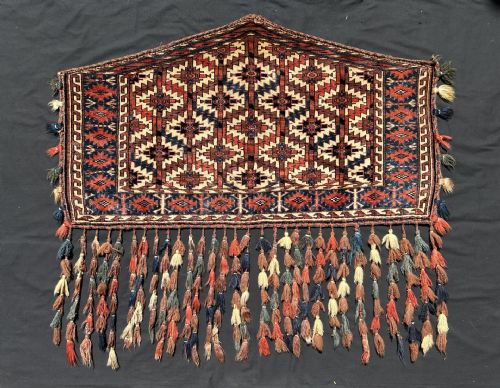
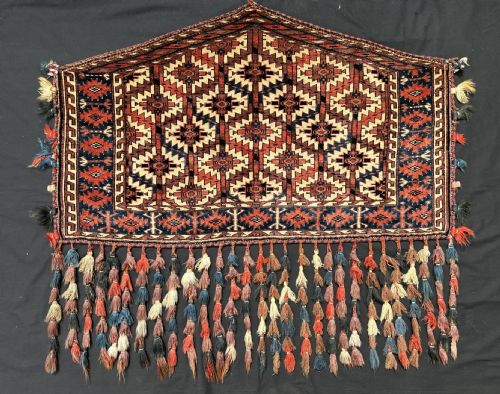
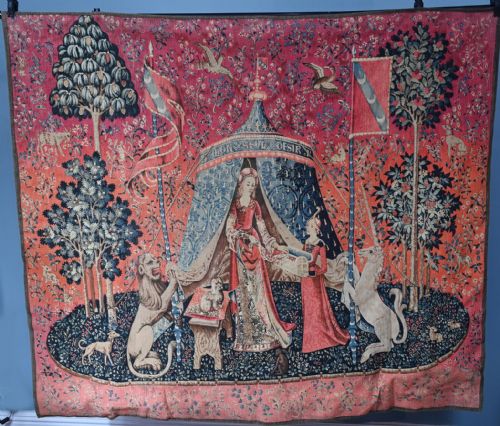
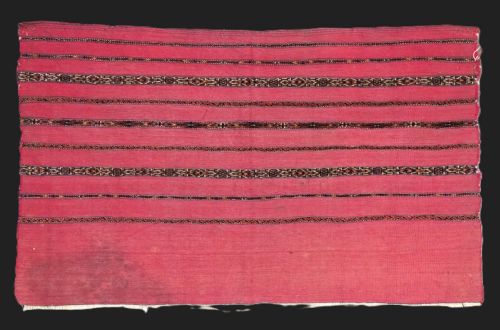
When you search for red woven wall tapestry, you encounter a diverse group of textiles spanning nomadic tribal weaving and European floor or wall coverings. The selection here ranges from nineteenth-century Central Asian bag faces and flatweaves to medieval-inspired French wall hangings.
The most common items meeting this description are Turkmen chuval faces, Yomut asmalyks, and Uzbek panels, alongside European wool and metal thread wall coverings. These objects generally function as decorative wall hangings despite their original utilitarian purposes as storage bags or floor coverings.
Materials and Construction
The pieces are constructed primarily from wool, cotton, and silk, often utilising natural dyes to achieve deep red colour palettes. Certain European panels incorporate metallic thread alongside wool to create reflective highlights within the woven design.
Tribal examples employ flatweave, sumac, and pile-weaving techniques executed on portable looms, resulting in dense, durable structures. Panels from urban workshops utilise refined looms and complex warp-and-weft arrangements to support pictorial imagery and intricate floral motifs.
Among the tribal textiles hides a portrait of Kaiser Wilhelm II, proving that even nomadic weavers kept an eye on global politics.
Evaluating Quality
Quality rests upon the fineness of the weave, the clarity of the graphic motifs, and the preservation of the natural dyes. Higher-tier examples display tight knotting or precise flatweave structures that maintain structural integrity across centuries.
The sophistication of the design, whether geometric tribal güls or figurative European imagery, dictates the visual impact. Pieces retaining their original hanging loops, backs, or complete borders command greater interest from collectors of historic textiles.
The Red Woven Wall Tapestry Glossary
- Chuval
- A large storage bag produced by Turkmen tribes, often displayed today as a wall hanging due to its intricate face design. These rectangular pieces typically feature repetitive guls.
- Asmalyk
- A trappings piece created by Yomut and other Turkmen groups for camel decoration during wedding processions. Their pentagonal or hexagonal shapes translate effectively to vertical wall displays.
- Soumak
- A flatweave technique involving wrapping weft threads around the warp beams before passing them back, creating a textured surface resembling embroidery. This method adds durability and visual weight to tribal panels.
- Gül
- An octagonal or medallion motif repeated across Turkmen and Baluch rugs and bag faces, often denoting specific tribal lineage. The variation and count of these motifs help identify the weaving group.
- Adras
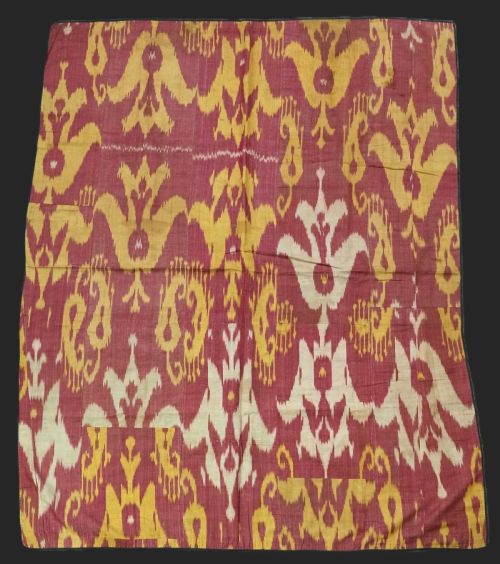
- A traditional Central Asian mixed-fabric textile woven with a silk warp and cotton weft, frequently patterned using ikat resist-dyeing methods. These panels show characteristic blurred colour edges.
Red Woven Wall Tapestry: Frequently Asked Questions
How do I hang a heavy textile safely?
Support heavy wool and textile pieces by distributing the weight evenly along a custom wooden slat or a padded sleeve stitched to the reverse. Avoid using direct nails or clips that pinch the fabric and cause localized strain.
Ensure the hanging method keeps the textile clear of direct sunlight and moisture to preserve the natural dyes and fibres over time.
How are tribal bag faces cleaned?
Surface dust should be removed gently using a low-suction vacuum with a mesh screen barrier protecting the fibres. Professional textile conservators should handle wet cleaning to prevent dye migration and shrinkage.
Frequent washing is unnecessary and detrimental to historic wool and silk components, so gentle preventive maintenance remains the preferred approach.
What is a tribal sofreh?
A sofreh is a flatwoven cloth traditionally used by nomadic groups as a communal eating surface or for processing dough. Their stark geometric layouts make them striking graphic wall art.
These pieces emphasise utilitarian function combined with tribal symbolism, featuring distinctive border patterns and earthy red dyes.
How do I distinguish Turkmen tribes?
Tribal identity is identified through the specific structure of the guls, the colour palette, and the weave density. Yomut pieces often display distinct asmalyk shapes and banded flatweave designs, while Tekke works frequently feature Chuval faces with multiple secondary motifs.
Reference guides and detailed examination of the knotting style clarify the specific Trans-Caspian steppe origin.