




Red Wool Nomad Bag
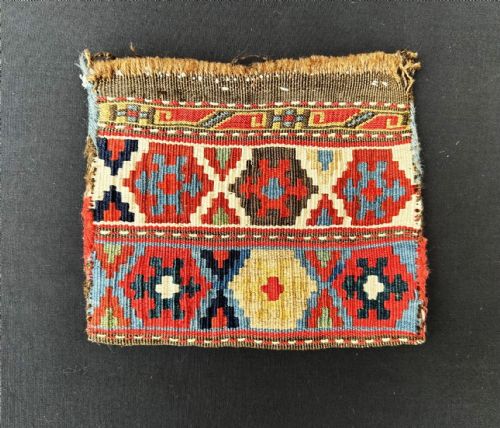
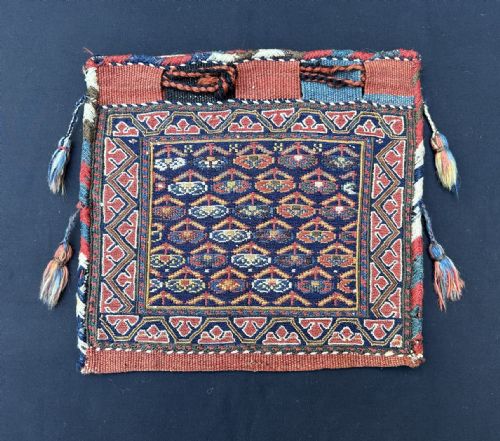
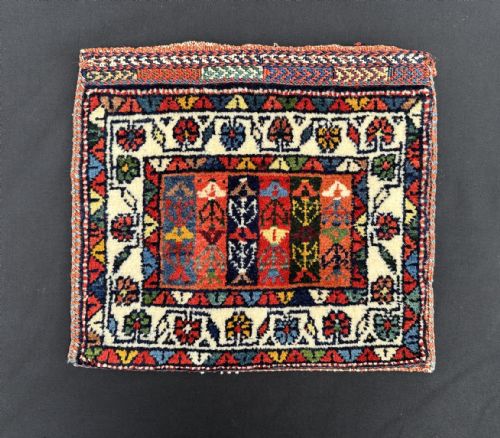
These red wool nomad bag examples are nomadic utilitarian weavings created for travel and domestic storage by tribal groups.
Red Wool Nomad Bag
A red wool nomad bag represents functional tribal art produced across Persia, Central Asia, and the Caucasus during the nineteenth and early twentieth centuries. These pieces encompass various utilitarian forms including saddlebags, salt bags, vanity bags, and storage faces created for daily nomadic life.
The most common examples on this page are Turkmen torba faces, Shahsevan salt bags, and Afshar storage bags originating from regional tribes. Each piece reflects the specific weaving traditions and tribal motifs of its makers.
Evaluating the Pieces
Quality rests upon the tightness of the weave, the handling of the wool, and the depth of the natural dyework. Finer knots and well-balanced palettes distinguish superior examples from simpler utilitarian productions.
The integrity of the structural design and the crispness of tribal motifs determine the standing of an individual piece. Retained original finishes and complete borders add significantly to the historical integrity of the weaving.
The inventory documents nomadic output from Persian, Caucasian, and Central Asian tribal groups including Shahsevan, Afshar, and Turkmen.
The Red Wool Nomad Bag Glossary
- Torba
- A small Turkmen storage bag traditionally hung inside a yurt for household possessions. These pieces usually feature wide horizontal proportions and characteristic tribal gull patterns.
- Namakdan
- A specialised Persian salt bag with a narrow neck designed to prevent spilling during camp movement. These containers often employ soumak wrapping techniques.
- Chuval
- A large Turkmen tent bag used for general bedding and clothing storage. They frequently display multiple major guls across the face.
- Soumak
- A flatweave technique utilising supplementary weft wrapping to create a durable, textured surface resembling embroidery. This method provides robust structure without a cut pile.
- Gul
- A repeated medallion motif found in Central Asian tribal carpets and bags. Each design often identifies a specific tribe or clan.
Red Wool Nomad Bag: Frequently Asked Questions
How were nomad bags used?
Nomadic families utilised these bags for transporting household goods, storing salt, and holding personal items during seasonal migrations. They served practical daily functions inside tents and on animal pack saddles.
Over time, many pieces transitioned from functional camp objects to decorative wall hangings and collector items. Their sturdy construction allowed them to withstand demanding nomadic conditions.
How do I identify tribal origins?
Tribal attribution relies on specific structural formats, wool qualities, and characteristic colour palettes. Different groups like the Shahsevan, Afshar, and Yomut employed distinct weaving techniques and border patterns.
Motifs such as specific guls or directional symbols provide clear clues to the maker's regional heritage. Comparing the knotting style helps pinpoint the geographic source.
How should I display these textiles?
Mounting these pieces flat on a neutral backing protects the structure from stretching and uneven weight distribution. Ensure the hanging method distributes tension evenly across the top edge.
Keep textiles away from direct sunlight to prevent natural dye fading. Gentle vacuuming through a mesh screen helps control dust accumulation.
What defines natural dye work?
Natural dyes utilise organic materials like madder root, indigo, and plant extracts to colour the wool. These colourants produce rich tones that develop subtle variations across the surface.
Unlike synthetic dyes, natural colours age gracefully and retain harmony over decades. Subtle tonal shifts within a single field often indicate batch dyeing.