
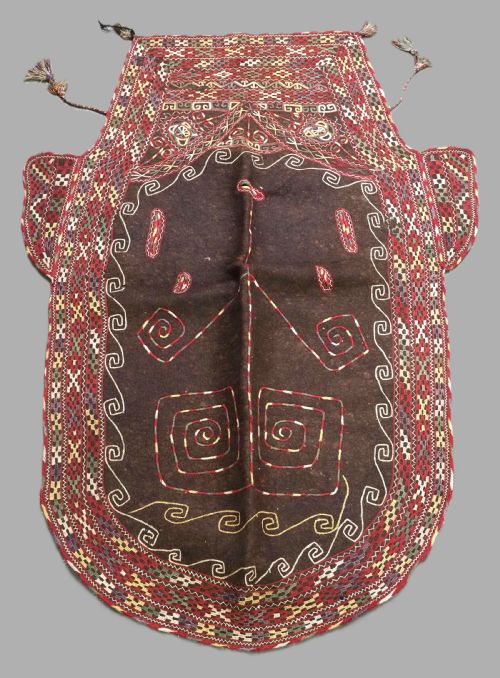
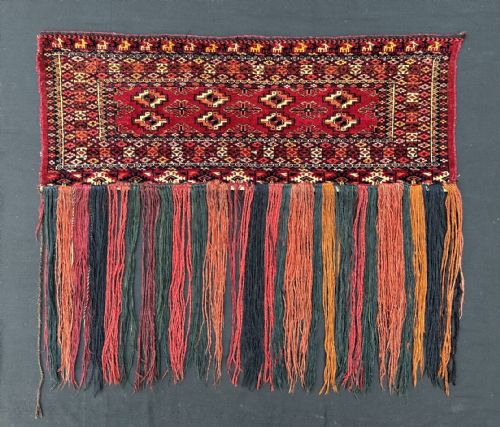
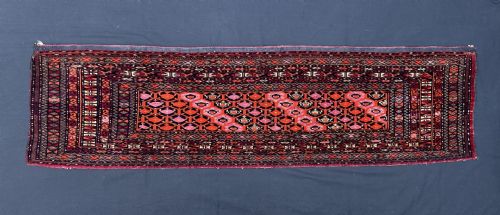
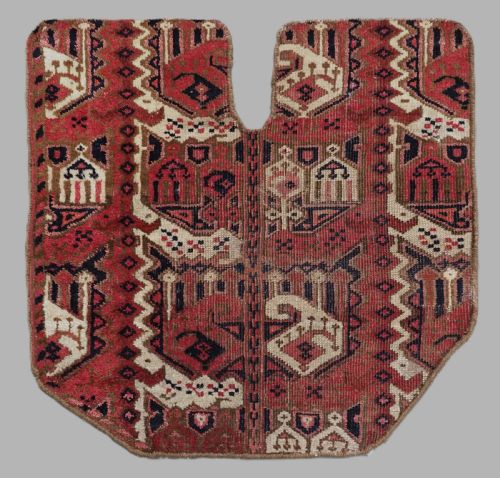

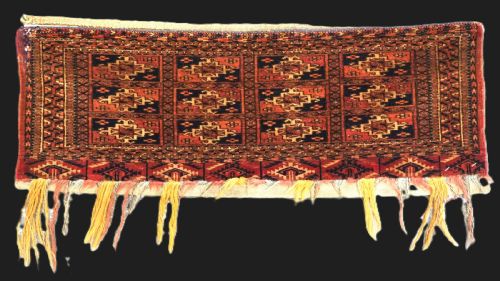
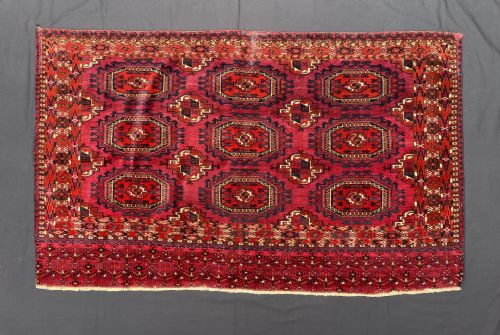


Red Turkmen Carpet Hanging
When you seek a red turkmen carpet hanging, you examine tribal textiles woven across Central Asia during the nineteenth and early twentieth centuries.
Red Turkmen Carpet Hanging
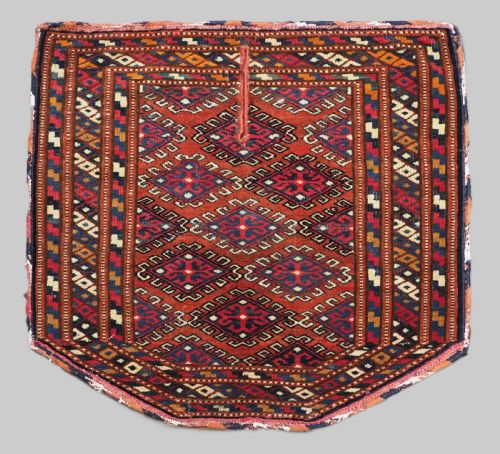
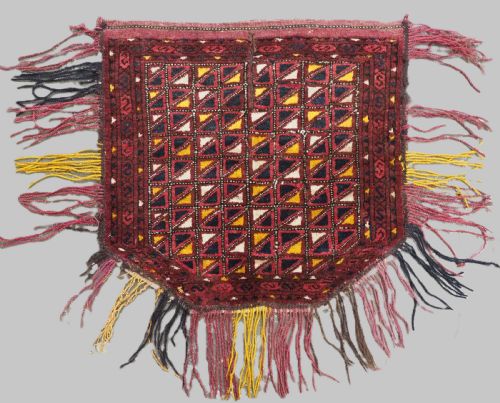
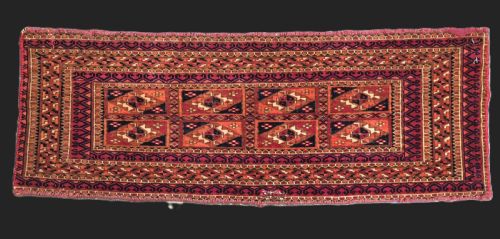
A red turkmen carpet hanging encompasses nomadic weavings created by various tribes including the Tekke, Yomut, Ersari, and Saryk groups. These items frequently originate as utilitarian tent bags, trapping face covers, camel or horse trappings, and saddle rugs rather than standard floor carpets.
The selections encountered here date predominantly from the mid-nineteenth century through the early twentieth century, spanning decades of traditional tribal production in regions such as the Merv Oasis, the Trans-Caspian Steppes, and the Amu Darya basin.
Makers utilised characteristic formats like the chuval, torba, and asmalyk, which served practical roles in nomadic domestic life before being adapted for display on walls.
How they were made
Weavers constructed these pieces using hand-spun wool for the pile and foundation, often incorporating cotton and silk threads for structural reinforcement and contrasting details. Natural dyes provided the deep madder red grounds and secondary shades characteristic of these textiles.
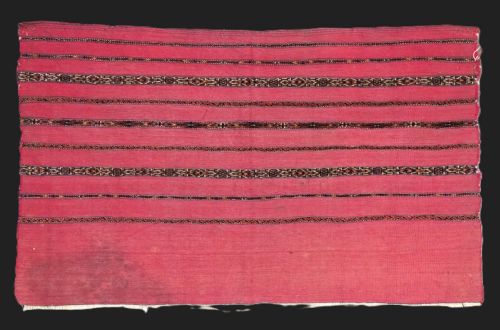
Certain objects utilised alternate techniques such as felted wool construction, embroidered ceremonial felt, or banded flatweave structures rather than knotted pile. Warp and weft threads were beaten down tightly, resulting in dense, durable fabrics suited to the rigorous demands of nomadic existence.
Nomadic brides rode beneath red trappings designed to ward off misfortune, transforming utilitarian saddle bags into protective marital art.
What varies in quality
The finesse of the knotting and the handling of the wool determine the refinement of a piece, with denser weaves allowing greater clarity in intricate geometric motifs. Master weavers achieved exceptional precision in executing tribal guls and secondary ornamentation.
The integrity of the natural dyes and the survival of original side cords, finishes, and tassels influence the desirability of surviving examples. Pieces retaining complete formats or backing structures demonstrate superior preservation compared to isolated fragments.
The Red Turkmen Carpet Hanging Glossary
- Gul
- A primary octagonal or repeating medallion motif used across tribal weavings to identify specific clans and lineages. These designs form the structural backbone of most traditional compositions.
- Chuval
- A large tent storage bag produced by nomadic tribes for domestic organisation and household storage. They typically feature multiple primary guls arranged in strict rows.
- Torba
- A smaller utility bag utilised within the felt tent for keeping personal items, salt, or small possessions. Their horizontal format adapts well to modern wall display.
- Asmalyk
- A pentagonal or wedding trapping traditionally hung on the flanks of a bride's camel during matrimonial processions. These scarce pieces often display elaborate design work.
- Kap
- A general term applied to various nomadic storage bags and covers created throughout Central Asia. They showcase the diverse regional weaving traditions of specific tribal groups.
Red Turkmen Carpet Hanging: Frequently Asked Questions
What is a red turkmen carpet hanging?
These items are traditional nomadic textiles, often consisting of repurposed storage bags, tent trappings, and horse covers originating from Central Asian tribes. They are characterised by rich madder red colour palettes and repeating geometric motifs.
Historically utilised within tribal dwellings or ceremonial processions, these pieces now function as decorative wall hangings due to their dense wool construction and striking patterns.
How were these tribal weavings used?
Nomadic groups employed these textiles primarily for storing household goods inside felt tents, as well as for decorative trappings on camels and horses during ceremonies. Bags like chuvals and torbas held blankets, clothing, and possessions.
Over time, collectors removed many of these items from daily utilitarian service, preserving their structural panels and decorative faces for display in interior settings.
How do I tell different tribal designs apart?
Different tribes utilised distinct primary guls, border arrangements, and colour saturations to signal their specific lineage and geographic origins. For instance, Tekke weavings often display precise secondary motifs, while Yomut pieces incorporate hooked elements and distinct borders.
Examining the structural materials, secondary dyestuffs, and knotting density helps attribute a textile to specific groups such as the Ersari, Saryk, or Yomut tribes.
How should I care for a textile hanging?
Display these textiles away from direct sunlight to protect the natural wool fibres and organic dyes from fading over time. Gentle, periodic vacuuming with low suction through a mesh screen helps remove dust without damaging the pile.
Ensure the hanging weight is distributed evenly across the support structure rather than pulling on a single point of the antique fabric.