






Red Suzani Textile
A red suzani textile brings the rich textile traditions of Central Asia into a contemporary interior through vibrant embroidery and striking regional designs.
Red Suzani Textile
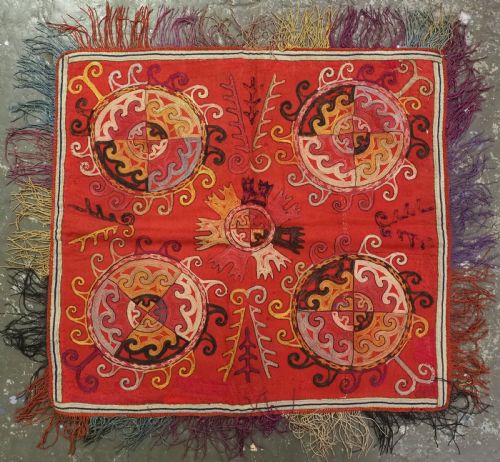
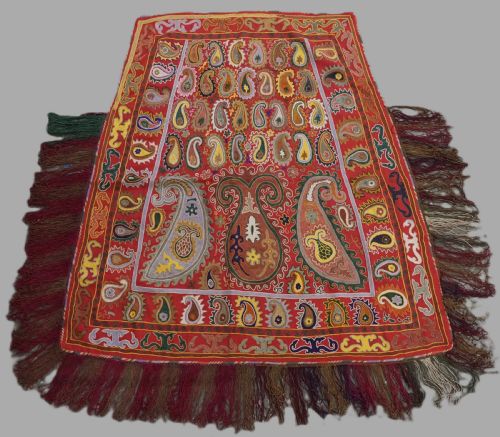
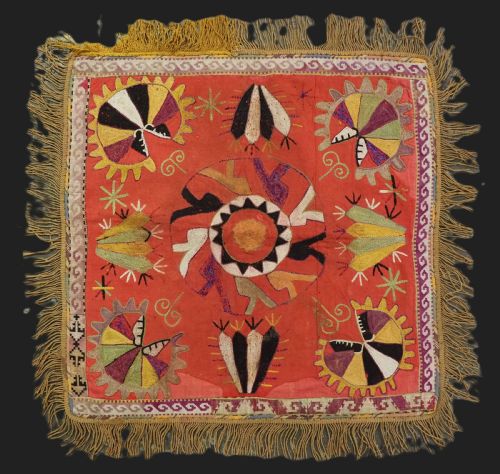
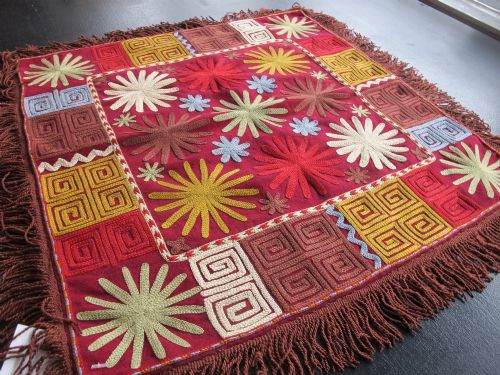
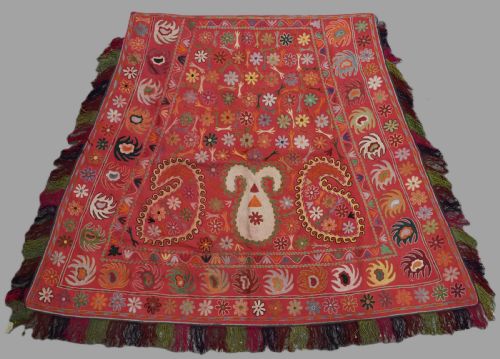
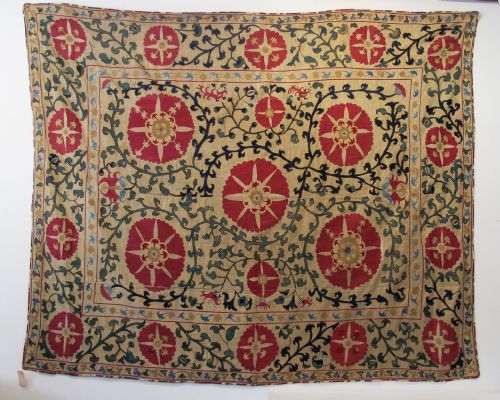
A red suzani textile is a form of Central Asian tribal embroidery historically created in regions such as Uzbekistan, Bokhara, Tashkent, and Shakrisabz. These pieces encompass wall hangings, dowry embroideries, yurt decorations, and ceremonial horse covers originating from periods spanning the mid nineteenth century to the early twentieth century.
Buyers seeking a red suzani textile will most frequently encounter nineteenth and early twentieth century examples featuring silk thread work on red grounds made from cotton, wool, or adras silk-cotton blends. Traditional formats range from full work palak designs to smaller ilgich wall hangings and nim suzani half-format covers.
The aesthetic of a red suzani textile is rooted in Central Asian folk art traditions, often displaying architectural motifs, central stars, or intricate floral patterns. These works reflect the diverse heritage of makers including the Lakai tribe, Kyrgyz yurt makers, and urban workshops in Samarkand and Tashkent.
Materials and construction methods
The construction of a red suzani textile relies primarily on natural fibres, combining lustrous silk embroidery thread with sturdy foundation grounds of cotton, wool, or adras. Artisans applied various needlework techniques by hand, executing dense surface stitching to cover wide expanses of fabric with complex floral and geometric compositions.
Many larger examples were constructed in separate strips, such as kilim-woven formats joined together, or individual panels stitched to form a cohesive wall hanging. The use of natural dyes on wool, cotton, and silk grounds produced the characteristic soft faded red and deep madder tones seen across these pieces.
Red Suzani Textile Retail Price Guide 2026
Typical asking prices for red suzani textile among the pieces listed under this phrase on Sellingantiques today, from the lower quarter to the upper quarter. They describe what is for sale here now, not the wider market.
The inventory records distinct regional forms including Bokhara, Tashkent, Shakrisabz, and Lakai tribal dowry embroideries.
Distinctions in quality
Quality in a red suzani textile is defined by the density of the needlework and the complexity of the design layout, such as fully embroidered palak pieces versus partial field coverage. The fineness of the silk thread and the precision of the traditional motifs distinguish finer workshop outputs from simpler folk pieces.
The structural integrity of the ground fabric, whether wool, cotton, or adras, alongside the preservation of the original hand-dyed palette, influences the standing of the piece. Well-balanced proportions and harmonious regional coloration separate exceptional ceremonial hangings and dowry items from standard examples.
The Red Suzani Textile Glossary
- Ilgich
- A specific type of Central Asian dowry embroidery or wall hanging, frequently associated with the Lakai tribe. These smaller textiles often feature distinct tribal motifs and geometric patterns.
- Palak
- A fully embroidered suzani style characterised by dense, overall pattern work featuring central star or medallion motifs. Tashkent workshops are particularly known for producing this grand format.
- Adras
- A traditional Central Asian woven fabric made from a blend of silk and cotton yarns. It served as a supple ground material for fine needlework.
- Nim Suzani
- A half-size or smaller format suzani textile used for specific wall spaces or domestic furnishings. These pieces offer a more compact alternative to full-scale wall hangings.
Red Suzani Textile: Frequently Asked Questions
How were suzani textiles used traditionally?
These textiles served primarily as domestic furnishings and dowry items within Central Asian households, functioning as wall hangings, bed covers, and ceremonial drapery. They brought warmth, colour, and symbolic protection to living spaces and nomadic yurt interiors.
Specific pieces like horse covers and smaller ilgich panels held ceremonial or personal significance within tribal communities, marking important life events and family milestones.
How do I hang a textile safely?
Hanging a vintage textile requires distributing the weight evenly across the entire upper edge to prevent distortion of the ground fabric. Using a non-damaging sleeve or specialised mounting technique ensures the historic silk embroidery remains unstressed.
Avoid direct, harsh sunlight to protect the natural red dyes and silk threads from fading over time. Displaying the piece on an interior wall away from moisture preserves the integrity of the cotton or wool ground.
What is an adras ground?
An adras ground is a woven textile base composed of a warp of silk and a weft of cotton, creating a sturdy yet lustrous foundation. This blended fabric was widely utilised in Central Asia for mounting intricate silk embroidery.
The unique texture of adras provides a slightly crisp feel that supports dense needlework while maintaining flexibility across large wall hangings and covers.
How can I tell tribal styles apart?
Tribal styles are distinguished by specific regional motifs, colour palettes, and embroidery techniques unique to groups such as the Lakai or Kyrgyz makers. Lakai pieces often feature bold, idiosyncratic geometric forms and compact formats like horse covers and small ilgich panels.
Urban and regional centres like Tashkent, Bokhara, and Shakrisabz typically produced more flowing floral compositions or grand architectural layouts. Examining the density of the silk work and the choice of ground fabric helps identify these distinct origins.