
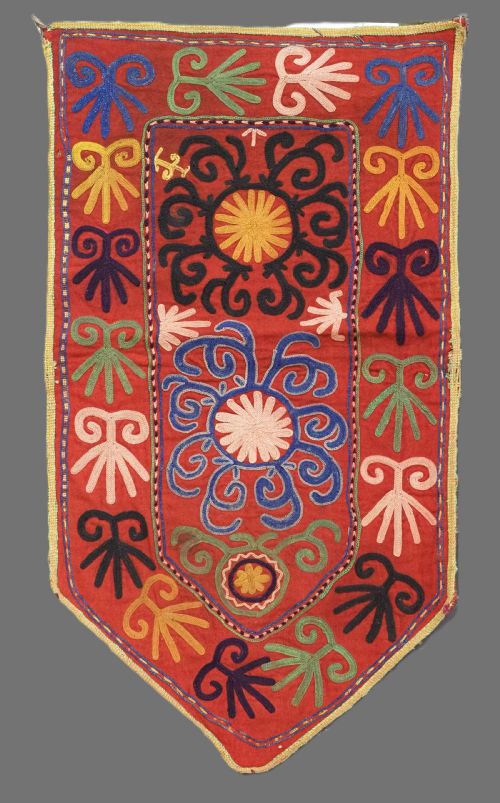
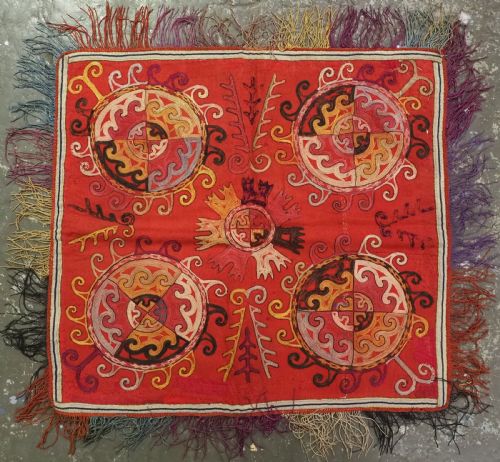
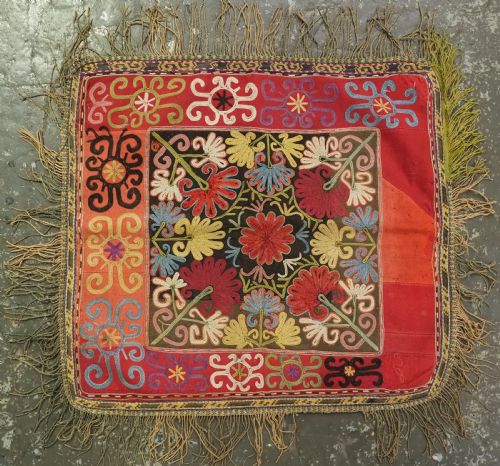
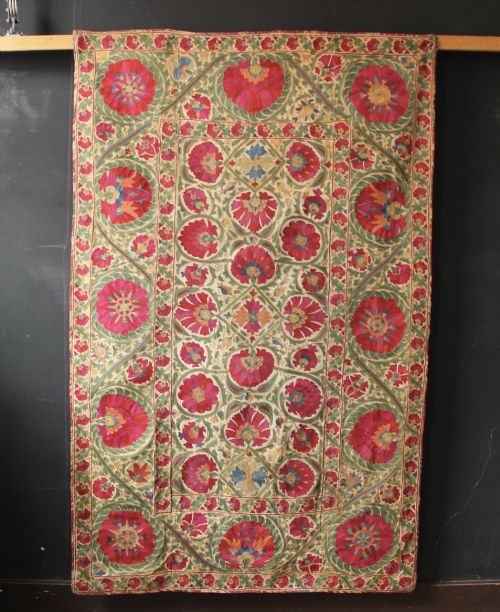

Red Silk Wall Hanging
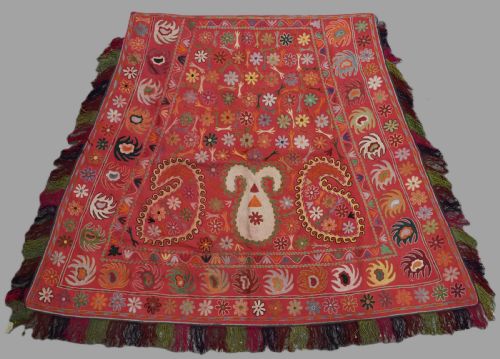
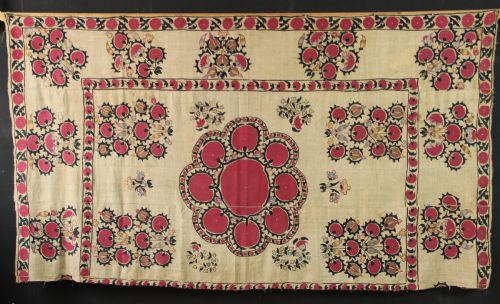
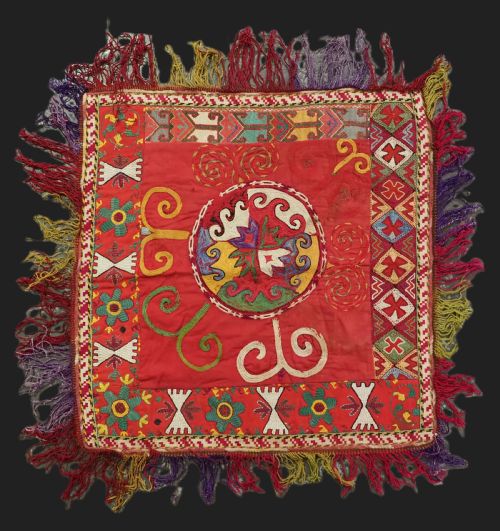
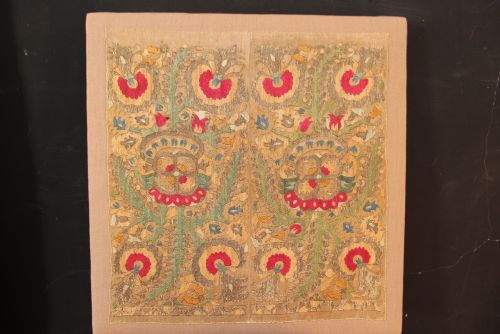
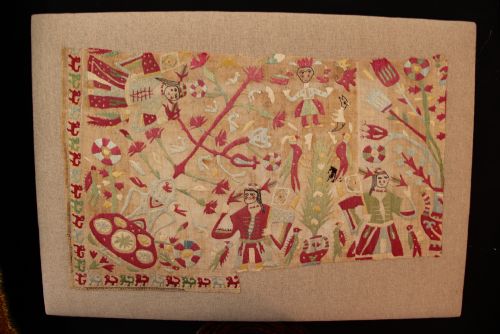
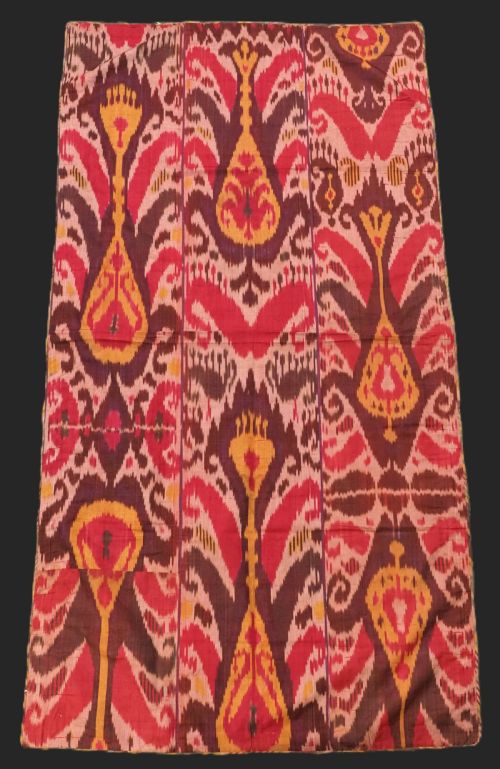
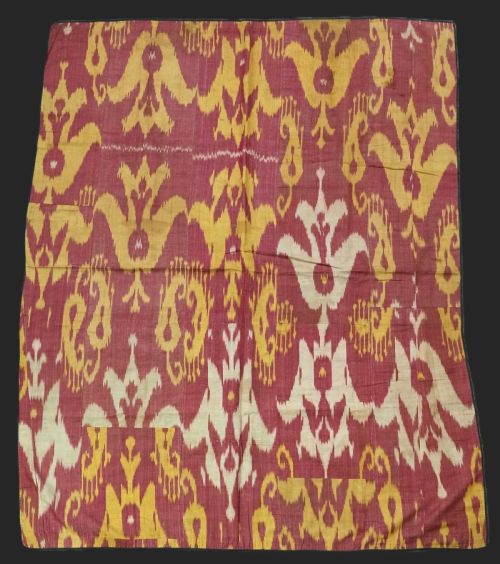
When searching for a red silk wall hanging, collectors encounter vibrant Central Asian embroideries and Persian textiles offering rich historical depth.
Red Silk Wall Hanging
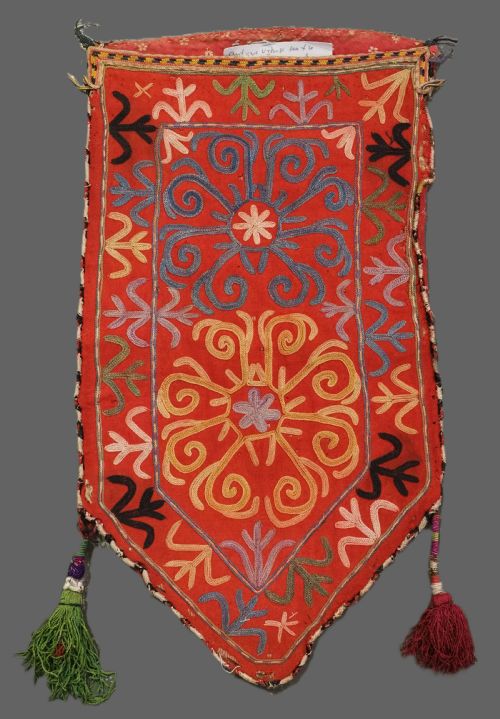
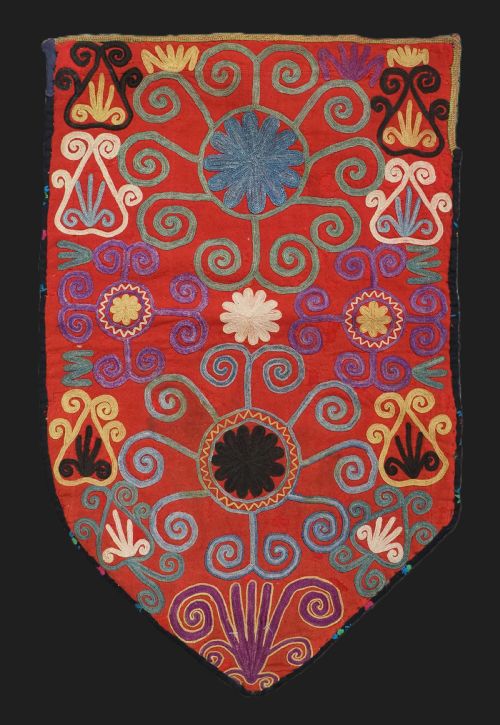
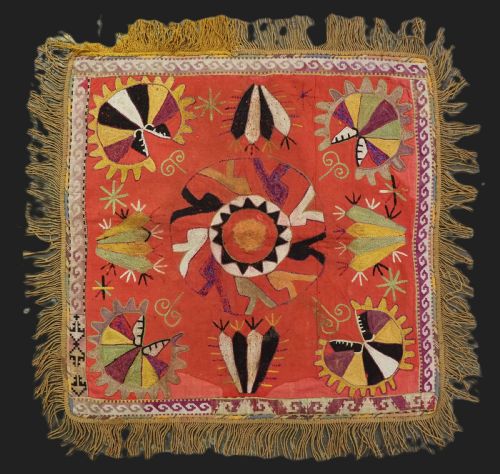
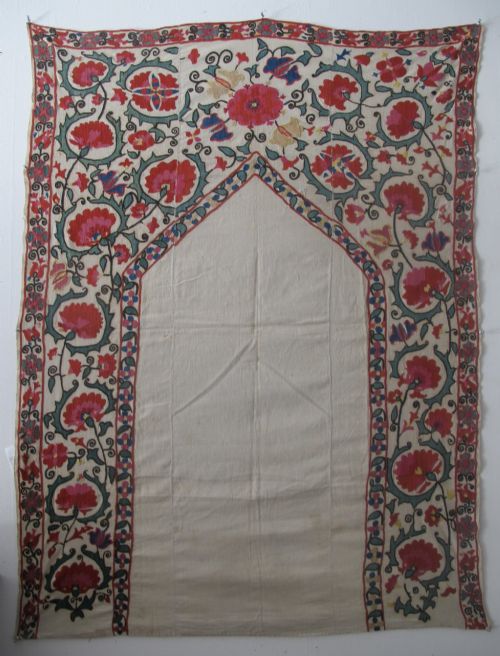
A red silk wall hanging typically encompasses traditional Central Asian suzanis, dowry embroideries, and Persian Rasht panels created across the nineteenth and early twentieth centuries. These textiles served domestic, ceremonial, or architectural purposes within nomadic and urban households before finding new life mounted for display.
The selections available range from Lakai tribe ilgich and Bokhara suzanis to Persian embroideries utilising wool or felt grounds with silk thread work. Buyers most frequently meet intricate tribal fragments and panels spanning the eighteen-fifties to nineteen-twenties.
How They Were Made
Artisans utilised natural textiles including silk, cotton, wool, and linen as foundations, often applying velvet or felt layers for structured support. Surface decoration relied heavily on silk thread embroidery, frequently employing chain stitch or applique techniques.
Dyes derived from local plants and minerals produced the characteristic red grounds and contrasting motifs seen across Uzbek, Persian, and Turkmen examples.
The inventory highlights regional styles including Central Asian tribal, Qajar, and Greek folk art.
What Varies In Quality
The fineness of the needlework and the complexity of the design layout distinguish superior examples from simpler pieces. Tighter stitching and well-balanced geometric or floral medallion compositions indicate skilled hands in the workshop or tent.
Preservation of the original ground fabric and the vibrancy of the silk threads also determine the distinction between ordinary panels and exceptional survivals.
The Red Silk Wall Hanging Glossary
- Suzani
- An embroidered textile from Central Asia, traditionally made by brides as part of their dowry. These large panels feature striking botanical and sunburst motifs.
- Ilgich
- A small embroidered hanging or utility bag face originating from Central Asian tribal groups. They often display lively zoomorphic or geometric forms.
- Adras
- A traditional fabric woven with a silk warp and a cotton weft. This hybrid material provided a stable ground for detailed embroidery.
- Rasht embroidery
- A distinctive Persian textile technique involving intricate mosaic-like applique work using wool felt and fine silk threads. These pieces are celebrated for their elaborate floral medallions.
Red Silk Wall Hanging: Frequently Asked Questions
How were these textiles used?
Many items functioned as domestic furnishings, dowry pieces, or decorative panels inside traditional homes and nomadic dwellings. Certain examples originated as utility bags, horse covers, or ceremonial garments before being adapted for display.
Owners mounted and preserved these panels to protect fragile historical needlework from daily wear.
How do I identify a Rasht embroidery?
Rasht embroideries are distinguished by their use of wool felt grounds decorated with intricate silk applique work and fine stitching. They frequently showcase central star or floral medallions.
These Persian pieces rely on contrasting felt inserts rather than purely surface-level embroidery.
What periods do these pieces date from?
The available inventory primarily spans the nineteenth century through the early twentieth century, with occasional eighteenth-century fragments. Makers during this era produced regional variations influenced by tribal traditions.
Stylistic shifts in colour palettes and motifs help historians assign approximate decades to unsigned works.