




Red Sealing Wax
These red sealing wax items are practical desk accessories and personal seals from the Georgian, Victorian, and Edwardian eras that collectors use for historical correspondence.
Red Sealing Wax
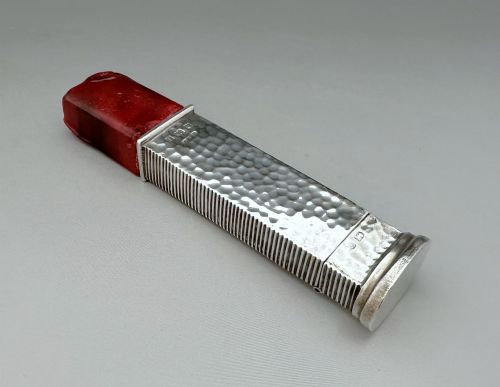
When you search for red sealing wax, you encounter a variety of desk accessories, fob seals, and writing implements spanning the eighteenth, nineteenth, and early twentieth centuries. These pieces encompass Georgian gold cased seals, Victorian carnelian fobs, and Edwardian silver combination vesta and sealing wax cases.
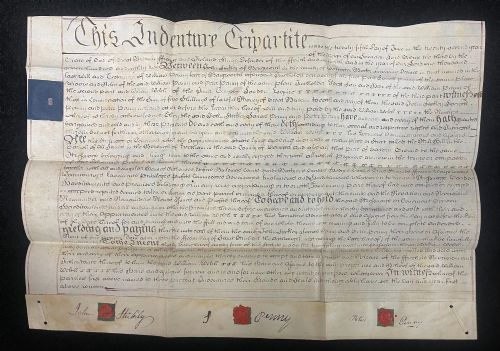
The objects on this page bridge personal stationery and portable writing gear, reflecting a time when letters required physical authentication. You will find items ranging from simple gilt metal fob seals to elaborate Middle Eastern desk seals and vellum indentures.
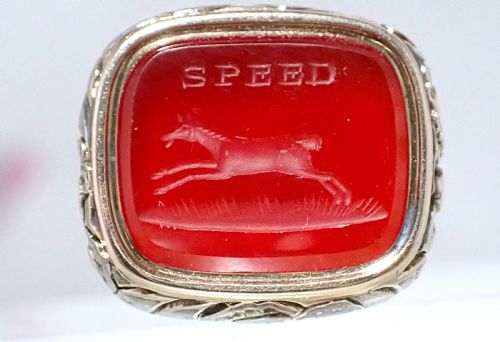
Fob seals and pendants form a major part of these listings, often mounted with carnelian stones carved with monograms, names, or classical motifs. Alongside these personal trinkets sit functional combination pieces and boxes designed to hold the wax and the flame needed to melt it.
Materials and construction
Makers utilised precious metals such as nine-carat gold, sterling silver, and gilt metal to house the working ends of these seals and holders. These metals were shaped into fob pendants, signet rings, and combination vesta cases designed for daily pocket or desk use.
Hardstones like carnelian serve as the primary engraving surface for the matrices, allowing intricate intaglio carvings of crests, names, and motifs. Vellum and paper also appear in the historical paper goods associated with these sealing practices.
Listings feature items spanning the Georgian, Victorian, and Edwardian periods, constructed from carnelian, nine-carat gold, silver, vellum, and gilt metal.
Assessing quality and execution
The standard of intaglio carving on the carnelian or metal matrix defines the visual clarity of the impression left in the wax. Finer pieces display crisp lettering, detailed classical figures, or sharply rendered armorial bearings.
The structural integrity of the metalwork, whether solid nine-carat gold or gilt metal over a base composition, dictates durability and wear over time. Integrated combination pieces rely on precise mechanical fitting for their vesta compartments and wax holders.
Sampson Mordan
The Red Sealing Wax Glossary
- Fob seal
- A small decorative seal designed to hang from a pocket watch chain or fob. They typically feature a carved stone matrix at the base.
- Vesta case
- A small pocket container specifically made to hold matches, occasionally combined with compartments for sealing wax. These appeared frequently in the Edwardian period.
- Intaglio
- A gem or metal carving technique where the design is incised below the surface so that a raised impression is left in the wax. This method protects the carved details from wear.
- Carnelian
- A reddish-brown variety of chalcedony quartz commonly used for signet rings and fob seals because it resists sticking to warm wax.
- Indenture
- A legal contract or deed, often written on vellum and authenticated with personal seals. These documents survive from the eighteenth century.
Red Sealing Wax: Frequently Asked Questions
What is a vesta and sealing wax combo?
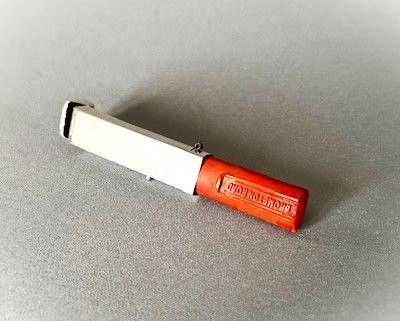
A vesta and sealing wax combo is a dual-purpose Edwardian pocket accessory that houses matches alongside a stick of sealing wax. It provided Victorians and Edwardians with everything needed to light a flame and seal a letter while away from a desk.
These combination pieces were carried in pockets or attached to watch chains for convenience. They represent the late peak of portable correspondence gear before modern adhesives replaced wax.
How do you use a fob seal?
A fob seal is pressed into heated red sealing wax to leave an impression of the engraved matrix. The carved design acts as a personal signature or family crest on correspondence.
To use one, you melt the end of a wax stick over a flame, drop the molten pool onto paper, and press the stone firmly into the liquid. Lifting it straight up leaves a crisp, raised seal.
What periods do these pieces come from?
The pieces span the eighteenth, nineteenth, and early twentieth centuries, covering the Georgian, Victorian, and Edwardian eras. You will find items dated from the seventeen-hundreds through to nineteen-ten.
Each period brought distinct stylistic shifts in metalwork and engraving, moving from Georgian gold cased fobs to elaborate Edwardian silver combination cases.
What stones are used in these seals?
Carnelian is the primary hardstone found in these seals, prized for its smooth texture and rich reddish-orange colour. The stone was hard enough to withstand repeated pressing into hot wax without dulling the engraved intaglio.
Some pieces also incorporate plain metal matrices or base metals depending on the period and the maker's intended market.