




Red Sarouk Rug
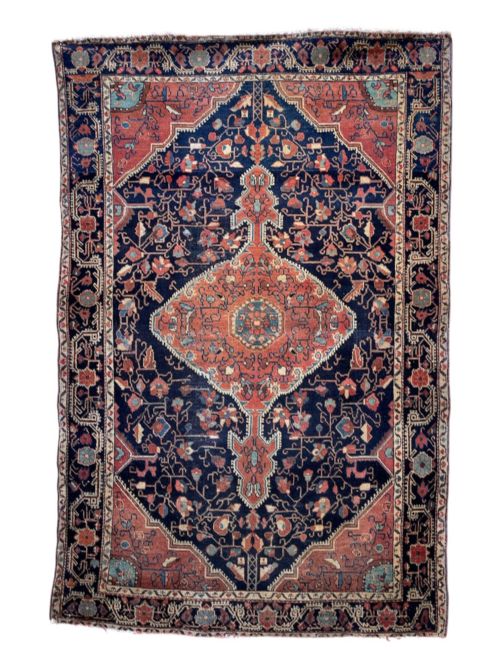
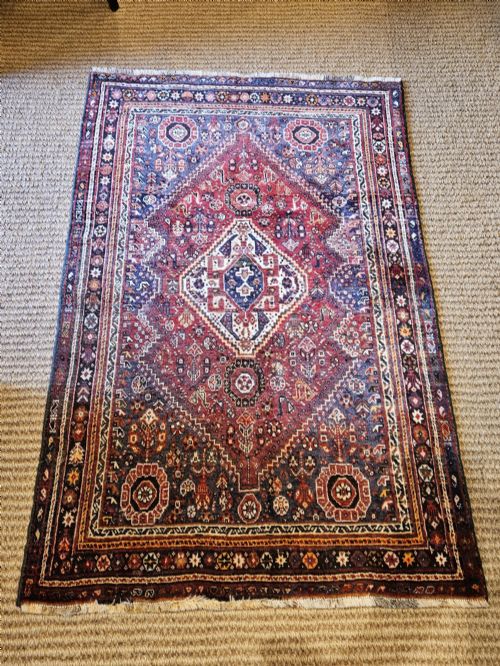
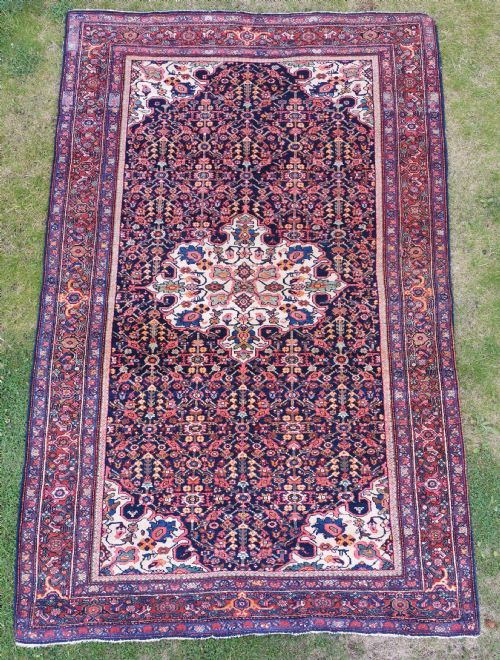
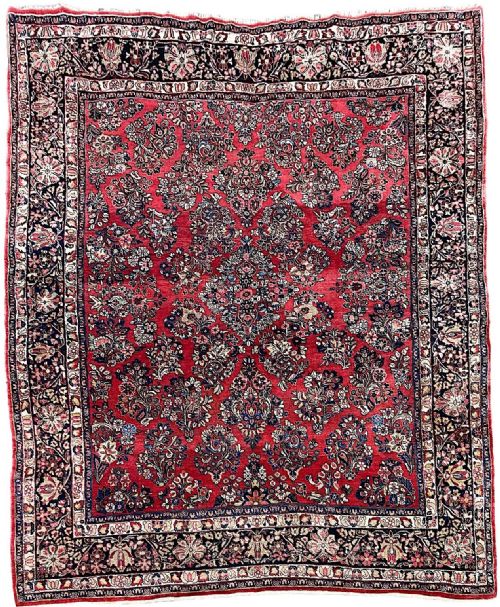
A red sarouk rug brings deep Persian craft into a room, offering rich colour and durable wool construction from past centuries.
Red Sarouk Rug
A red sarouk rug represents traditional Persian weaving originating from West Persia, spanning periods from the nineteenth century through the early decades of the twentieth century.
Buyers encounter various formats on this page, ranging from standard area rugs and carpets to exceptionally long narrow runners.
Many pieces display influences or origins tied to specific regional villages and styles such as Jozan, Ferahan, and Mohajeran.
Materials and Construction
Weavers utilised wool for the pile to achieve durability and warmth, supported by cotton foundations that provided structural stability.
Traditional workshops in West Persia executed fine weaves by hand, incorporating detailed motifs like boteh, birds, and pomegranates alongside traditional Persian patterns.
Listings feature wool and cotton materials across periods spanning the nineteenth century to 1930.
Quality Variations
The fineness of the weave distinguishes individual pieces, with tighter knots allowing for more intricate design work and greater longevity.
The nuance of the palette and the complexity of regional designs, from village carpets to signed workshop pieces, define the character of each rug.
The Red Sarouk Rug Glossary
- Sarouk
- A type of Persian carpet traditionally woven in West Persia, known for durable wool pile and sophisticated floral designs.
- Boteh
- A traditional paisley or almond-shaped motif commonly found woven into Persian rugs and textile designs.
- Ferahan
- A style of Persian rug originating from the Ferahan district, celebrated for fine village craftsmanship.
- Runner
- A long and narrow format of rug specifically proportioned for hallways and corridors.
- Jozan
- A village in West Central Persia associated with distinctive traditional rug production.
Red Sarouk Rug: Frequently Asked Questions
What is a red sarouk rug?
A red sarouk rug is a hand-knotted Persian floor covering made from wool and cotton, typically originating from West Persia during the late nineteenth or early twentieth century.
These pieces reflect traditional regional weaving methods and often feature rich red backgrounds paired with intricate floral or boteh patterns.
How are runners different?
Runners are woven in exceptionally long and narrow proportions designed specifically for hallways, corridors, or narrow spaces.
They share the same wool materials and traditional Persian village styling as larger carpets but adapt the layout to linear architectural spaces.
Where were they made?
These rugs were made in West Persia, often associated with specific weaving centres and villages such as Jozan, Ferahan, and Mohajeran.
Local workshops and villages developed distinct variations in weave density and design motifs while maintaining traditional Persian craftsmanship.
How do I identify the age?
Age is identified through stylistic cues, construction methods, and materials recorded from periods spanning the nineteenth century up to the 1930s.
Details like village specificities, weave tightness, and traditional colour palettes help place each piece within its historical era.