
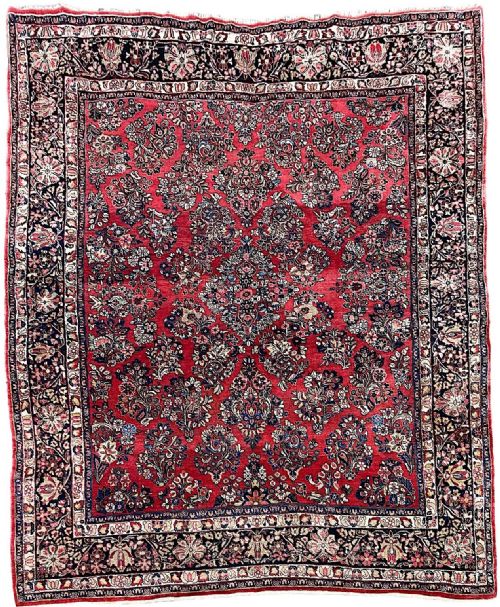


Red Persian Room Rug
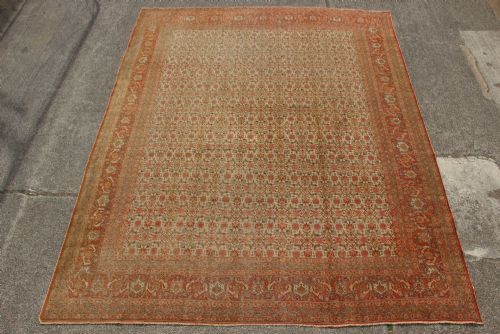
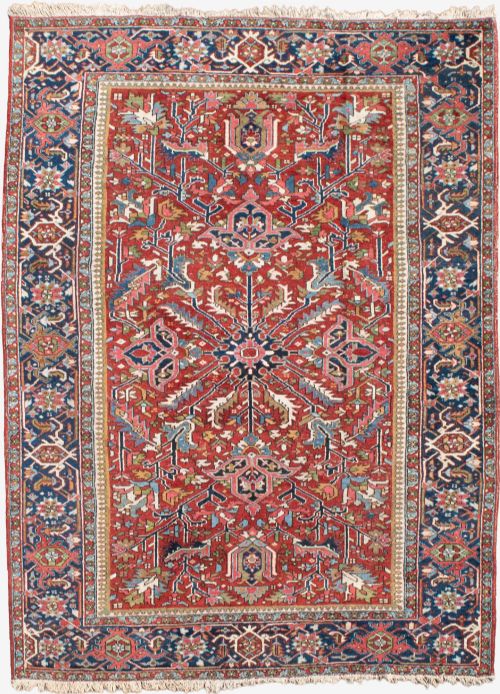
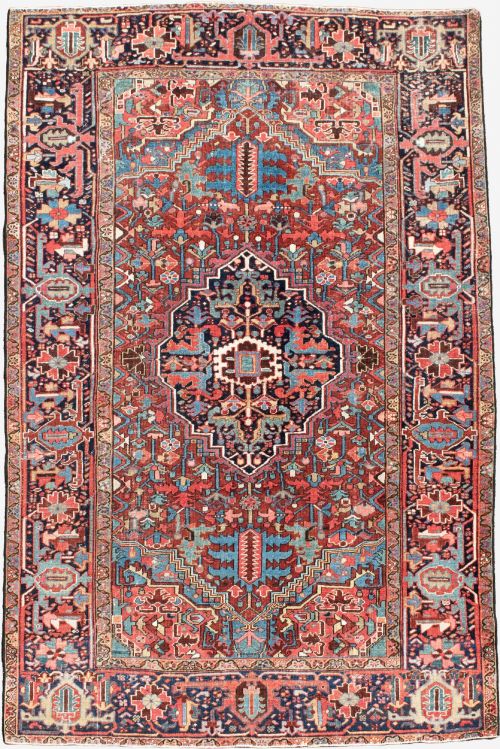
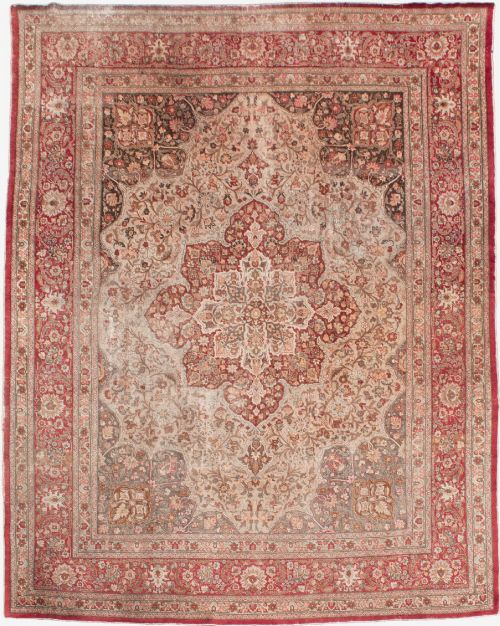
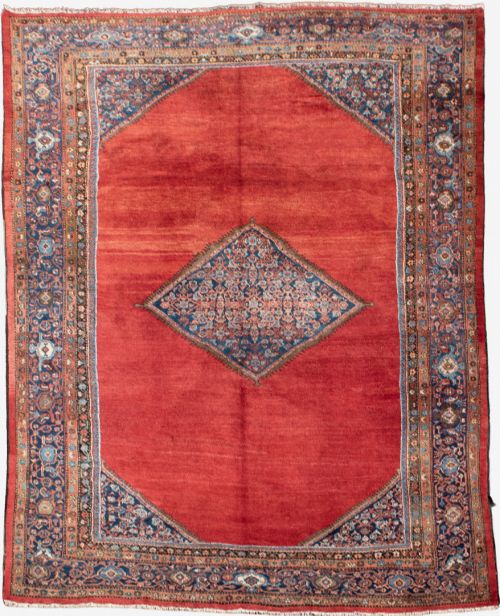
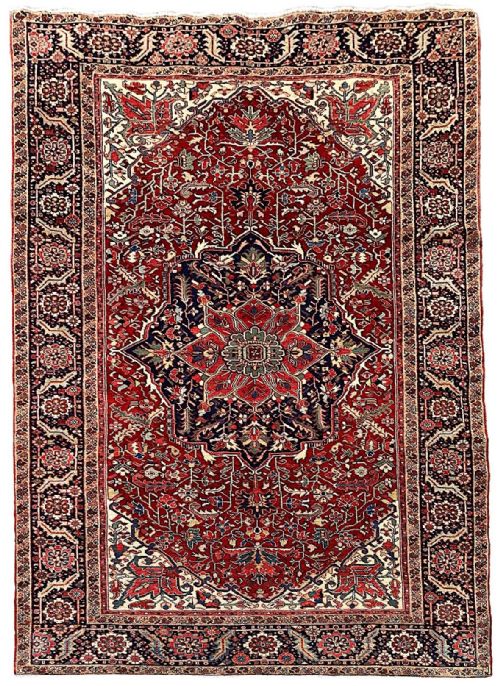
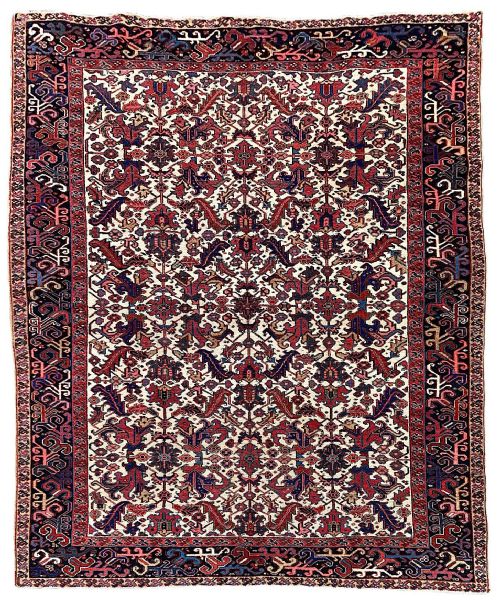
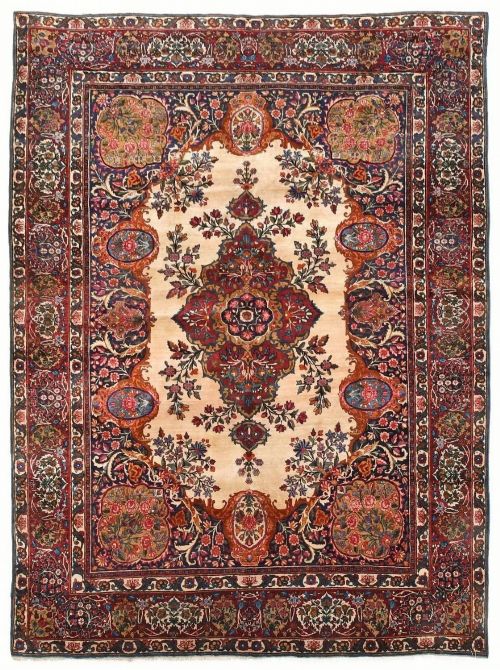
A red persian room rug anchors a large interior with deep madder tones and intricate village or city knotwork.
Red Persian Room Rug
A red persian room rug encompasses large-scale floor coverings originating from weaving centres across Persia and neighbouring regions, dating from the late nineteenth century into the mid-twentieth century. When searching for a red persian room rug, buyers encounter room-sized carpets and smaller floor pieces displaying traditional Persian, Heriz, Sarouk, Sultanabad, Ferahan, Tabriz, Kirman, Kashan, Qum, Hamadan, Malayer, and Yalameh styles. These textiles range from grand country house carpets exceeding five metres in length down to more compact area rugs.
The selections span distinct weaving traditions, from the bold geometric medallions of Heriz village workshops to the refined floral curves of Tabriz, Kirman, and Kashan city looms. Pieces attributed to specific northern and western districts demonstrate the diverse regional aesthetics gathered under this heading, including pieces from northern India such as Amritsar. Buyers will find substantial room-sized formats alongside narrower runner proportions and smaller village formats like Hamadan and Malayer.
How they were made
These carpets and rugs are constructed using hand-knotted techniques executed on vertical or horizontal looms. Artisans tied individual knots of wool, cotton, or occasionally part silk onto warp and weft foundations.
Natural and early synthetic dyestuffs produced the characteristic red grounds and contrasting blue, ivory, and terracotta motifs seen across these pieces. The foundation structures predominantly utilise spun cotton for warps and wefts, supporting dense piles of hand-spun wool or fine silk.
Several carpets recorded here retain the stray nomadic stray knot or wool colour shift that proves a human hand guided the shuttle.
What varies in quality
Knot density and the precision of the curvilinear or geometric drawing dictate the foundational quality of each rug. Finer city workshops employed high knot counts per square inch to achieve crisp, detailed floral outlines, whereas village and tribal pieces often relied on bolder, more relaxed proportions.
The handling of materials also separates examples, as the grade of the wool, the consistency of the hand-spun yarn, and the stability of the cotton foundation determine how well the pile wears over generations of foot traffic.
The Red Persian Room Rug Glossary
- Warp
- The vertical foundation threads stretched tightly on the loom before knotting begins. The fringes of the rug are usually formed by the exposed ends of these threads.
- Weft
- The horizontal threads passed between rows of knots to bind the structure together. They lie perpendicular to the warp and tighten the weave.
- Pile
- The upright surface of the rug formed by the clipped ends of the knotted yarn. Pile height varies depending on whether the piece originates from a nomadic tribe or a sedentary urban workshop.
- Medallion
- A central ornamental design motif placed in the middle of the field. Many Heriz and Tabriz carpets feature prominent central medallions surrounded by corner spandrels.
- Spandrels
- The triangular corner ornaments situated in the upper and lower corners of the main field. They frame the central medallion and balance the overall composition.
Red Persian Room Rug: Frequently Asked Questions
How do I choose the right size room rug?
Measure your floor space to allow a uniform border of exposed timber or stone around the perimeter of the carpet. Large room sizes work best when furniture legs sit comfortably either fully on the rug or just off the edge.
Consider the clearance required for doors to open smoothly over the pile thickness. Larger formats anchor main reception areas, while smaller room sizes suit dining spaces or bedrooms.
What is the difference between Heriz and Tabriz carpets?
Heriz carpets typically display bold, geometric central medallions and sturdy, architectural designs woven in northern village workshops. Their palette often relies on strong madder reds and rich indigos.
Tabriz carpets originate from a major urban centre and feature refined, curvilinear floral patterns with high knot counts. They showcase delicate drawing and sophisticated colour shading.
How do I care for an antique wool rug?
Vacuum the rug gently using a suction-only attachment without a rotating beater bar to protect the old pile and fringes. Rotate the piece every year to ensure even exposure to foot traffic and sunlight.
Professional specialist cleaning is recommended for antique textiles to preserve the natural lanolin in the wool. Avoid harsh chemical spot treatments on historic dyes.
Can I place these rugs in high-traffic hallways?
Sturdier wool room rugs and thicker village weaves handle moderate movement well when laid over a quality underlay. Underlays prevent slipping and cushion the foundation threads against hard floors.
Delicate part-silk pieces or heavily distressed examples are better suited to lower-traffic sitting rooms or bedrooms to limit further wear.
How can I tell a village rug from a city rug?
Village rugs like Hamadan, Malayer, and Heriz exhibit slightly less rigid symmetry, bolder motifs, and thicker wool yarns spun locally. They reflect the individual expression of the weaver working from memory or small design sketches.
City carpets from Tabriz, Kashan, Qum, and Kirman display precise cartographic symmetry, complex floral scrolls, and finer materials dictated by master designers in urban ateliers.