



Red Patterned Chairs
Red patterned chairs bring warmth and tactile pattern to a room, spanning formal nineteenth-century upholstery and country house seating.
Red Patterned Chairs
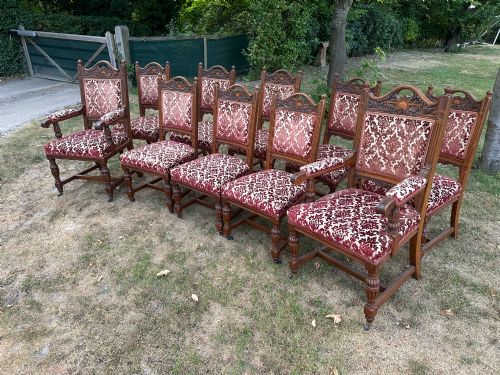
Red patterned chairs encompass a diverse group of seating furniture found across multiple eras, including eighteenth-century wing chairs, Victorian armchairs, and Edwardian dining sets. Buyers seeking red patterned chairs encounter formats ranging from single elbow chairs and large open armchairs to sets of dining chairs and complete settee suites.
The selections span significant historical periods such as the eighteenth century, the Victorian era, and the Edwardian period, along with twentieth-century examples from nineteen-ten and nineteen-twenty. These pieces demonstrate varied stylistic influences including Carolean Revival, Queen Anne style, Arts and Crafts, Baroque Revival, and English Country House aesthetics.
How they were made
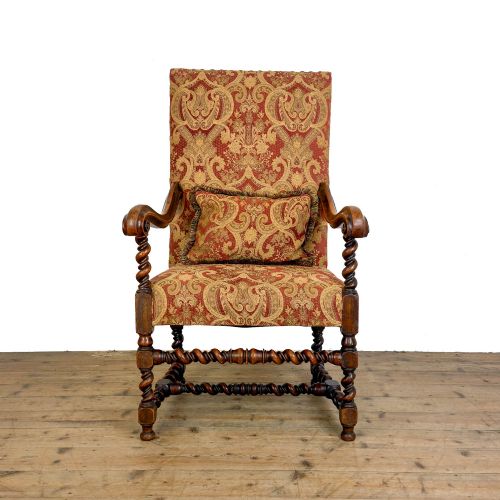
Construction relies heavily on traditional hardwoods such as mahogany, oak, walnut, beechwood, and general timber framing, often incorporating turned elements like barley twists and carved details. Structural stability frequently utilises brass fixings or folding campaign mechanisms.
Upholstery employs textiles such as fabric, velvet, damask fabric, and needlework, sometimes styled with kilim patterns or barrel back designs.
Red Patterned Chairs Retail Price Guide 2026
Typical asking prices for red patterned chairs among the pieces listed under this phrase on Sellingantiques today, from the lower quarter to the upper quarter. They describe what is for sale here now, not the wider market.
Period representation spans the eighteenth century, the Victorian and Edwardian eras, through to specific twentieth-century pieces dated nineteen-ten and nineteen-twenty.
What varies in quality
The distinction between standard and superior pieces rests on the integrity of the underlying woodwork and the sophistication of the joinery. Carved details, timber selection such as figured walnut or dense mahogany, and maker attribution dictate the standing of a chair.
Upholstery quality depends on whether original textiles survive or if renewed upholstery respects the period character of the frame. Proportions also matter, separating grandly scaled country house armchairs from modest bedroom or side seating.
Gillows·Howard and Sons
The Red Patterned Chairs Glossary
- Wing chair
- A high-backed upholstered armchair with side panels designed to shield the sitter from draughts. These pieces date back to earlier centuries and often feature deep padded upholstery.
- Barley twist
- A decorative turning technique resembling a twisted rope, carved into wooden furniture legs or supports. This form appears frequently on Victorian seating supports.
- Damask
- A reversible figured fabric traditionally woven on a loom with patterns formed by contrasting warps and wefts. It provides a formal upholstered surface for period chairs.
- Elbow chair
- An armchair designed with low arms, often used as a carver or desk companion. These pieces offer compact seating whilst maintaining wooden framework visibility.
Red Patterned Chairs: Frequently Asked Questions
How do I date a red patterned chair?
Dating relies on examining the timber frame, structural joinery, and the distinct stylistic markers of periods like the Victorian era or Edwardian times. Secondary clues include the type of turned woodwork, such as barley twists, and any recorded maker stamps.
Upholstery fabrics often undergo renewal over time, so the textile alone is less reliable for dating than the underlying wooden skeleton and construction methods.
Where should I place an antique armchair?
These armchairs suit reception rooms, studies, or bedrooms where their distinct scale and patterned upholstery can serve as a focal point. Large open armchairs require sufficient floor space to display their proportions properly.
Lighter elbow chairs and side chairs function effectively in dining spaces or as occasional seating alongside larger sofas and settees.
Are these chairs suitable for daily use?
Many of these pieces were built for active domestic service using robust timbers like oak, mahogany, and walnut. Their suitability for modern sitting habits depends on the current internal webbing and sprung upholstery condition.
Gentle daily use preserves fragile needlework or antique damask fabrics, whereas robust velvet or woven covers withstand regular sitting more readily.
What defines an English Country House style?
This aesthetic combines comfortable, deep-seated upholstered furniture with relaxed traditional textiles that accumulate character over generations. Pieces matching this description often prioritise generous proportions and tactile fabrics like damask or needlework.
Such seating is designed to look lived-in and welcoming rather than strictly formal, fitting seamlessly into varied interior settings.