

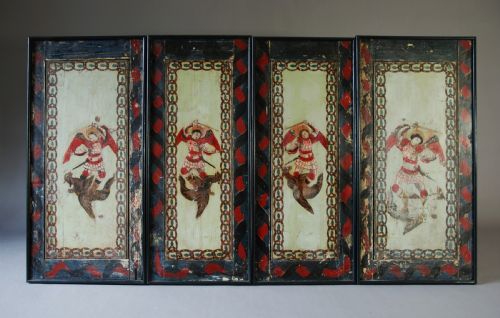
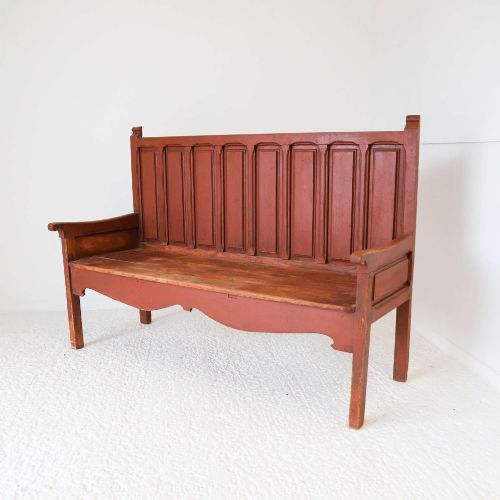





Red Painted Wooden Panel
A red painted wooden panel brings immediate colour and texture to a room, drawn from diverse folk and traditional traditions.
Red Painted Wooden Panel
A red painted wooden panel encompasses architectural salvage, furniture elements, and decorative boards from various centuries and origins. When you search for a red painted wooden panel, you encounter items ranging from English fairground boards and theatre scenery to Spanish settles and Indian doors.
The selections on this page span the eighteenth, nineteenth, and twentieth centuries, alongside pieces from the Victorian era and later periods. Forms vary from folding screens and wall mirrors to benches, armoires, and glass shop signs.
Geographic origins stretch across England, Spain, China, India, Northern Europe, and Russia, reflecting both folk art traditions and traditional craftsmanship. Pine and painted timber form the primary wooden structures, often enhanced with iron, brass, gold leaf, and glass.
How they were made
Construction relies primarily on wood, specifically pine and painted timber, fashioned into panels, doors, boards, and furniture. Makers applied paint directly to the wooden substrate, sometimes incorporating gold leaf for decorative emphasis.
Red Painted Wooden Panel Retail Price Guide 2026
Typical asking prices for red painted wooden panel among the pieces listed under this phrase on Sellingantiques today, from the lower quarter to the upper quarter. They describe what is for sale here now, not the wider market.
Fairground carousel panels once spun riders through the air before finding a second life indoors.
What varies in quality
Quality rests in the integrity of the original surface paint and the authenticity of the wooden structure. Pieces retaining their original framing, undisturbed patination, and distinct hand-painted details stand apart from later alterations.
The distinction between utilitarian salvage and purposeful artistic creation shapes the character of each piece. Depth of provenance, regional decorative style, and the survival of secondary materials like gold leaf or early glass influence the overall visual impact.
The Red Painted Wooden Panel Glossary
- Architectural salvage
- Building elements removed from structures for reuse or decorative display. These items often retain weathered paint and original fixings from their primary installation.
- Folk art
- Artistic work created within a traditional culture by self-taught or untrained makers. It frequently displays naive perspectives and bold use of colour.
- Gold leaf
- Gold beaten into extremely thin sheets used for gilding surfaces. It appears on decorative panels to highlight specific areas of design.
- Settle
- A wooden bench with high backrests, solid arms, and often enclosed storage beneath the seat. Early examples frequently feature painted finishes.
- Patina
- The surface appearance altered by age, wear, and use over time. Collectors value undisturbed patination as an indicator of genuine age.
Red Painted Wooden Panel: Frequently Asked Questions
What is a red painted wooden panel?
A red painted wooden panel is a decorative or structural board finished in red paint, sourced from architectural salvage, furniture, or signboards.
These pieces originate from diverse periods and global traditions, functioning as wall art or functional items.
How do I clean a painted wooden panel?
Cleaning requires a soft, dry cloth to remove dust without disturbing fragile or historic paint layers.
Moisture and chemical cleaners should be avoided to protect the underlying timber and original surface finishes.
Can I hang these panels on a wall?
Many panels and boards are suitable for wall hanging, provided adequate fixings are used to support their weight.
Larger furniture elements or doors require sturdy wall brackets or alternative placement as freestanding items.
How do I tell different periods apart?
Differentiating periods relies on examining construction techniques, types of wood, fastener styles, and the character of the paint.
Eighteenth-century items often show traditional joinery and naive religious subjects, whereas twentieth-century pieces include fairground boards and trade signs.