



Red Occasional Table
A red occasional table brings a punch of bold colour and compact utility to a room, offering a surface for lamps, drinks or books.
Red Occasional Table
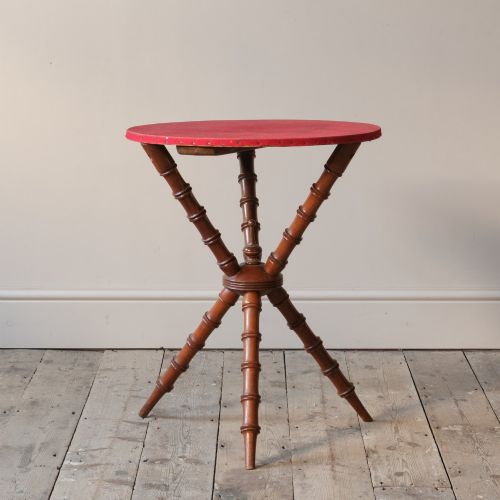
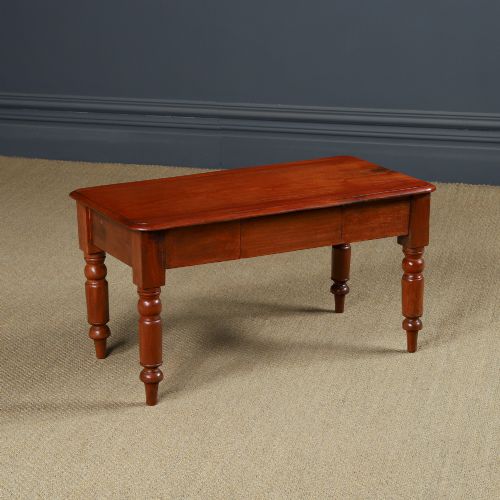
A red occasional table encompasses a varied group of movable side pieces, from tripod wine tables to nests and lacquered card tables. These small tables appear across multiple periods, including the Georgian, Victorian and Edwardian eras, as well as the early twentieth century.
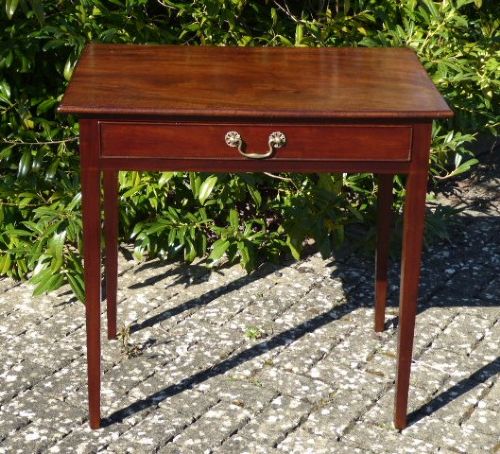
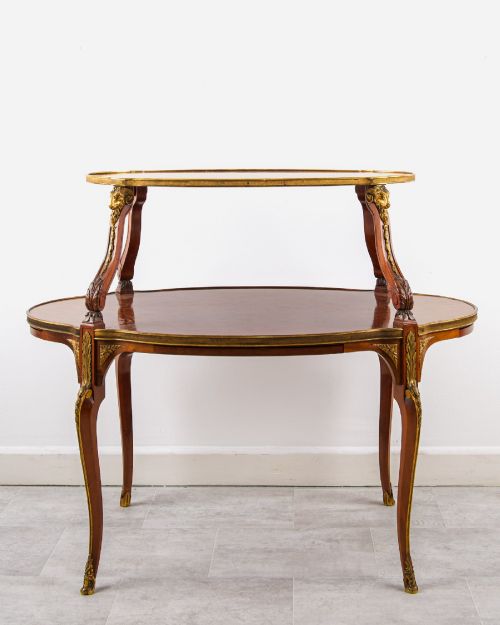
The selection ranges from British mahogany and walnut examples to French gueridons, Italian polychrome items, and Asian lacquer or elm designs. Side tables, lamp tables and two-tier étagères dominate the forms on offer.
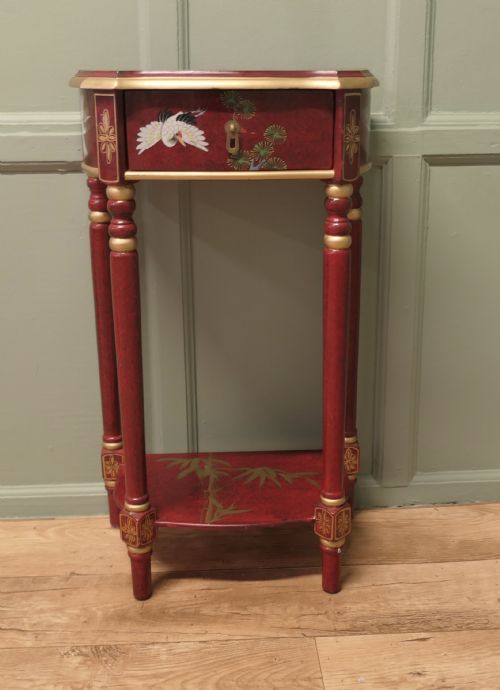
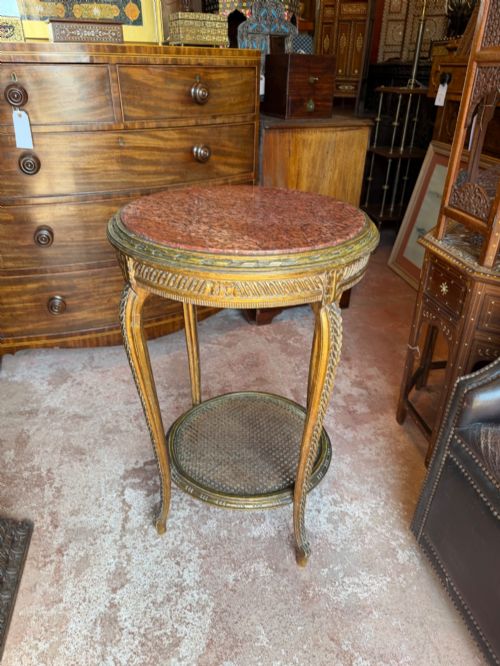
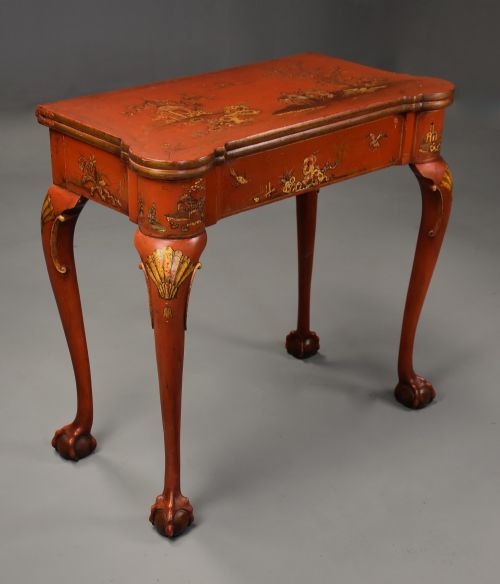
Chinoiserie lacquer work provides the most striking manifestations of red occasional tables, alongside painted floral motifs and red walnut timbers. Buyers encounter everything from simple tea tables to elaborate giltwood and marble-topped centre pieces.
How they were made
Cabinet makers utilised traditional timbers such as mahogany, rosewood, oak and red walnut, often shaping them into tripod bases, serpentine galleries or multi-tiered structures. Joinery techniques varied from simple pegging to intricate carving and turning.
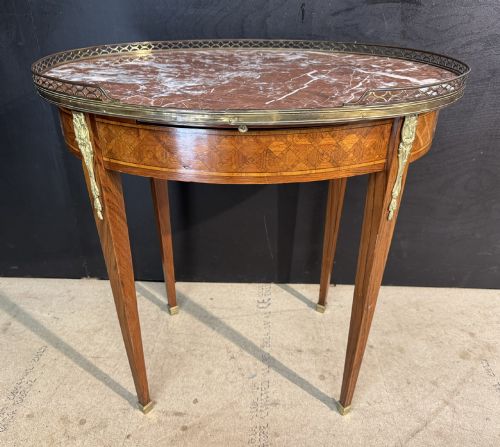
Surface decoration frequently involved layers of red lacquer, paint, or polychrome finishes, sometimes accented with gilt, ormolu mounts, or bamboo framing. Marble tops appear on several continental and French gueridon designs, providing heavy, smooth upper surfaces.
Lacquered Chinoiserie pieces relied on specialised finishing processes to achieve the distinct red backgrounds and pictorial details seen on panels and card tables.
Red Occasional Table Retail Price Guide 2026
Typical asking prices for red occasional table among the pieces listed under this phrase on Sellingantiques today, from the lower quarter to the upper quarter. They describe what is for sale here now, not the wider market.
A Japanese elm Chabudai table sits comfortably alongside Victorian gypsy tables and French gueridons, proving red occasional tables cross every cultural boundary.
What varies in quality
The integrity of the surface finish dictates much of the visual success of a red occasional table, particularly where lacquer, paint or gilding are concerned. Hand-painted details and well-preserved lacquer display greater depth and execution than simpler commercial applications.
Structural refinement separates standard utility items from finer examples, showing in the crispness of carved tripod legs, the fit of snap-top mechanisms, and the quality of brass or ormolu mounts. The choice of underlying timber, such as red walnut or plum pudding mahogany, also elevates certain pieces.
Proportion and balance define the better tables, where smaller dimensions and gallery edges remain true to their period style without awkward alterations.
L. Martin of Paris·Weisweller
The Red Occasional Table Glossary
- Gueridon
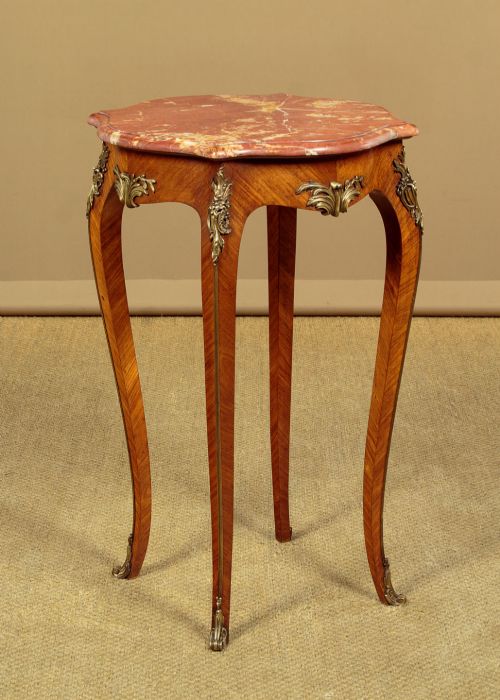
- A small French table, often round and supported by a central column or tripod base. These frequently feature marble tops.
- Chinoiserie
- European decorative style inspired by Chinese artistic traditions, notable for lacquered finishes and painted figural scenes.
- Tripod Table
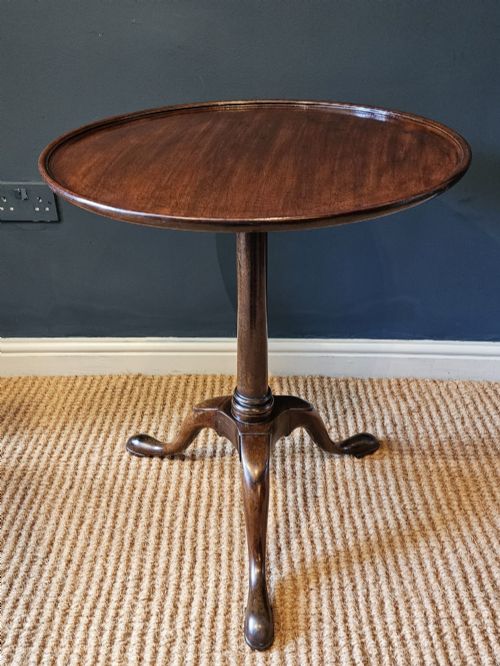
- A small table standing on three legs connected to a central pillar, occasionally incorporating a tilt-top mechanism.
- Nest of Tables
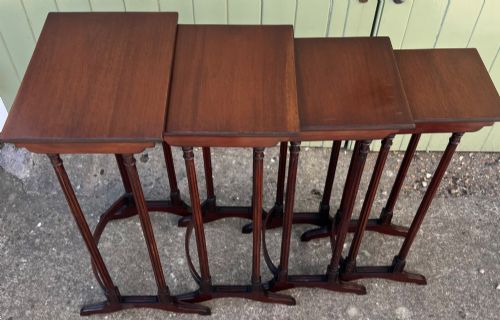
- A set of graduated tables designed to fit neatly beneath one another when not in use.
- Ormolu
- Gilded bronze used for decorative mounts and furniture ornamentation, common in French cabinet work.
- Gallery
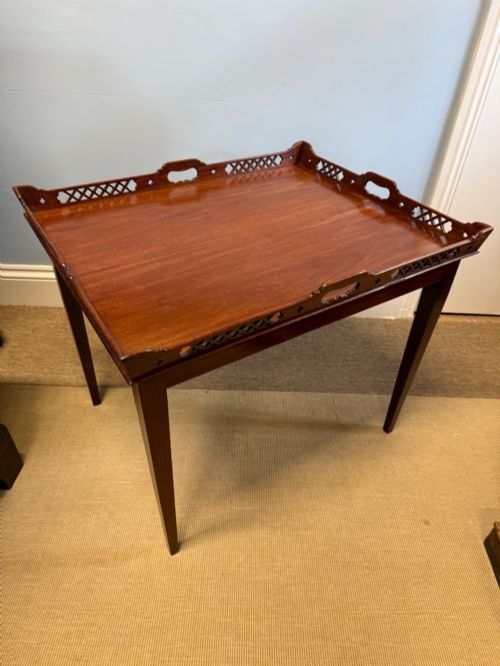
- A raised decorative edge or railing running around the perimeter of a tabletop to prevent items from sliding off.
Red Occasional Table: Frequently Asked Questions
Where do I put a red occasional table?
These compact tables fit easily beside a sofa, armchair or bed to hold lamps, drinks or decorative objects. Their small scale allows them to move between rooms without dominating the floor plan.
Lacquered or painted versions also serve as standalone accent pieces in hallways or corners where a flash of colour is needed.
How do I care for lacquer and painted finishes?
Keep lacquered and painted surfaces away from direct sunlight and excessive moisture to prevent fading or lifting of the finish. Dust gently with a dry, soft cloth and avoid chemical polishes.
Use coasters under glasses and mats under hot items to protect delicate antique surfaces from rings and heat damage.
What is the difference between a lamp table and a wine table?
Lamp tables generally offer a slightly wider surface area designed to support a lighting fixture and small accessories. Wine tables traditionally feature smaller tops, often on tripod bases, intended for holding a single glass or bottle.
Both fall under the broader category of occasional tables due to their flexible utility.
How do I identify a Chinoiserie table?
Chinoiserie tables feature painted or lacquered orientalist motifs, typically showing figures, landscapes or floral designs against a coloured background such as red or black. These pieces date across various periods from the eighteenth to the early twentieth centuries.
They often incorporate gilt detailing and contrasting borders to emphasise the decorative panels.