


Red Kazak Runner
When you search for a red kazak runner, you step into the bold geometry and saturated hues of Caucasian tribal weaving.
Red Kazak Runner
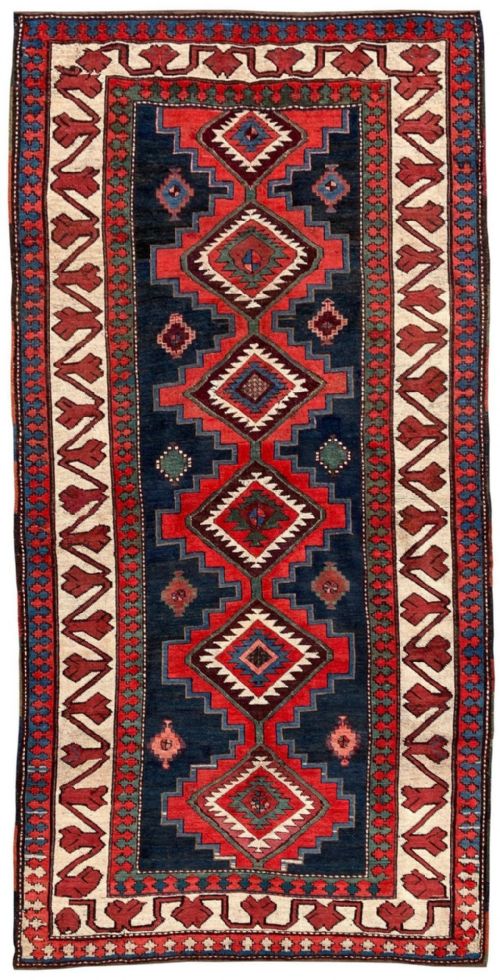
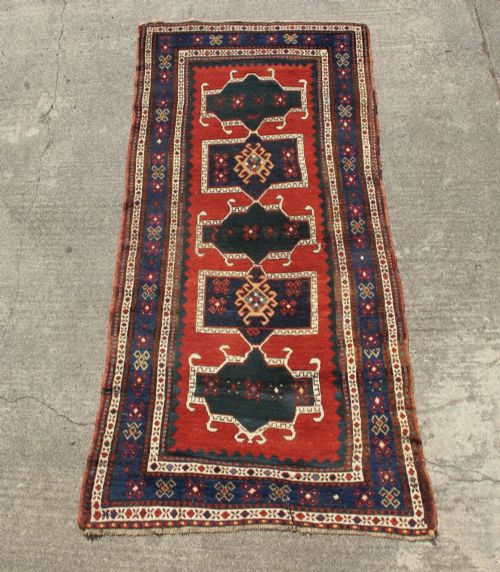
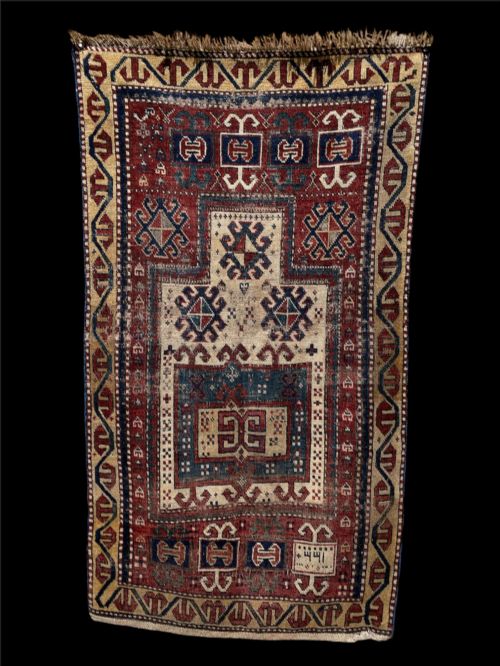
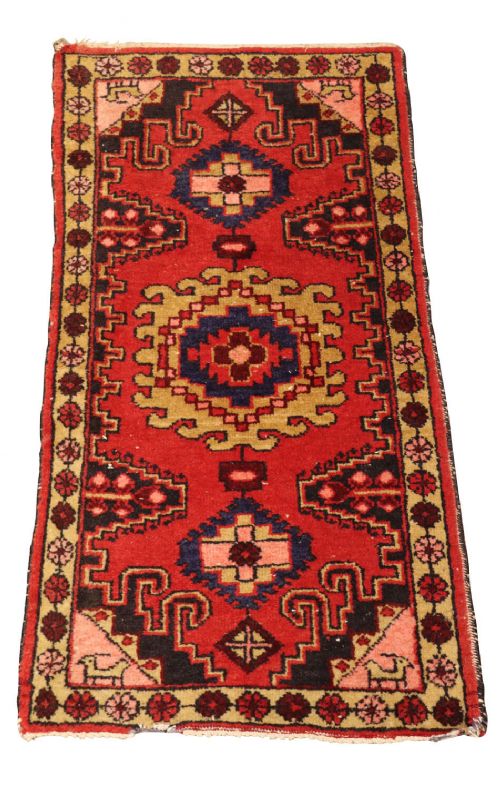
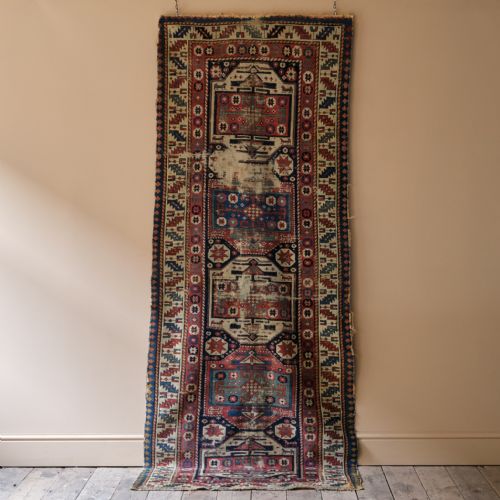
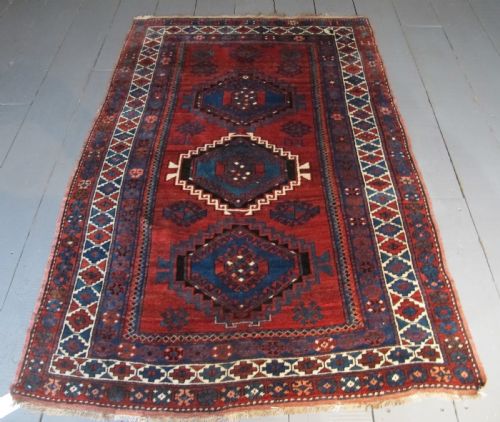
A red kazak runner brings the striking visual language of the Caucasus into a long, narrow format suited for hallways and corridors. These pieces originate from tribal and village workshops across the region, dating from the nineteenth and early twentieth centuries.
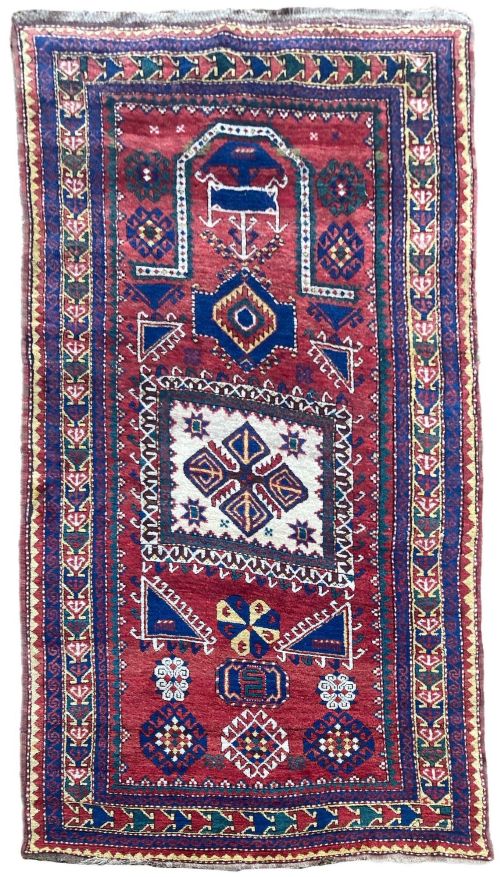
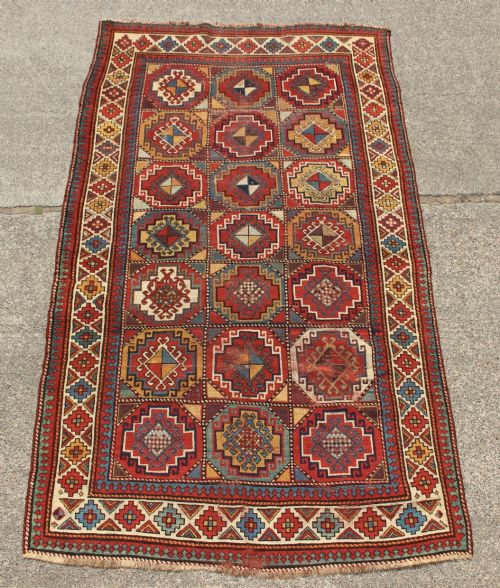
Buyers will encounter specific regional subtypes within these listings, including Moghan, Gendje, and Fachralo pieces. These variations display distinct formatting, from hooked medallions and Memling guls to repeating diagonal stripes and animal motifs.
Materials and Construction
Weavers constructed these long carpets using wool for the pile and foundation, often incorporating hand-spun wool that accepts dye with subtle tonal variation. Cotton foundation threads appear alongside wool, providing structural stability to the dense pile.
Makers relied upon natural dyes to achieve the deep reds and contrasting tones characteristic of the tradition. Hand-knotting techniques bound the wool firmly to the warp and weft, producing durable textiles designed for heavy use.
Keep an eye out for rogue horses and small figures trotting across the geometric fields of nineteenth-century village weaves.
Assessing Quality and Execution
The precision of the geometric drawing and the saturation of the natural dyes separate finer examples from simpler village work. Crisp latch hooks and well-defined medallions indicate a weaver with exceptional control over the traditional grid.
Pile density and the condition of the wool also dictate the calibre of a runner. Retaining a generous pile height preserves the clarity of the design and the rich depth of the red ground over decades of foot traffic.
The Red Kazak Runner Glossary
- Kazak
- A designation given to rugs woven in the Caucasus region, known for strong geometric designs and primary colour palettes. These tribal pieces frequently feature bold medallions and latch-hook details.
- Memling Gul
- An octagonal medallion motif with hooked edges, named after the fifteenth-century painter who depicted similar carpets. This geometric emblem appears frequently in Moghan village weaves.
- Boteh
- A stylised almond or pear-shaped motif representing a floral shoot or cypress tree. Weavers arrange these symbols in repeating rows or diagonal bands across the field.
- Latch Hook
- A stepped triangular or square extension projecting from the edge of a medallion or border. This geometric device is a defining characteristic of Caucasian tribal design.
- Fachralo
- A specific village style within the region typically distinguished by large central prayer panels or distinct square medallions. These rugs often display bold contrasting blocks of colour.
Red Kazak Runner: Frequently Asked Questions
Where should I place a runner?
These long formats suit high-traffic corridors, hallways, and entryways where their narrow dimensions span the floor effectively. The durable wool construction handles regular movement while introducing strong colour to transitional spaces.
Ensure you place a suitable underlay beneath the textile to prevent sliding on hard floors and to reduce friction on the historical foundation fibres.
How do I clean an antique runner?
Gentle surface vacuuming without a rotating brush helps remove embedded dust from the wool pile. Professional textile conservators should handle any wet cleaning to protect the natural dyes.
Avoid exposing the wool to direct sunlight for prolonged periods, as intense rays can fade the rich red tones over time.
What motifs appear on these rugs?
Design elements include hooked medallions, diagonal stripes, and repeating octagons known as guls. Some examples incorporate figurative elements such as animals, horses, and human figures in folk art traditions.
These symbols reflect the cultural heritage of the weavers, passed down through generations of village workshops.
How do I date an older piece?
Examination of the wool spin, dye palette, and structural weave helps establish the period of manufacture. Hand-spun wool and a reliance on natural dyes typically point towards nineteenth and early twentieth-century production.
Structural irregularities in older village weavings also indicate hand-loom construction predating standardised modern manufacturing.