
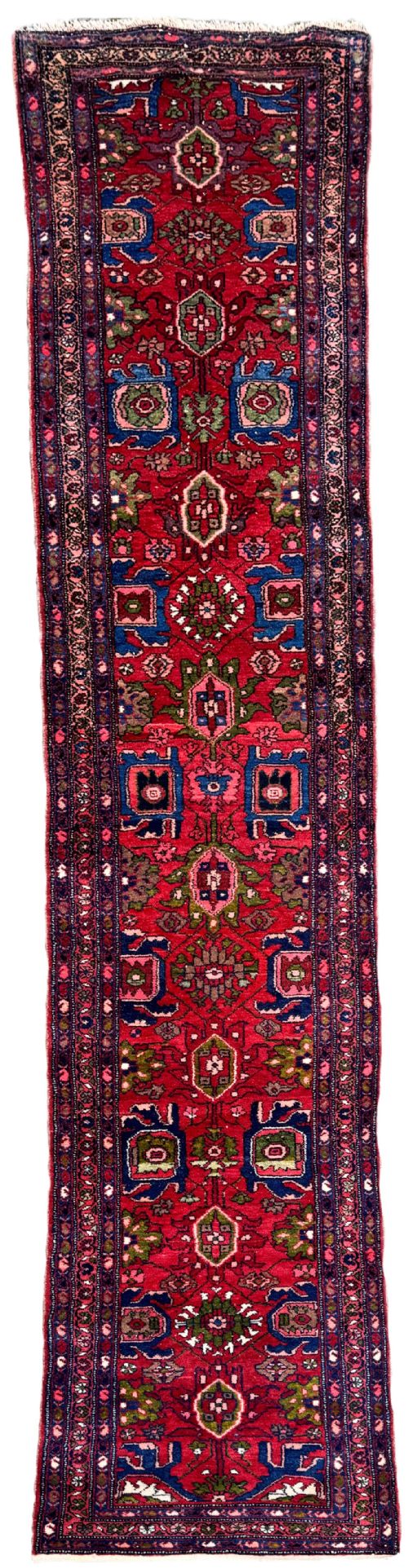
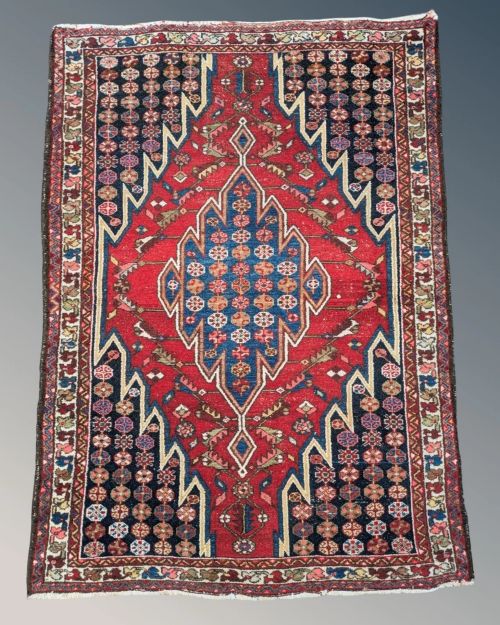
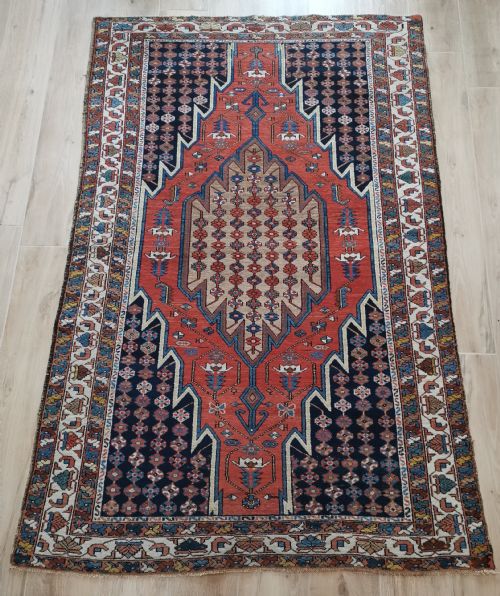
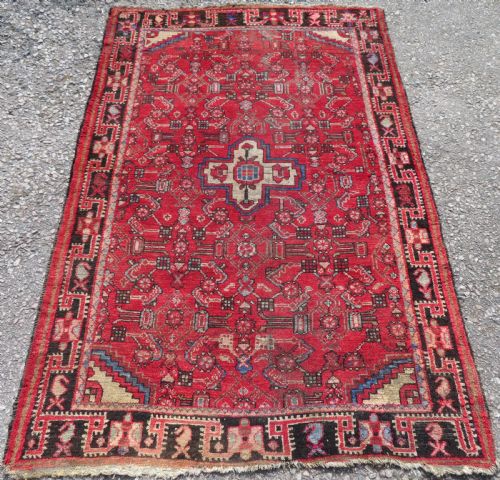
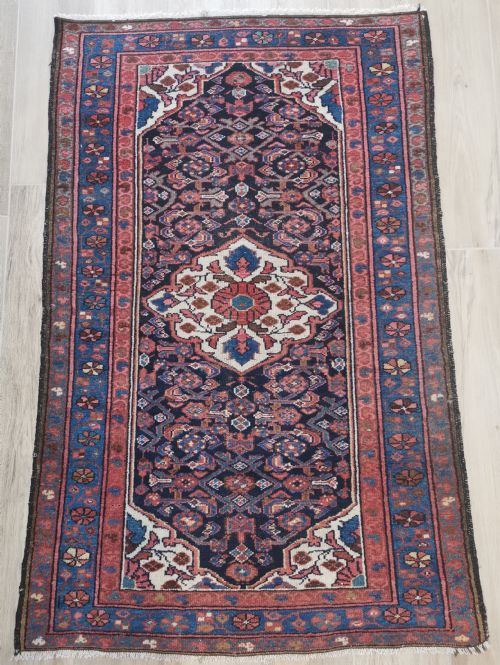
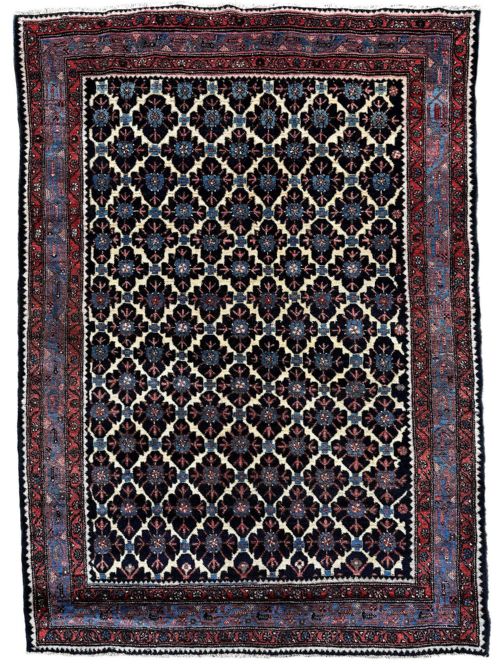


Red Hamadan Carpet Runner
A red hamadan carpet runner brings lasting character to a hallway, woven by village hands in Persia from durable wool.
Red Hamadan Carpet Runner
A red hamadan carpet runner serves as a practical floor covering designed specifically for narrow spaces like corridors and hallways. These pieces originate from the extensive Hamadan region in West Persia, encompassing various surrounding villages and weaving traditions. When searching for a red hamadan carpet runner, buyers typically encounter elongated formats featuring rich madder-red grounds and traditional village motifs.
The pieces listed here span the late nineteenth century through to the early decades of the twentieth century. Alongside narrow runners, the selection includes related formats such as kelleh carpets, village rugs, and long floor coverings. Each item reflects the distinctive aesthetic of Persian tribal and traditional village workshops from periods including the 1890s, 1900s, 1910s, 1920s, and 1930s.
Materials and construction
These floor coverings are constructed using sturdy wool pile knotted onto a foundational cotton warp and weft. The natural resilience of wool provides a thick and hardwearing surface capable of withstanding heavy foot traffic in domestic settings. Weavers utilised traditional hand-knotting techniques passed down through generations in West Persian villages.
The production relies on natural and early synthetic dyeing methods to achieve the characteristic deep red tones seen across the region. Local materials and regional wool qualities impart a substantial weight and firm handle to the finished carpets and runners.
Listings span several decades, featuring pieces produced between the 1890s and the 1930s using traditional wool and cotton materials.
Distinctions in quality
Quality in these West Persian textiles depends heavily on the fineness of the knotting and the crispness of the geometric or floral lattice design. Tighter foundations and well-balanced proportions separate finer village productions from coarser utility grades. The handling of the wool pile, whether thick and plush or lower and tightly packed, dictates the longevity and tactile appeal of the runner.
The complexity and execution of the border guards and central field patterns also influence the overall standard. Pieces exhibiting precise symmetry, harmonious colour saturation, and specific named village origins like Borodjert or Sanjan generally represent the upper echelon of this weaving tradition.
The Red Hamadan Carpet Runner Glossary
- Hamadan
- A vast market and weaving region in West Persia encompassing hundreds of villages that produce distinct hand-knotted rugs and runners. Pieces from this area often share robust wool structures and rich red colourways.
- Runner
- A long, narrow carpet format traditionally utilised in hallways, corridors, and on staircases. These pieces are proportioned specifically to fit restricted spatial dimensions.
- Kelleh
- A large-sized rectangular rug format, broader than a runner but longer than a standard scatter rug. These substantial carpets were traditionally woven for specific room dimensions in Persian homes.
- Warp
- The vertical structural threads stretched tightly on the loom before knotting begins. Cotton is commonly used for these foundation threads in West Persian village weaving.
- Weft
- The horizontal threads passed back and forth through the warp threads to secure the knots in place. This contributes to the structural integrity and rigidity of the carpet.
Red Hamadan Carpet Runner: Frequently Asked Questions
Where should I place a long runner?
These narrow formats suit hallways, corridors, and transition spaces where traditional carpets are too wide. Their elongated proportions draw the eye along the length of a room while protecting high-traffic flooring.
Ensure you measure the available floor space carefully, leaving a uniform border of exposed wood or tile on either side of the textile.
How do I care for antique wool runners?
Regular gentle vacuuming without a rotating brush roll prevents dust and grit from settling deep into the wool pile. Professional cleaning suited for antique textiles maintains the integrity of the natural dyes.
Rotate the runner periodically to ensure even wear across the surface from foot traffic and sunlight exposure.
What defines the Hamadan style?
Hamadan village weaving is characterised by sturdy wool construction, geometric or stylized floral motifs, and predominant use of madder red and indigo blue. The designs often incorporate repeating medallions and intricate border guards.
Individual villages within the region contribute subtle variations in palette and drawing style, creating diverse visual results.