
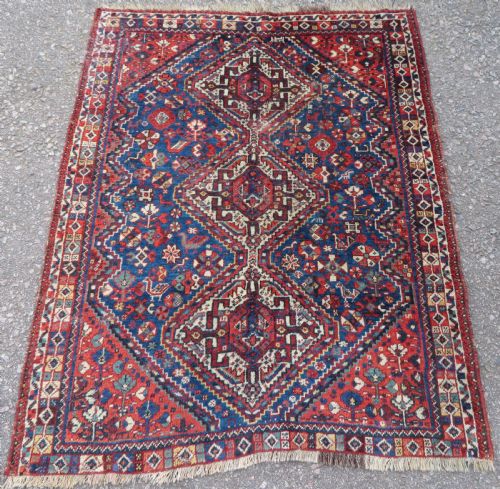
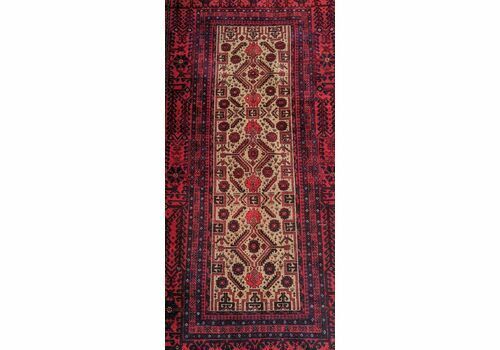
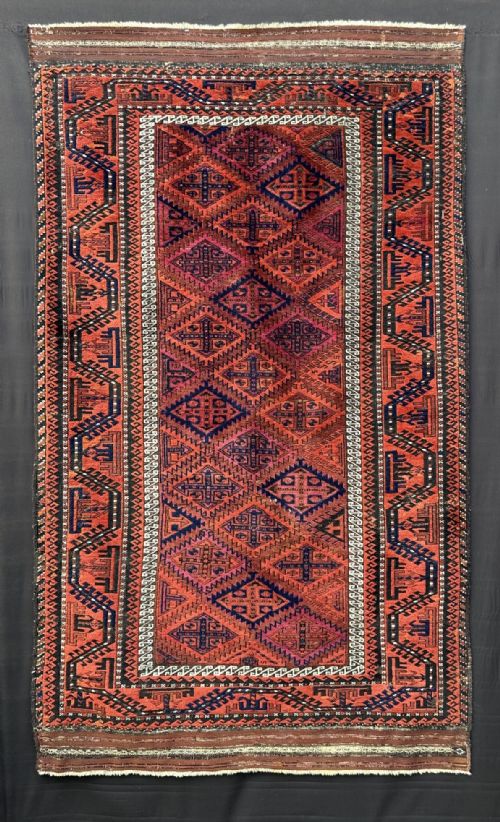
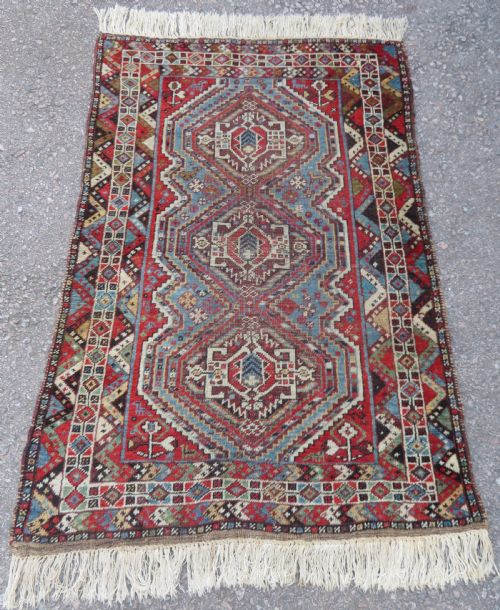
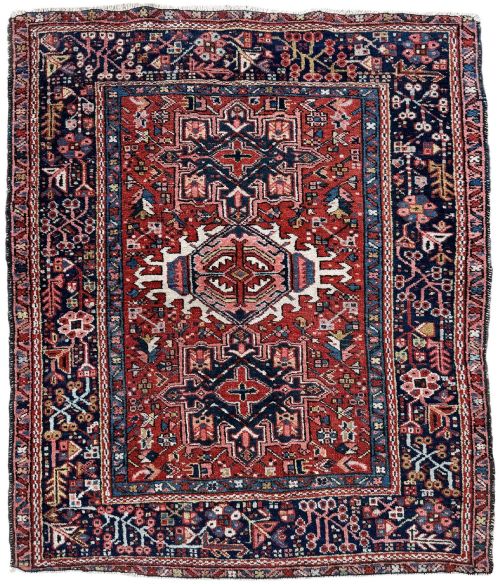
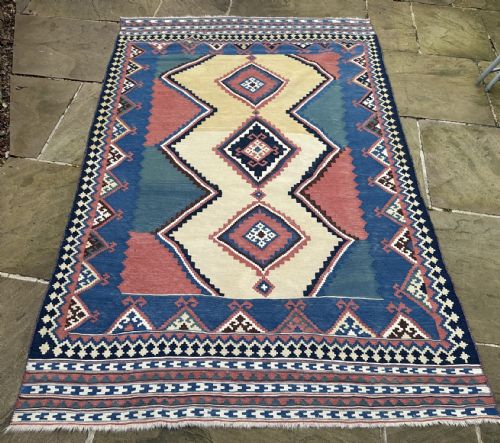

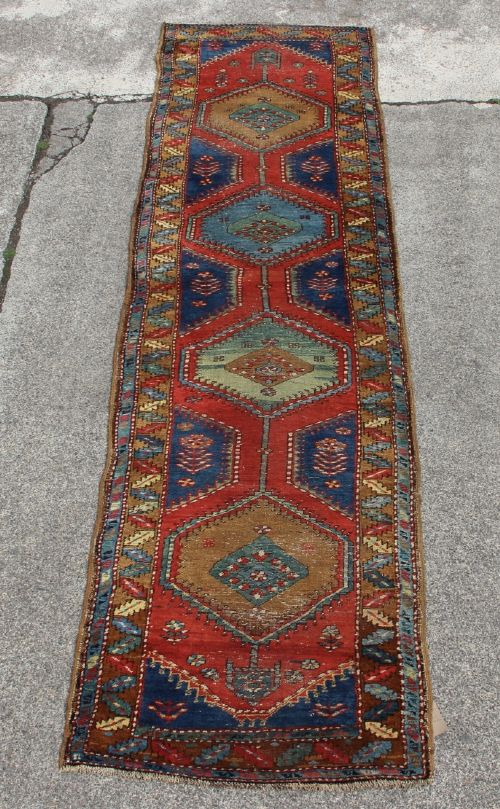


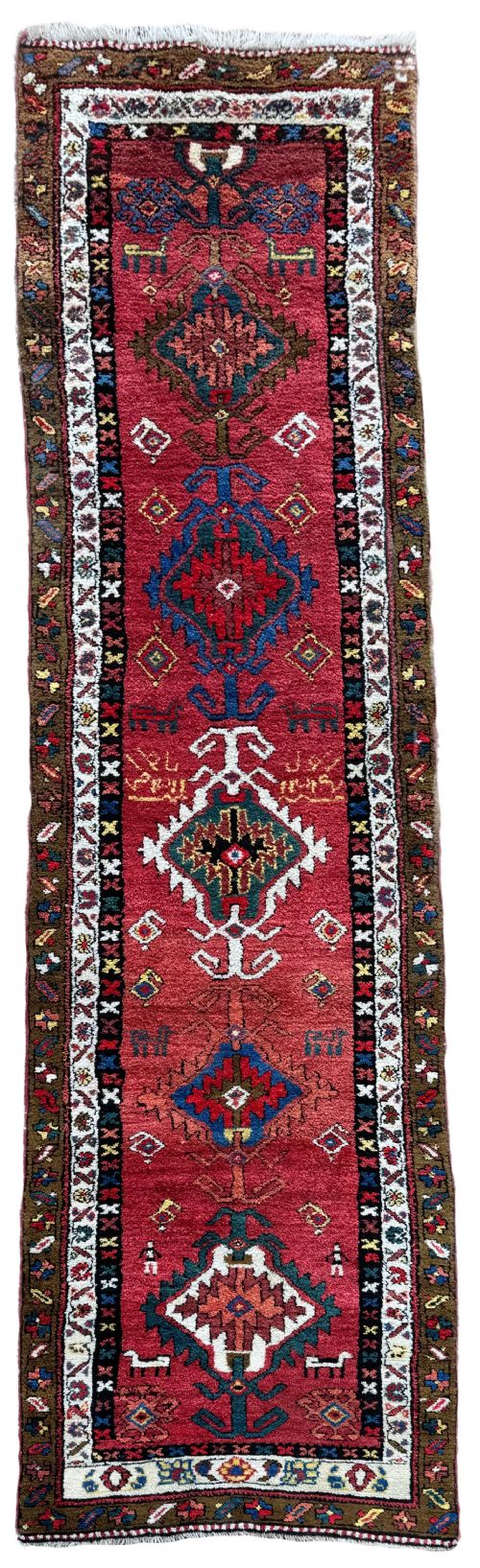
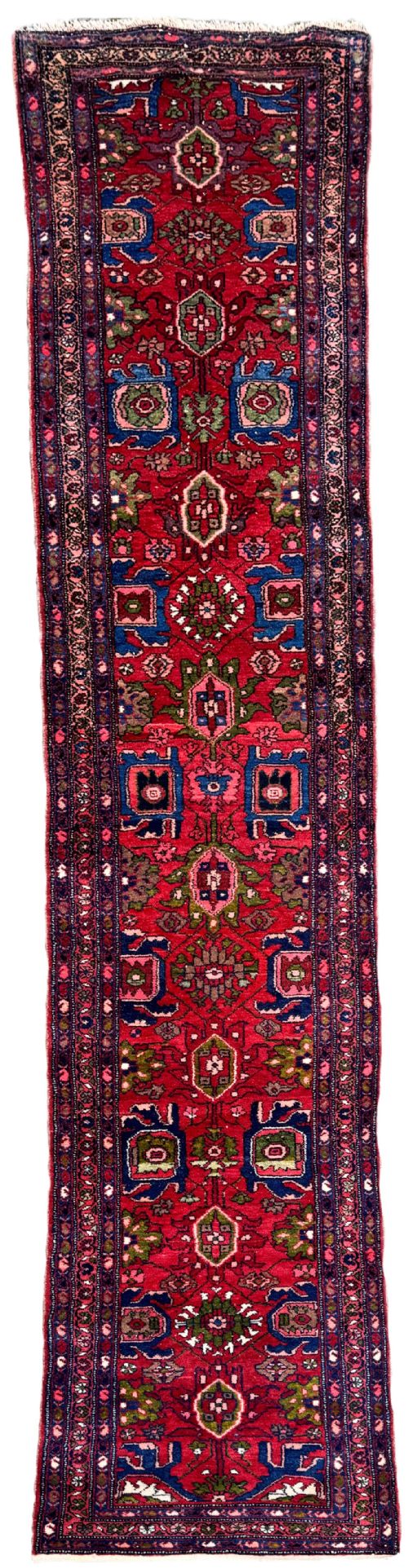
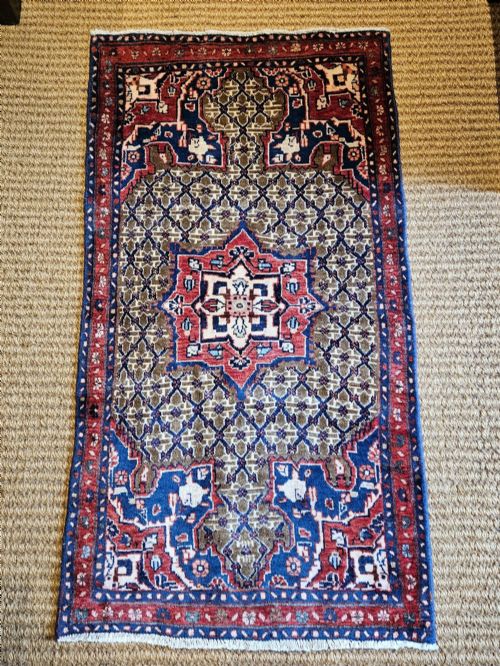
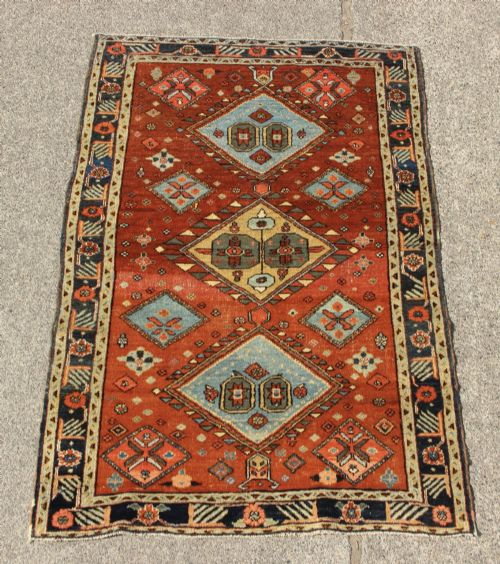
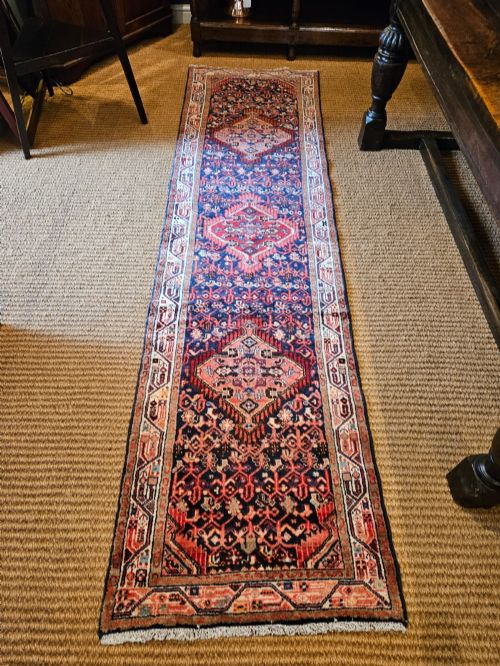
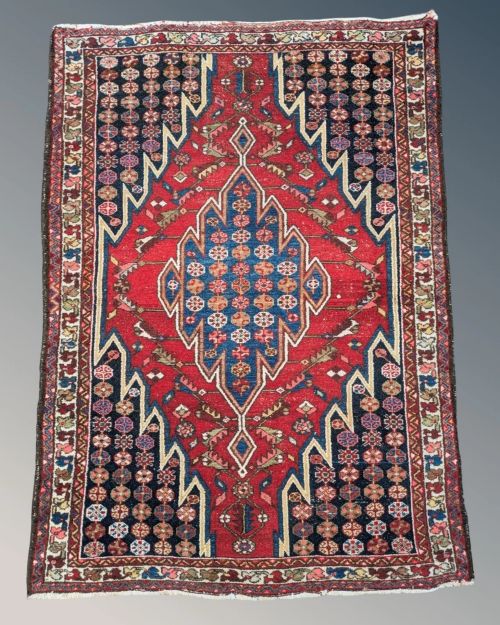
Red Geometric Persian Runner
A red geometric persian runner brings enduring tribal character and linear depth to a hallway.
Red Geometric Persian Runner
A red geometric persian runner is a long, narrow floor covering originating from various regions and tribes across Persia, designed primarily for corridors and hallways. When searching for a red geometric persian runner, buyers encounter examples spanning from the nineteenth century through the early decades of the twentieth century. These pieces display linear motifs, medallions, and repeat patterns rooted in traditional village and tribal weaving practices.
The selection includes specific regional provenances such as Heriz, Hamadan, Kurdish, and Baluch workshops or tribal groups. Formats range from narrow hallway runners to elongated long rugs, utilising saturated red grounds offset by contrasting geometric designs. Buyers find pieces shaped by distinct regional aesthetics, varying from bold rectilinear Heriz compositions to intricate tribal field patterns.
How They Were Made
These floor coverings are constructed using wool and pure wool piles knotted onto cotton or wool foundation warps and wefts. Artisans employed hand-weaving techniques passed down through generations, building the structure knot by knot to ensure dense, durable surfaces suitable for heavy foot traffic.
Colour comes from natural dyes derived from plant and mineral sources, creating rich red tones that mellow gracefully over decades. The interplay of these organic colorants gives each runner its distinctive depth and tonal variation across the field.
Several pieces are recorded simply as hearth sized, designed long ago to sit comfortably in front of a warm open fireplace.
What Varies in Quality
Knot density and structural tightness set finer examples apart from coarser village productions, influencing how crisply the geometric motifs resolve. A tighter weave provides greater resilience against daily wear in high-traffic corridors.
The purity and complexity of the natural dye palette determine visual impact, with superior pieces exhibiting vibrant, harmonious colour saturation. Balanced proportions and precise execution of tribal medallion layouts elevate certain regional runners above standard domestic output.
The Red Geometric Persian Runner Glossary
- Runner
- A long, narrow carpet format traditionally utilised in hallways, corridors, and narrow passageways. These pieces measure significantly longer than they are wide.
- Natural Dyes
- Organic colorants sourced from plants, roots, and minerals prior to the widespread adoption of synthetic alternatives. They age gracefully and develop subtle tonal shifts over time.
- Heriz
- A region in north-west Persia known for producing sturdy carpets featuring bold, large-scale geometric medallions and rectilinear designs. These pieces often incorporate a prominent central motif.
- Baluch
- A tribal group inhabiting regions of Persia and surrounding areas, known for producing smaller rugs and runners with distinctive geometric field patterns and dark colour palettes.
- Warp
- The vertical foundation threads stretched lengthwise on the loom onto which the pile knots are tied. The weft threads are then inserted across them to secure the structure.
Red Geometric Persian Runner: Frequently Asked Questions
Where should I place a runner?
These long formats suit hallways, corridors, and narrow entryways where linear floor space benefits from defined warmth and pattern. They add character to transit areas while protecting underlying floorboards.
Positioning them away from direct, unmanaged moisture helps preserve the wool pile and natural foundation fibres over extended periods of daily use.
How do I clean my rug?
Gentle, regular surface care keeps wool fibres clear of embedded grit and dust that can weaken the foundation structure over time. Professional cleaning tailored to antique textiles remains the safest method for deeper maintenance.
Avoid harsh chemical treatments or excessive water immersion, as these traditional natural dyes and wool piles react poorly to aggressive washing techniques.
Are these runners durable?
Traditional hand-knotted construction using sturdy wool pile on solid foundations makes these pieces remarkably resilient for everyday domestic environments. Their dense structure handles corridor foot traffic successfully when paired with a suitable underlay.
Rotating the placement periodically ensures even wear across the surface, especially in high-use transitional spaces.
How do I identify different regional types?
Distinguishing regional origins relies on observing specific design vocabularies, border arrangements, and structural characteristics unique to each weaving group. For instance, Heriz pieces display bold rectilinear medallions, whereas Baluch or Kurdish examples often feature darker, denser tribal field motifs.
Examining the knotting style and foundation materials on the reverse side provides further clues regarding where and how the piece was made.