


Red Gemstone Halo Ring
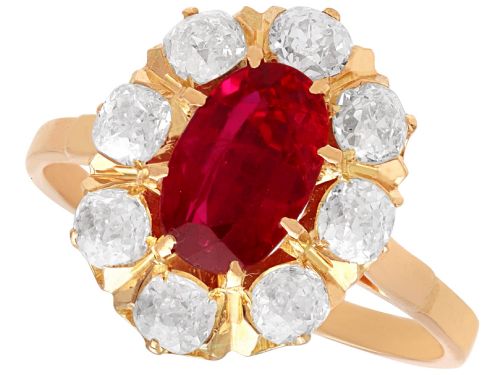
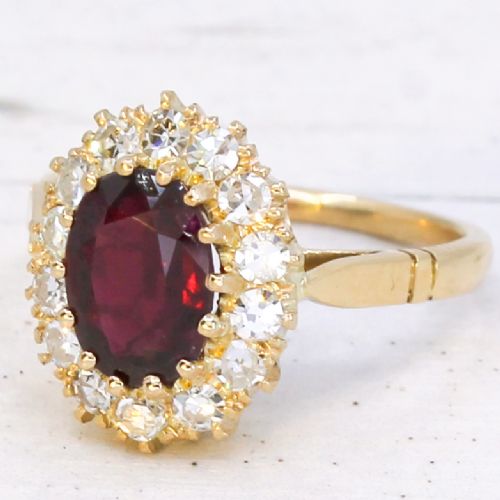
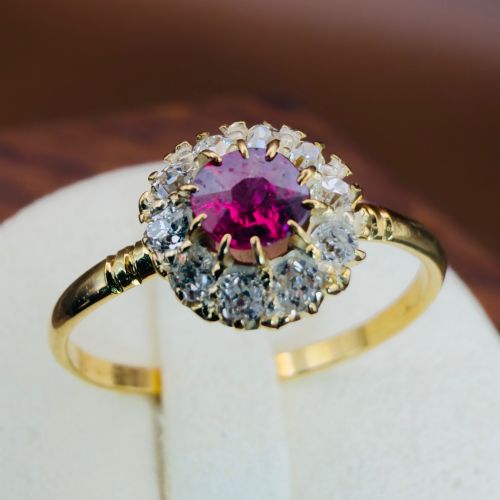
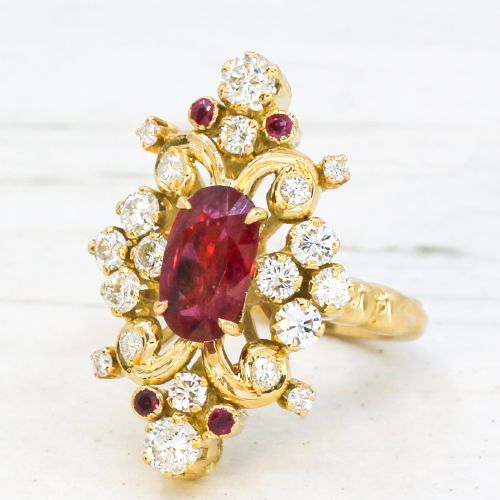
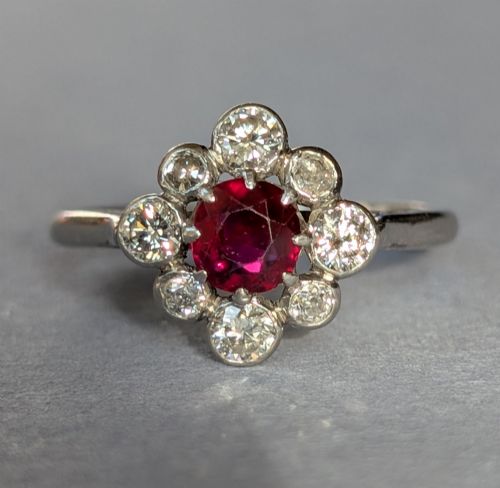
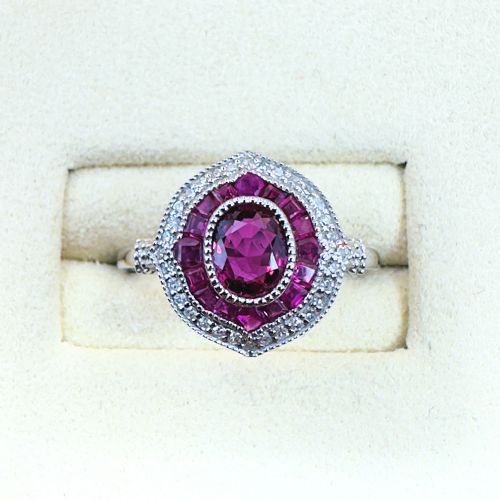
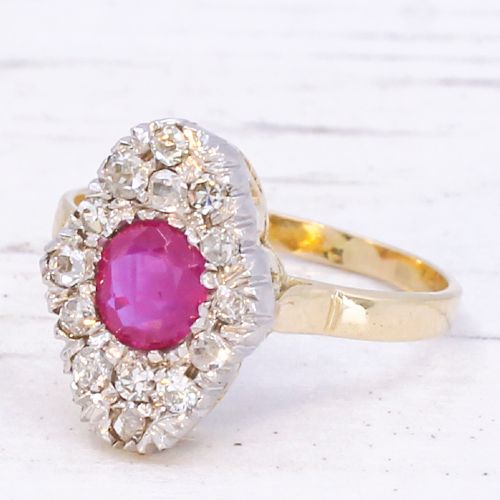
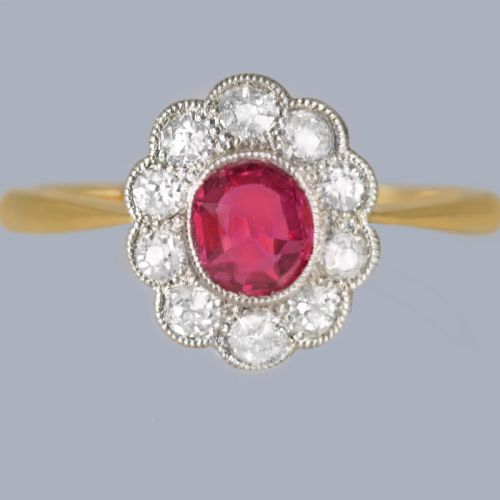
A red gemstone halo ring brings together a central ruby or garnet encircled by diamonds, offering a bright splash of colour on the finger.
Red Gemstone Halo Ring
A red gemstone halo ring centres on a red stone such as a ruby or garnet surrounded by a border of smaller diamonds. These pieces span periods from Victorian and Edwardian to Art Deco and mid-century.
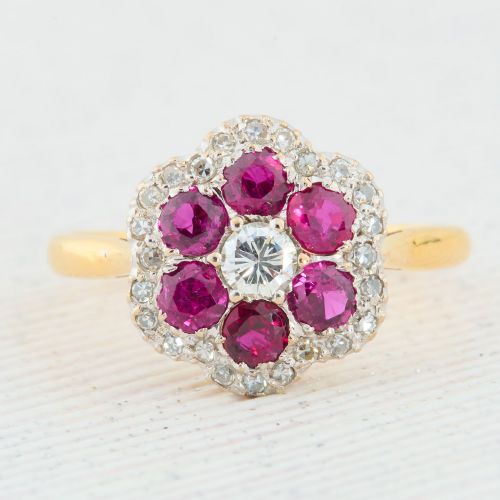
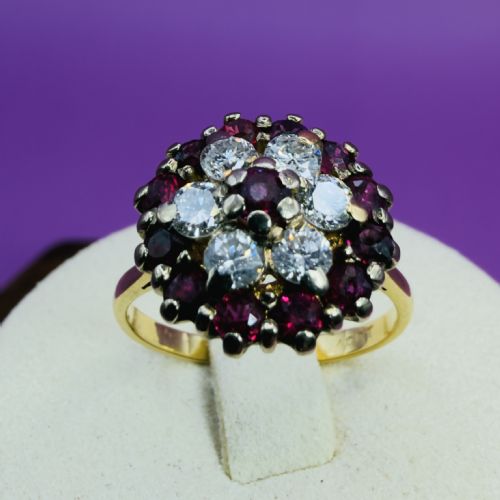
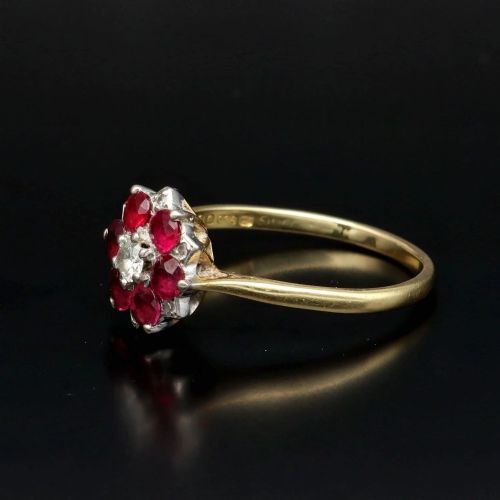
The most frequent form on this page is the cluster ring, where the central red gemstone is held securely within a bright ring of diamonds. Examples range from early Victorian yellow gold settings to platinum Art Deco designs.
Makers utilised distinct mountings across the decades, moving from heavy yellow gold in the nineteenth century to crisp white gold and platinum in the twentieth century.
Materials and Construction
Goldsmiths constructed these rings primarily in 18ct gold, 18ct white gold, yellow gold, and platinum, frequently pairing the white metals with diamonds to enhance their sparkle.
Central stones comprise rubies and garnets, often secured with claw or bezel settings while the surrounding diamond halo is closely packed to frame the red core.
Listings feature yellow gold, white gold, and platinum alongside ruby, garnet, and diamond across periods from the Victorian era to the mid-century.
Quality and Distinction
The distinction between tiers rests on the origin and treatment of the central red gemstone, with unheated rubies from sources like Mogok or Burma holding particular interest.
Metalwork finesse also dictates the standard, as finely milled platinum or gold claw work provides a more harmonious balance between the central red stone and the diamond halo than heavier, less refined castings.
The Red Gemstone Halo Ring Glossary
- Halo
- A ring of smaller gemstones surrounding a larger central stone. This layout magnifies the visual impact of the centre ruby.
- Cluster ring
- A jewellery design featuring a main gem grouped closely with smaller stones. It creates a bold floral or geometric silhouette.
- Old cut diamond
- A hand-faceted diamond cut popular before modern machinery standardised proportions. These stones possess smaller tables and broad facets.
- Unheated ruby
- A corundum gemstone that has undergone no thermal enhancement to improve colour or clarity. Natural stones retain their original internal characteristics.
- Marquis cluster
- A boat-shaped gemstone arrangement ending in sharp points. It elongates the appearance of the finger.
Red Gemstone Halo Ring: Frequently Asked Questions
How do I care for my ring?
Clean these rings gently using warm soapy water and a soft brush to remove dust from beneath the stone settings. Avoid harsh chemical dips, particularly if the ring contains softer gems or seed pearls.
Store each piece separately in a lined box to prevent the diamonds from scratching softer gold bands or adjacent stones.
How do I identify the period?
Examine the metal choices and cutting styles, as Victorian and Edwardian examples often utilise yellow gold and old cut diamonds. Art Deco pieces favour platinum or white gold alongside precise geometric arrangements.
Gemmological reports often confirm the era and origin of unheated rubies found in mid-century and earlier mountings.
Were these rings worn daily?
Original owners frequently wore these cluster rings for formal occasions or daily use depending on the era's fashions. Sturdier 18ct gold and platinum settings from the Edwardian and mid-century periods withstand regular wear well.
Prongs and claw settings should still be checked periodically by a jeweller to ensure the halo stones remain secure.