




Natural Ruby Cluster Ring
A natural ruby cluster ring brings together rich red gems and sparkling diamonds in lasting precious metal.
Natural Ruby Cluster Ring
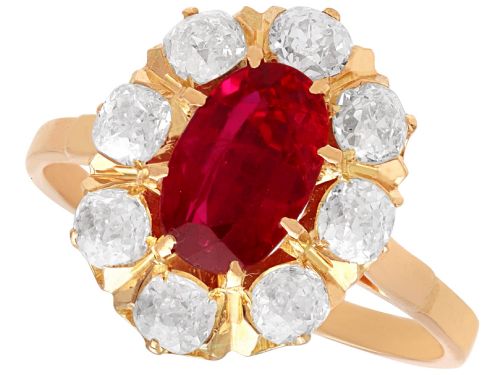
A natural ruby cluster ring is a finger ornament featuring a central red corundum surrounded by supporting stones, most commonly diamonds, set in precious metals. When searching for a natural ruby cluster ring, buyers encounter pieces spanning the Victorian, Edwardian, and Art Deco periods, alongside French examples.
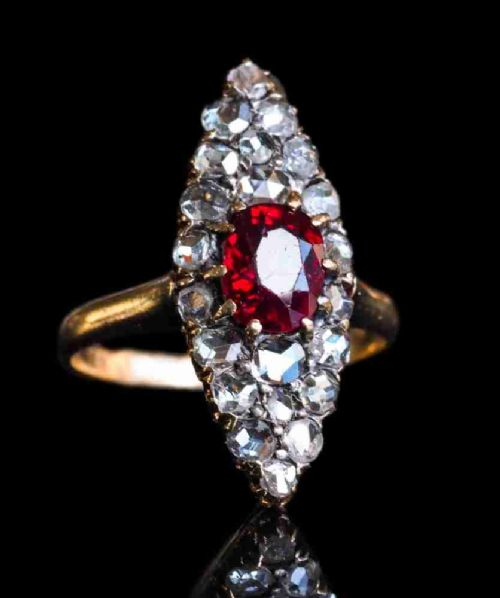
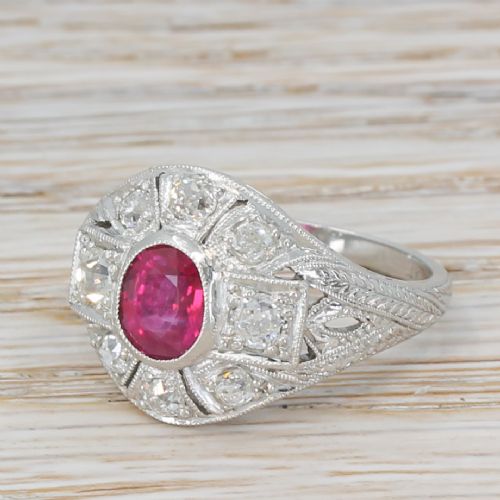
The designs range from traditional oval and round floral clusters to elongated navette shapes and geometric Art Deco layouts. These rings showcase varied gold tones and platinum settings that reflect the aesthetic preferences of their respective eras, from the late nineteenth century through the 1930s.
How they were made
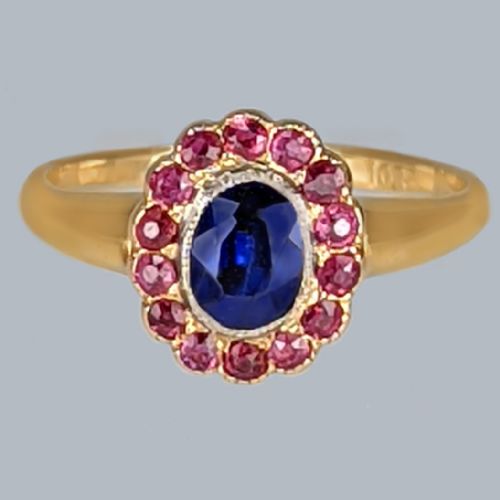
Goldsmiths constructed these clusters using 18ct yellow gold, 18ct rose gold, 18k gold, and durable platinum to secure the stones safely. Gems were shaped with old cut diamonds and rubies, sometimes accompanied by pearls or sapphires, mounted tightly together to create a dense display of colour and light.
French workshops and period jewellers employed specialised claw and bezel settings to hold the central stones and their surrounding borders. The structural frameworks utilised solid gold shanks and detailed gallery work underneath the face of the ring.
The selection spans four distinct eras: Victorian, Edwardian, Belle Epoque, and Art Deco, covering dates from 1880 to 1935.
What varies in quality
Quality rests in the origin and treatment of the gemstones, such as unheated stones and Burmese stones commanding particular attention from collectors. The clarity and cut of the surrounding old cut diamonds also determine the overall brilliance of the piece.
The fineness of the metalwork, including the precision of the cluster arrangement and the preservation of original French hallmarks or gem reports, sets exceptional pieces apart from standard examples.
The Natural Ruby Cluster Ring Glossary
- Cluster ring
- A ring design featuring a central stone encircled by a border of smaller gems. This layout maximises visual impact and light reflection on the hand.
- Navette ring
- An elongated boat-shaped cluster ring that sits lengthways along the finger. This distinctive silhouette appears frequently in Victorian and Edwardian jewellery.
- Old cut diamond
- A diamond cut by hand before modern machinery, characterised by a high crown, small table, and deep pavilion. These stones exhibit a soft, candlelit sparkle.
- Unheated ruby
- A ruby that has not undergone thermal enhancement to improve its natural colour or clarity. Such untreated stones are documented with gem reports.
Natural Ruby Cluster Ring: Frequently Asked Questions
How do I care for a ruby ring?
Rubies are a durable gemstone ranking high on the hardness scale, making them suitable for regular wear when handled with care. Clean the setting gently using warm soapy water and a soft brush to remove everyday oils from beneath the stones.
Avoid exposing antique rings to harsh chemical cleaners or ultrasonic machines, which can damage older settings and delicate pearls. Remove the ring during heavy manual tasks to protect the claws holding the diamonds and rubies.
Are these rings suitable for daily wear?
Many people wear antique cluster rings daily provided the settings remain secure and robust. Regular inspection by a jeweller ensures the claws and shank stay strong over time.
Because Victorian and Edwardian pieces possess delicate handmade details, mindful wear preserves their structural integrity. Saving the ring for lighter daily activities prevents unnecessary impact on the precious metal and stones.
How can I tell Victorian from Art Deco rings?
Victorian cluster rings often feature warm yellow gold settings, floral cluster shapes, and romantic navette silhouettes. Gemstones in these earlier pieces are typically secured in closed-back or heavy claw mounts.
Art Deco rings showcase geometric lines, checkerboard patterns, and bright white platinum or white gold settings. The transition from nineteenth-century styles to 1920s and 1930s designs brought sharp angles and streamlined symmetry to the forefront.
What does a gem report tell me?
A gem report provides professional laboratory verification of a stone's natural origin and details any treatments it has undergone. These certificates confirm whether a ruby is unheated or originates from Burma.
Independent documentation gives buyers confidence in the authenticity and specific characteristics of the central gemstone. Such reports accompany select antique pieces to verify their high quality.