
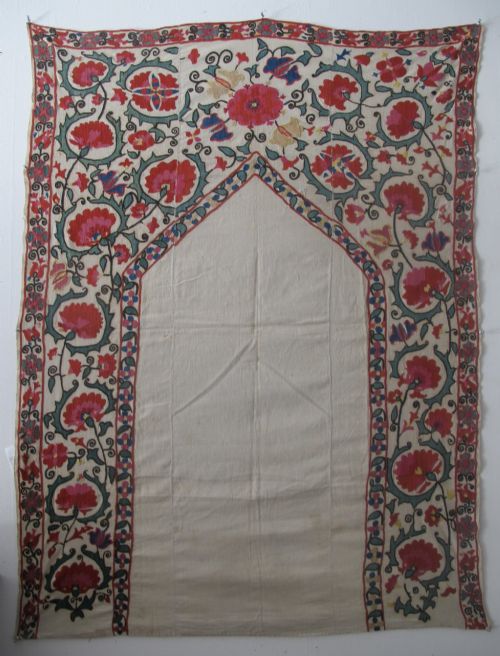
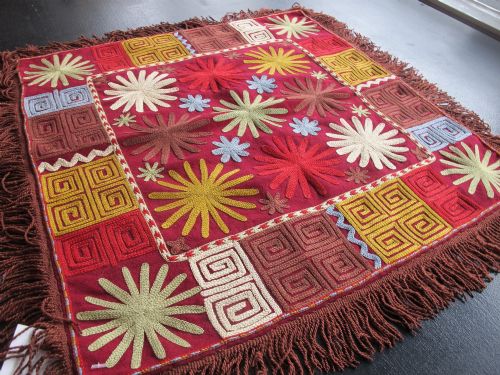
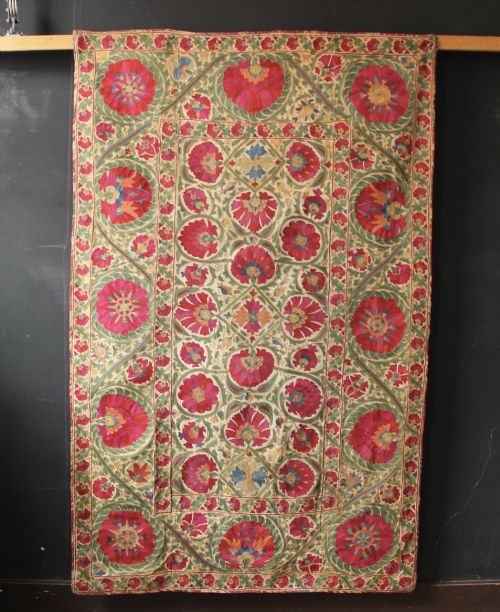


Red Floral Embroidery Hanging
These red floral embroidery hanging pieces bring rich Central Asian and Persian character to a wall.
Red Floral Embroidery Hanging
A red floral embroidery hanging brings together centuries of textile tradition from Central Asia and Persia, presented here as wall panels, rugs, and covers. When searching for a red floral embroidery hanging, collectors encounter traditional Suzanis from regions such as Bokhara, Shakhrisabz, and Nurata, alongside Persian Rasht embroideries. These textiles span periods from the eighteenth century through to the mid twentieth century, reflecting varied regional aesthetics.
The most common examples on this page are nineteenth-century Uzbek Suzanis and Persian Rasht pieces featuring silk needlework on cotton or felt grounds. Makers employed distinct regional motifs, including architectural designs, small floral medallions, and traditional tribal patterns. Each piece functions primarily as a wall hanging or decorative textile panel within a domestic space.
Materials and construction methods
Artisans constructed these textiles using foundational grounds of cotton, linen, wool, wool felt, or plain felt, upon which they worked detailed needlework. Silk thread forms the dominant embroidery medium, creating vibrant floral patterns and intricate geometric borders.
Techniques range from fine chain stitch embroidery to intricate silk and felt applique work. Workshops in regions like Rasht and Uzbekistan utilised specialised needle skills passed down through generations to secure durable, decorative surfaces.
Regional attributions in the inventory cover Uzbekistan centres like Bokhara and Samarkand, alongside Persian Rasht workshops.
Distinctions in execution and material
Quality in these textiles rests upon the fineness of the needlework and the complexity of the design layout. Finer stitches produce greater detail in floral medallions and architectural elements, separating standard domestic items from superior examples.
The choice and preservation of ground materials, such as heavy felt or closely woven cotton, influence the structural integrity of the hanging. Richer colour saturation in the silk threads and precise execution of traditional motifs indicate higher standards of craftsmanship.
The Red Floral Embroidery Hanging Glossary
- Suzani
- An embroidered tribal textile originating from Central Asia, traditionally worked in silk on a cotton or linen ground. These panels often display large floral designs and were made as part of a bride's dowry.
- Rasht embroidery
- A traditional Persian textile technique involving inlaid pieces of coloured felt and wool, embellished with fine chain stitch embroidery. These works frequently feature central floral medallions.
- Nim suzani
- A half-size Suzani variation, smaller than the full-scale hanging panels used in traditional Central Asian interiors. They offer similar decorative motifs on a more compact scale.
- Chain stitch
- An embroidery technique where loops of thread are linked in a chain pattern to form flowing lines and dense fills. It appears frequently in Kashmiri and Persian textile works.
- Applique work
- A sewing technique where pieces of fabric are applied to a larger ground material to build up a design. Persian Rasht embroideries make extensive use of this method with felt.
Red Floral Embroidery Hanging: Frequently Asked Questions
How were these textiles used originally?
Many of these pieces served as decorative wall hangings, bed covers, or ceremonial dowry items within Central Asian and Persian homes. They added warmth, colour, and status to domestic interiors.
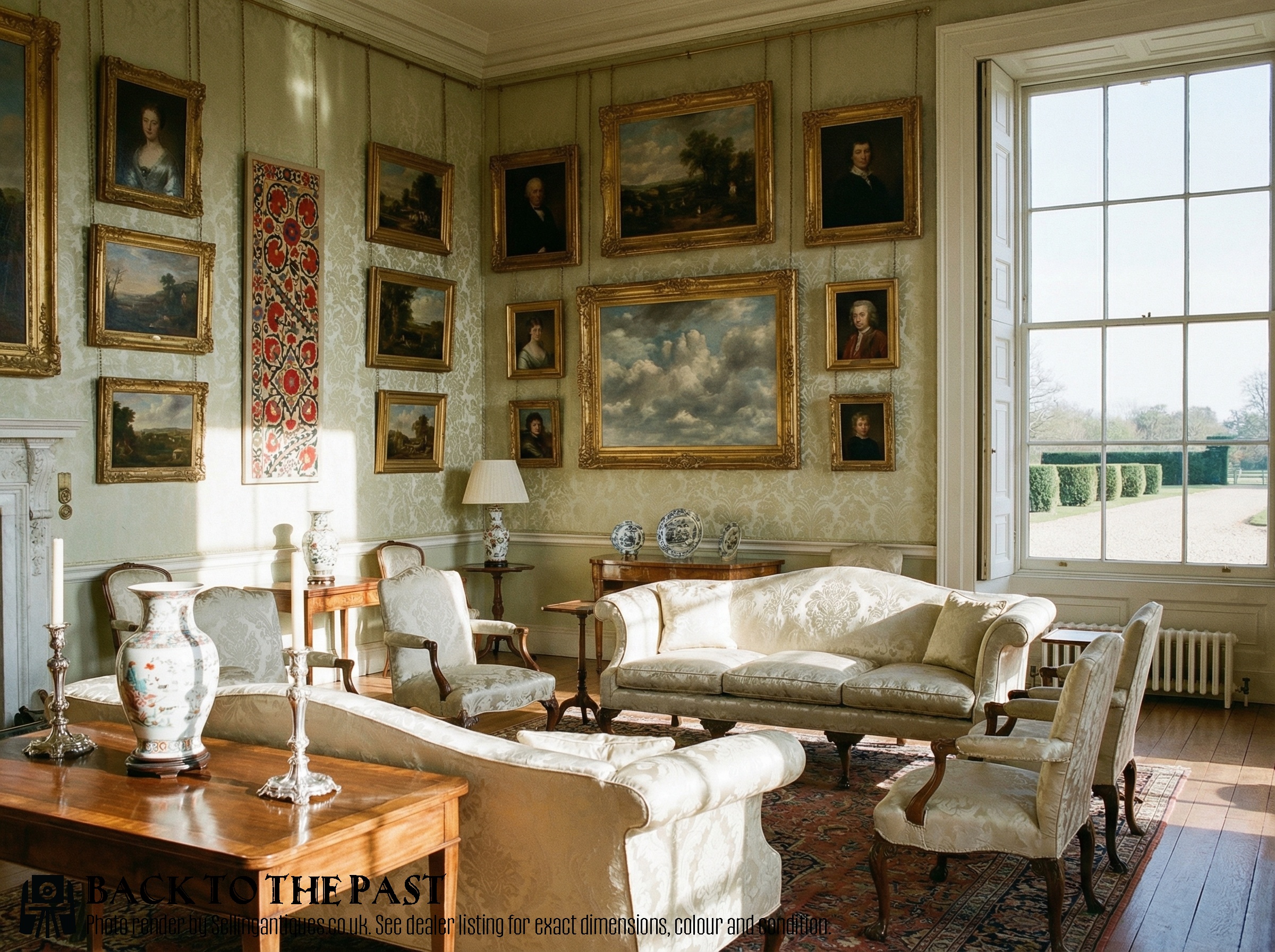
Over time, collectors adapted them for modern display, mounting them on walls or using them as textile panels to protect and showcase their historic needlework.
How do I hang a textile safely?
Hanging an antique textile requires weight distribution to prevent strain on the historic fabric and silk threads. Methods often involve stitching a fabric sleeve to the reverse and sliding a padded support rod through.
Direct sunlight and high humidity can damage delicate silk and wool fibres, so placement away from direct windows preserves the colours and structural integrity.
How do I distinguish regional Suzani styles?
Bokhara and Samarkand pieces often feature bold floral sprays and distinctive medallion layouts, while Nurata Suzanis display finer, more naturalistic botanical arrangements. Regional workshops utilised specific colour palettes and compositional habits.
Examining the ground fabric, whether cotton, linen, or wool, alongside the density of the silk embroidery helps narrow down the probable place of origin.
What distinguishes Rasht embroidery from Suzanis?
Rasht embroidery originates from Persia rather than Central Asia, relying heavily on wool felt grounds with silk applique and chain stitch work. The visual effect prioritises inlaid colour blocks over purely needle-drawn botanical motifs.
Suzanis are primarily silk-embroidered cotton panels from Uzbekistan, featuring distinct floral vines and geometric framing elements characteristic of nomadic and settled tribal groups.