



Central Asian Embroidered Art
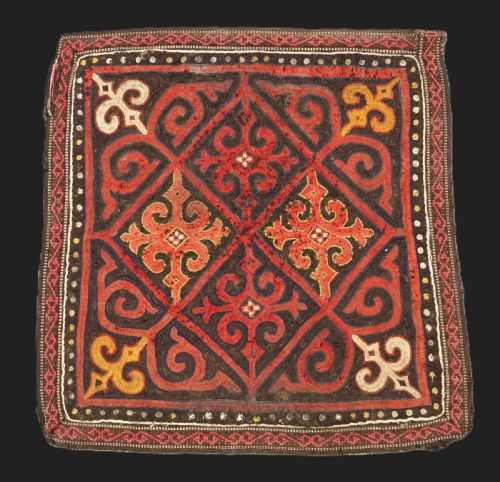
Central asian embroidered art brings together tribal hangings, dowry pieces and ceremonial textiles carrying centuries of nomadic heritage.
Central Asian Embroidered Art
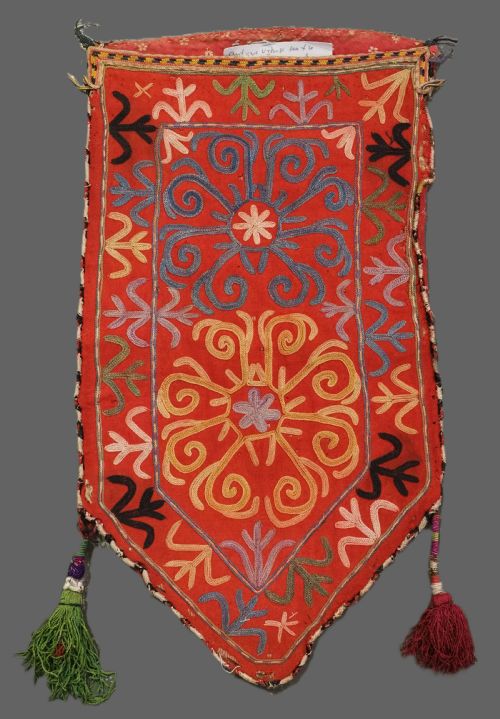
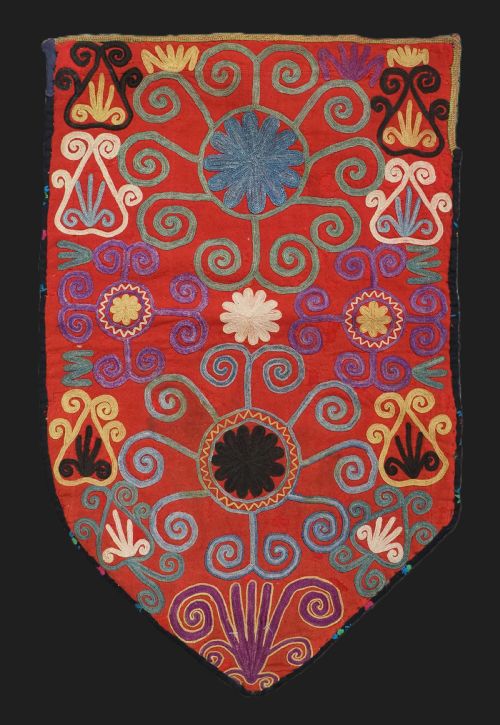
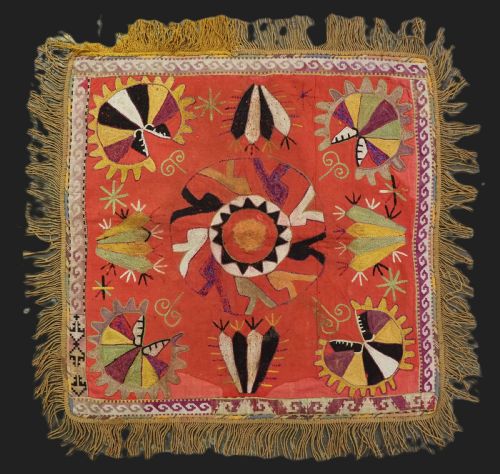
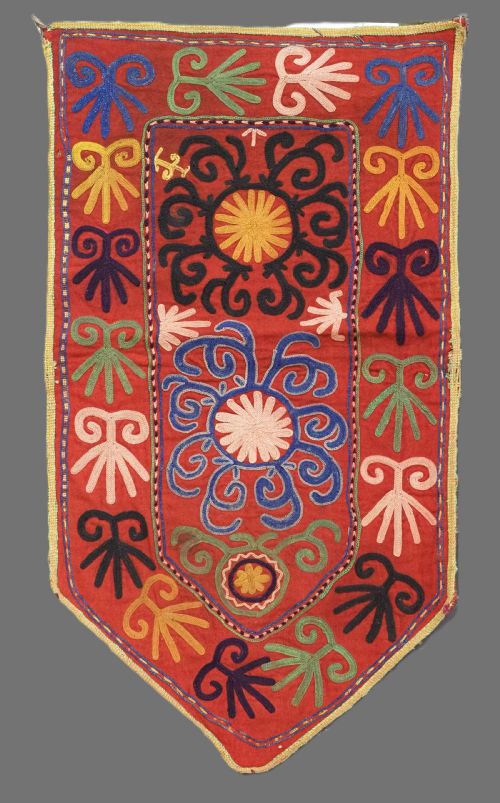
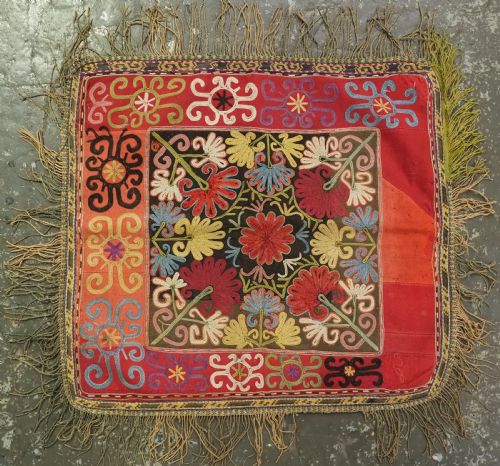
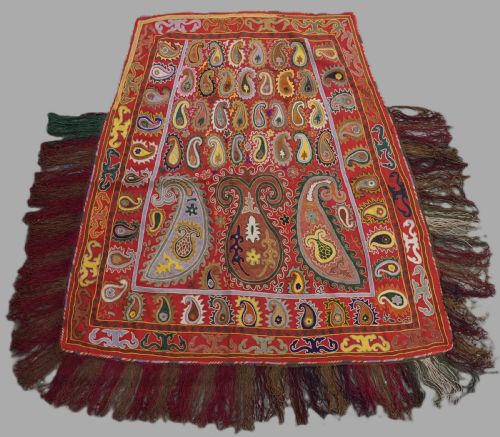
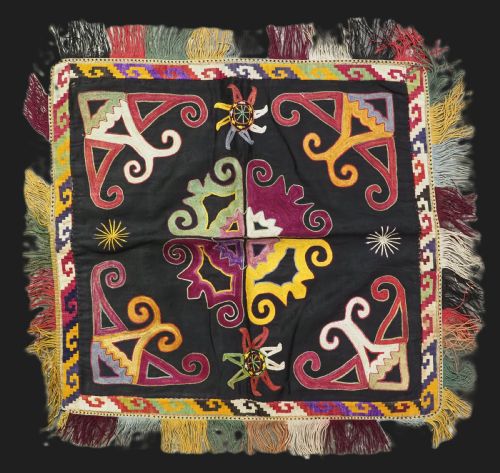
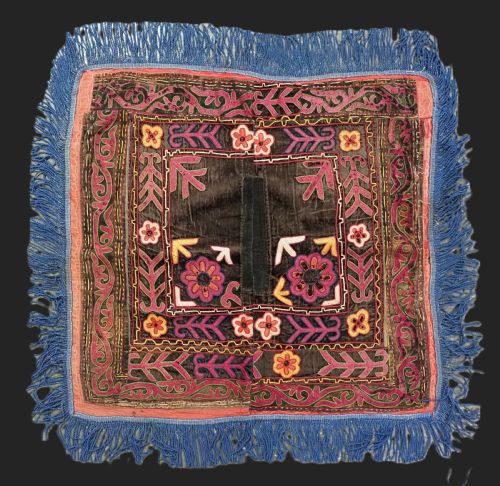
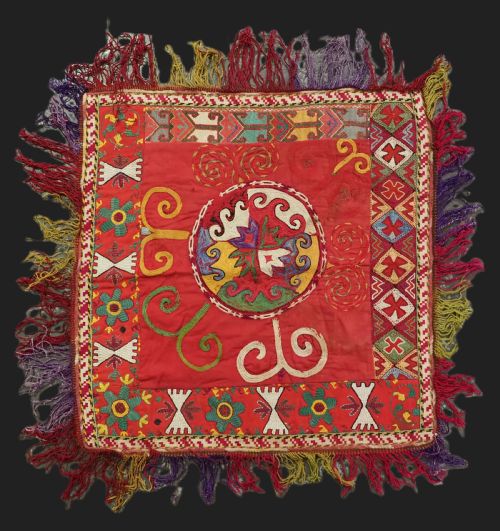
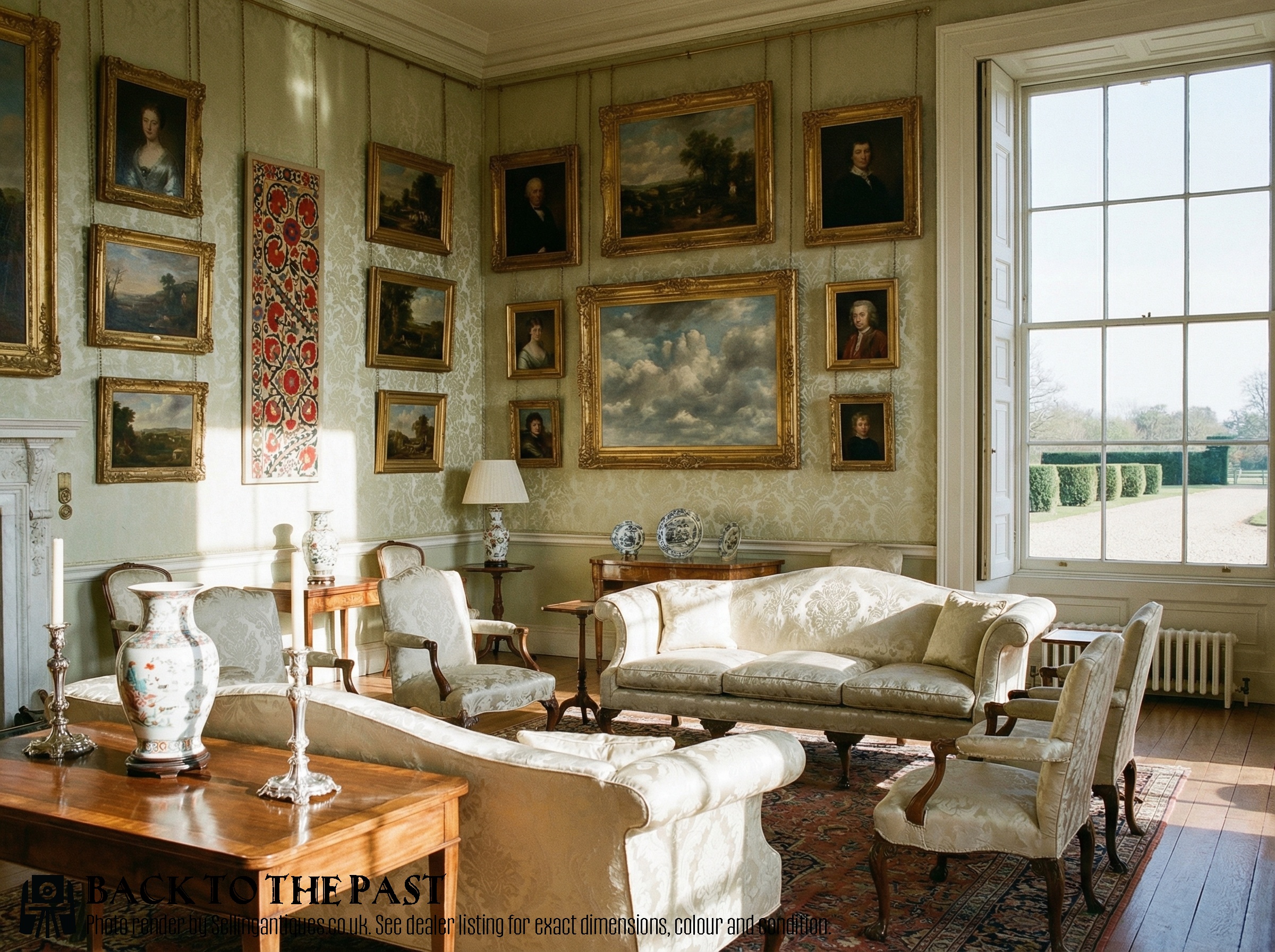
Objects range from large wall hangings and bed decorations to specialised items such as horse covers, saddle bags, and ceremonial coats. These pieces reflect specific regional traditions across Uzbekistan, Turkmenistan, and Kyrgyzstan, spanning periods from the mid-nineteenth century through to the early twentieth century.
Materials and Construction Techniques
The foundation grounds typically employ hand-woven cotton, linen, or felt, providing a durable base for dense needlework. Artisans utilised vibrant silk threads and occasionally wool highlights to execute intricate geometric and floral motifs.
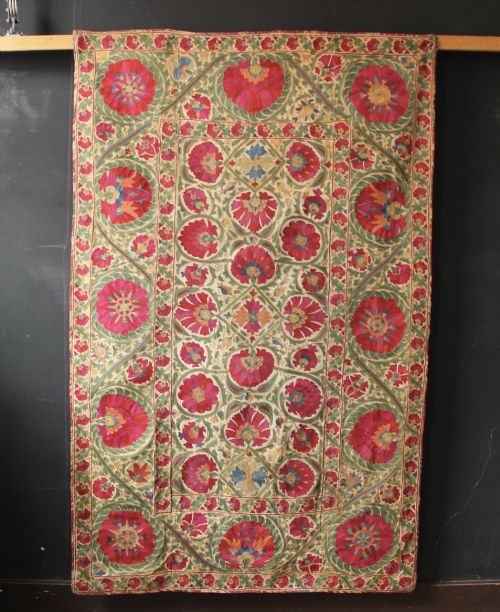
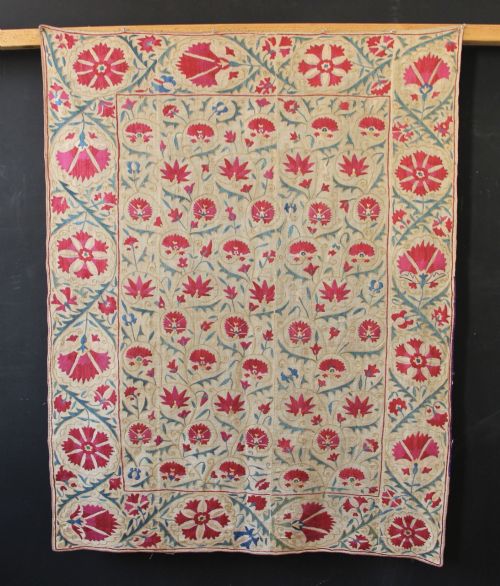
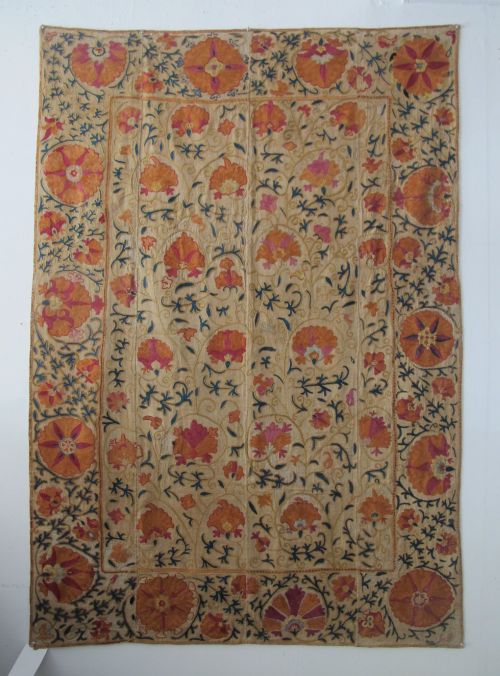
Needlework techniques varied from fine tambour stitch embroidery seen in comprehensive suzani panels to distinct relief embroidery characteristic of tribal groups. Ground fabrics range from natural cotton to dyed red and black cotton backgrounds supporting dense silk compositions.
The listings span from the mid-nineteenth century to the early twentieth century, incorporating cotton, silk, wool, velvet, and felt materials.
Evaluating Quality and Execution
Quality in these textiles depends heavily on the density of the stitching and the complexity of the design layout. Full work panels that completely cover the ground fabric demand significantly greater time and skill than open compositions.
The vibrancy of the palette and the precision of the needlework distinguish finer examples from standard pieces. Preservation of the original ground material and integrity of the silk thread further elevate the standing of an individual textile.
The Central Asian Embroidered Art Glossary
- Suzani
- An embroidered tribal wall hanging originating from Central Asia, traditionally worked in silk on a cotton or linen ground. These panels often feature large floral and sunburst motifs.
- Ilgich
- A specific type of Central Asian hanging or dowry embroidery, frequently produced by Lakai tribes. These pieces served decorative and functional roles within nomadic dwellings.
- Torba
- A small ceremonial bag or trapping created by Turkmen tribes, often featuring detailed face embroidery with silk highlights. They were used for storage inside traditional tents.
- Palak
- A fully embroidered suzani variety characterised by dense, comprehensive needlework covering the entire ground fabric. The name derives from the Persian word for heaven or canopy.
- Chyrpy
- A ladies ceremonial coat heavily embroidered in silk, worn by women in Turkmenistan. These garments display distinctive side panels and elongated false sleeves.
Central Asian Embroidered Art: Frequently Asked Questions
How were these textiles used originally?
Many pieces functioned as wall hangings, bed decorations, or tent furnishings inside traditional yurts and houses. Specialised items such as horse covers and saddle bags were utilised during ceremonies and festive processions.
Dowry embroideries were created to mark significant life events like marriages, acting as displays of family wealth, status, and artistic heritage.
How should I care for antique textiles?
Protect antique embroideries from direct sunlight to prevent fading of natural silk and cotton dyes. Display them away from high humidity and sources of heat to maintain the integrity of the organic fibres.
Mounting should distribute weight evenly across the backing fabric rather than suspending the textile by tension points. Professional conservation framing using UV-filtering glass offers the best protection for fragile pieces.
How do I distinguish between different regional styles?
Regional attribution relies on identifying specific design motifs, colour palettes, and embroidery structures. Urban centres like Tashkent, Samarkand, and Bokhara produced large, balanced floral suzanis on cotton grounds.
In contrast, tribal groups such as the Lakai and Kyrgyz utilised distinct geometric patterns, felts, and heavy relief stitching. Examining the ground fabric and stitch technique clarifies the geographic and cultural origin of the piece.