







Red Cut Glass
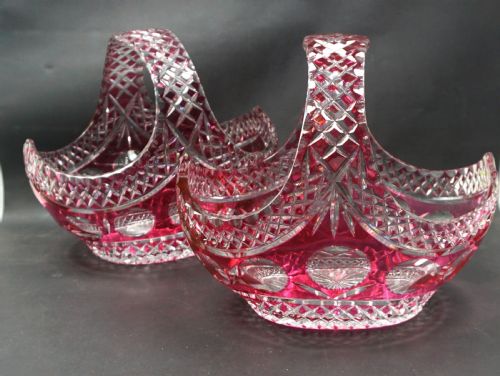
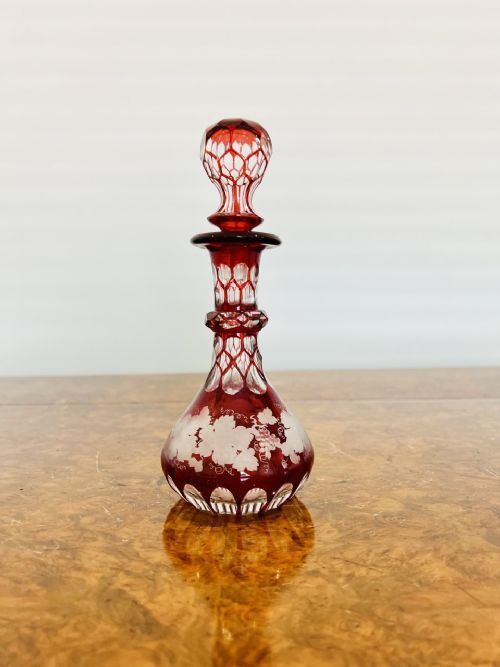
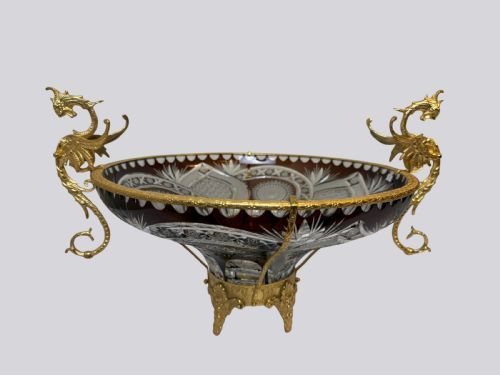
Red cut glass comprises vibrant vessels and decorative objects shaped by wheel-cutting and faceted surfaces.
Red Cut Glass
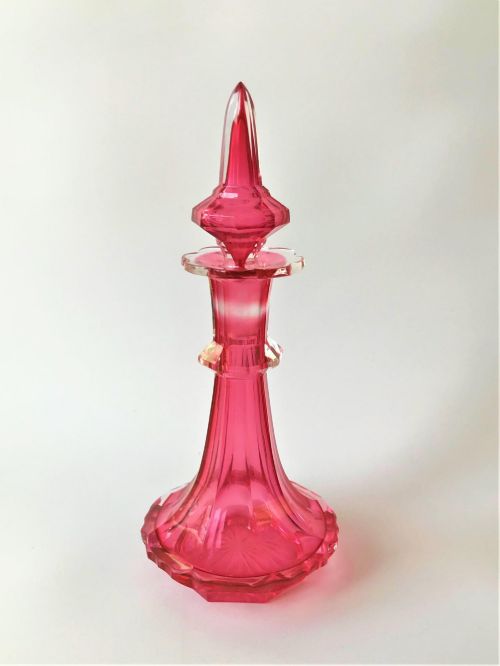
Red cut glass encompasses functional and decorative objects defined by deep hues and light-catching facets. Buyers seeking this category encounter items designed for display, dining, and personal use across multiple decades.
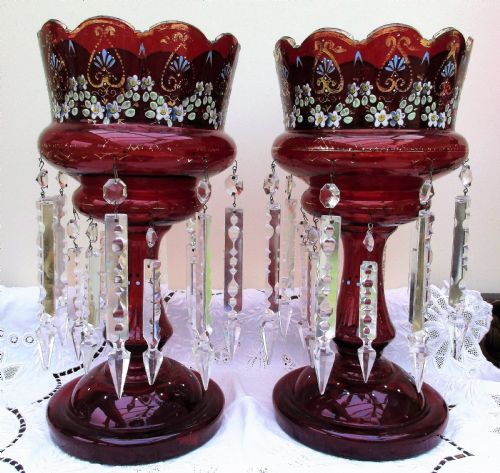
The selections on this page concentrate heavily on nineteenth-century Victorian and Edwardian examples, alongside distinct Art Deco pieces. Mantel lustres, decanters, scent bottles, and vases dominate the physical forms available.
Origin points span English, Bohemian, and continental European workshops, each bringing distinct traditions to coloured crystal and flash glass. Victorian mantel lustres and Bohemian overlay vases represent the most frequent discoveries in this market.
Materials and methods of production
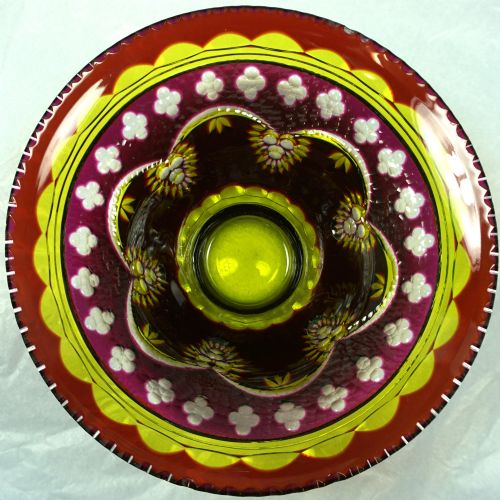
Makers achieved rich coloration through the use of ruby glass, cranberry glass, and red overlay or flashed techniques applied to clear crystal. Overlay methods involved fusing a layer of coloured glass over a colourless base before cutting through the top stratum.
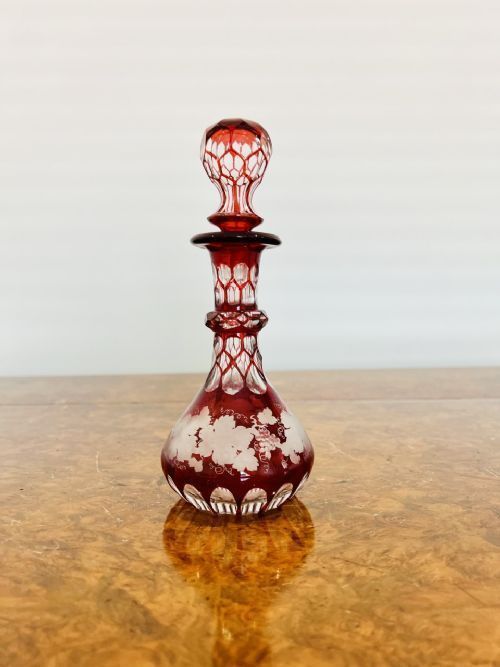
Wheel-cutting and engraving created geometric facets, floral motifs, and panels that revealed the contrasting clear glass beneath. Additional details frequently included silver mounts, gilt bronze, and enamel decoration applied to the finished vessels.
Red Cut Glass Retail Price Guide 2026
Typical asking prices for red cut glass among the pieces listed under this phrase on Sellingantiques today, from the lower quarter to the upper quarter. They describe what is for sale here now, not the wider market.
Listings feature Victorian, Edwardian, and Art Deco periods alongside materials including cranberry glass, ruby glass, and cut crystal.
Distinguishing quality in red cut glass
Depth and clarity of colour distinguish superior examples, particularly where layers contrast sharply against clear crystal. Precision and crispness in the wheel-cut facets dictate the overall definition of the design.
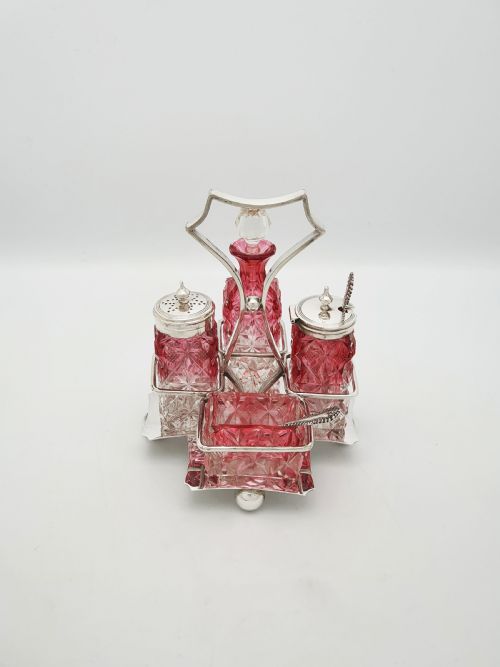
The integration of secondary materials, such as heavy silver mounts or intricate hand-engraved bird and vine motifs, elevates specific pieces. Proportion, weight, and the retention of original stoppers or hanging prisms heavily influence the standing of glassware.
Karl Palda·St. Louis·Val St. Lambert·Charles Graffart
The Red Cut Glass Glossary
- Ruby glass
- A deep red glass coloured with gold or copper compounds during melting. It forms the basis of many traditional Victorian and Bohemian decorative items.
- Cranberry glass
- A transparent pinkish-red glass achieved by adding gold chloride to the molten batch. It appears frequently in nineteenth-century tableware and scent bottles.
- Flash glass
- A thin layer of coloured glass fused over a thicker body of clear crystal. Cutting through the outer red layer exposes the clear crystal underneath.
- Mantel lustre
- A decorative ornamental vase hung with cut glass prisms designed for placement on a fireplace mantel. These pieces reflect ambient light through their dangling pendants.
- Overlay
- A technique where a vessel receives one or more complete outer jackets of coloured glass. Artisans grind away portions of this outer layer to create contrasting patterns.
Red Cut Glass: Frequently Asked Questions
How do I clean red cut glass?
Wash pieces gently in lukewarm water using a mild, non-abrasive detergent and a soft cloth. Avoid sudden temperature changes to protect the material from thermal shock.
Dry items immediately with a lint-free towel to prevent water spots on the faceted surfaces and metal mounts.
Were these items used daily?
Many decanters, wine glasses, and cruet sets served active roles in nineteenth-century dining and entertaining. Other objects, such as mantel lustres and scent bottles, functioned primarily as decorative accessories.
Scent bottles and vanity items belonged to personal dressing rooms, while large vases and centrepieces remained displayed in formal reception rooms.
How can I tell Victorian from Art Deco pieces?
Victorian items typically display heavy proportions, rich cranberry or ruby flash colours, and elaborate floral or bird engravings. They often incorporate hanging crystal prisms or ornate silver mounts.
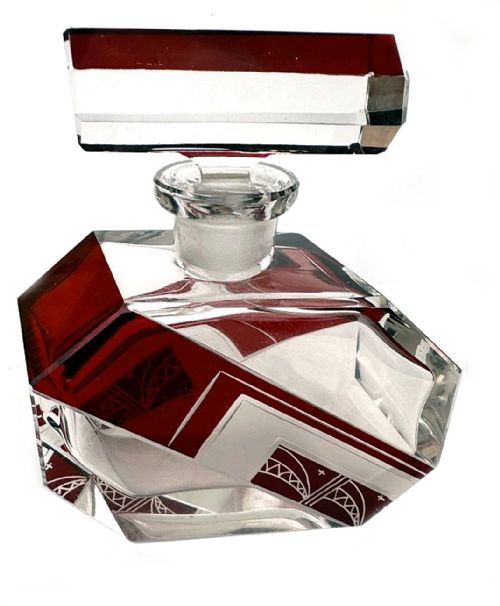
Art Deco examples from the 1930s feature geometric silhouettes, sharp lines, and striking contrasts typical of Czech and Belgian modern design.
What is overlay glass?
Overlay glass consists of a primary clear crystal body covered by one or more distinct layers of coloured glass. Artisans cut through the outer red layer to reveal patterns in the clear base beneath.
This method creates high-contrast visual depth that defines much of the finest Bohemian and European glassware.