


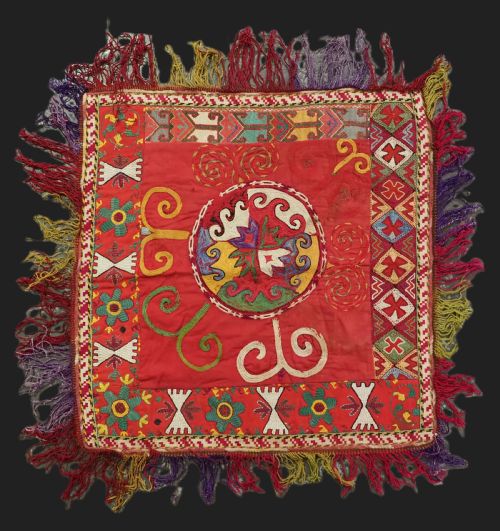
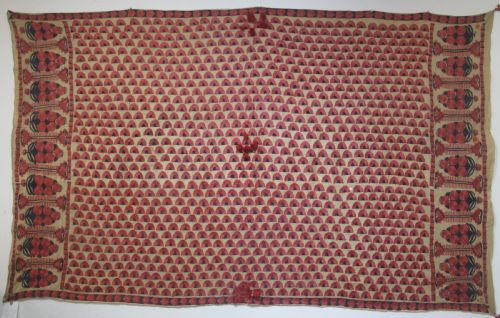


Red Cotton Tribal Embroidery
Red cotton tribal embroidery brings vibrant Central Asian wall hangings and shawls into a room through rich textiles worked in silk thread.
Red Cotton Tribal Embroidery
Red cotton tribal embroidery comprises decorative textiles, wall hangings, and shawls originating from Central Asian and South Asian traditions. Buyers searching for red cotton tribal embroidery encounter regional pieces such as Uzbek suzanis, Lakai tribe ilgiches, and Banjara textiles dating from the late nineteenth century to the early twentieth century.
The inventory on this page spans forms like the large Ura Tube suzani, smaller nim suzanis, and dowry embroideries intended for wall display. These objects reflect traditional designs from regions including Bukhara, Tashkent, and Shakhrisabz.
Most examples combine structured cotton foundations with dense decorative needlework. Central Asian pieces frequently display tribal motifs executed with distinct local variations.
Materials and Techniques
Artisans built these textiles using woven cotton foundations, frequently employing red cotton as a striking background ground or border element. Silk thread provides the primary medium for the detailed surface embroidery, creating contrast against the cotton base.
Additional materials such as wool, wood, and glass occasionally appear within specific tribal or regional constructions. Embroiderers utilised various stitching methods to build dense floral, geometric, and star patterns across the fabric surface.
Red Cotton Tribal Embroidery Retail Price Guide 2026
Typical asking prices for red cotton tribal embroidery among the pieces listed under this phrase on Sellingantiques today, from the lower quarter to the upper quarter. They describe what is for sale here now, not the wider market.
Current listings feature textiles utilising cotton, silk, wool, wood, and glass across various Central Asian and South Asian origins.
Assessing Quality and Execution
Quality in these textiles rests upon the density of the needlework and the precision of the design execution. Pieces described as full work or fully embroidered demonstrate superior handwork compared to examples with sparse or open stitching.
The vibrancy of the silk thread and the preservation of the red cotton ground dictate visual impact. Finer examples maintain crisp tribal motifs and structural integrity across large wall hanging formats.
The Red Cotton Tribal Embroidery Glossary
- Suzani
- An embroidered tribal hanging originating from Central Asia, traditionally worked in silk on a cotton or linen ground. These large textiles served functional and decorative roles in nomadic and village homes.
- Ilgich
- A specific type of Central Asian tribal embroidery often created as a dowry piece or wall hanging. Lakai groups frequently produced these items with distinct geometric and figurative motifs.
- Palak
- A fully embroidered suzani variant featuring a prominent central star or medallion motif surrounded by dense floral work. Tashkent workshops are well known for producing this grand scale of textile.
- Nim Suzani
- A smaller or half-scale suzani format utilised for wall decoration or furnishing smaller interior spaces. They share the same traditional needlework techniques as their larger counterparts.
- Gala Textile
- A traditional decorative fabric piece, such as those made by the Banjara community, featuring intricate mirror work and embroidery. These textiles formed part of traditional pastoral attire and adornment.
Red Cotton Tribal Embroidery: Frequently Asked Questions
How were these embroideries used?
These textiles served primarily as dowry items, wall hangings, and decorative covers within traditional homes. Families displayed suzanis and ilgiches during celebrations and as part of domestic interiors.
Today, buyers mount these pieces as wall art to introduce texture and historic pattern into modern living spaces. Smaller formats function well as decorative wall textiles.
How do I care for antique textiles?
Protect antique embroidery from direct sunlight to prevent the red cotton ground and silk threads from fading. Display pieces away from excessive moisture and heat sources.
Mount wall hangings using professional conservation methods that distribute weight evenly across the fabric. Avoid washing historical textiles with water unless handled by a textile conservator.
How can I tell regions apart?
Regional styles appear through distinct colour palettes, motif arrangements, and stitch densities. Tashkent pieces often present large palak star designs, while Lakai works employ compact geometric tribal patterns.
Appraising the specific thread types and background cotton helps connect a piece to centres like Bukhara or Shakhrisabz. Local traditions dictated the preferred layout of floral and symbolic elements.
What period do these pieces date from?
The available pieces on this page date primarily from the late nineteenth century through to the early decades of the twentieth century. Specific dates range from the 1880s up to the 1930s.
Turn-of-the-century examples from around 1900 represent a significant portion of surviving Central Asian and South Asian needlework. Dating relies on stylistic analysis and material examination.