

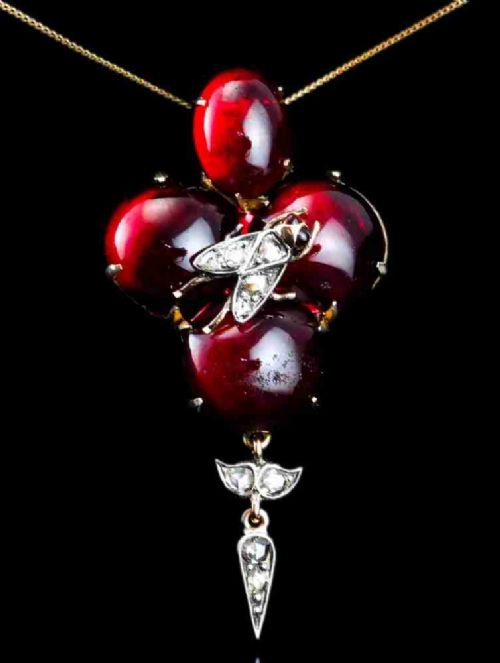


Red Cabochon Pendant
A red cabochon pendant is a polished, unfaceted gemstone jewel that sits at the throat, prized for rich colour and smooth depth.
Red Cabochon Pendant
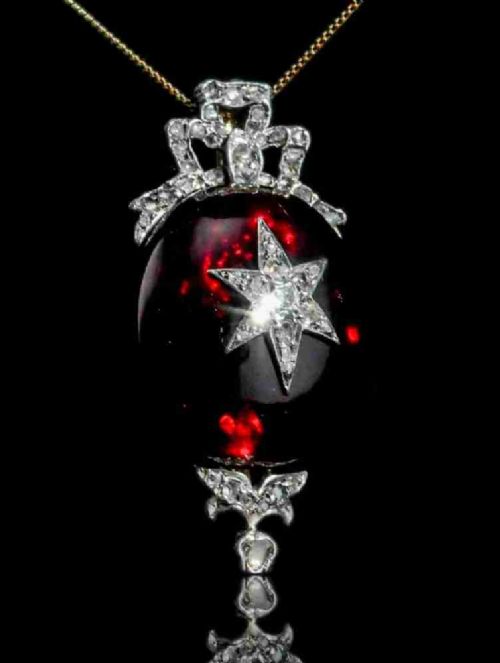
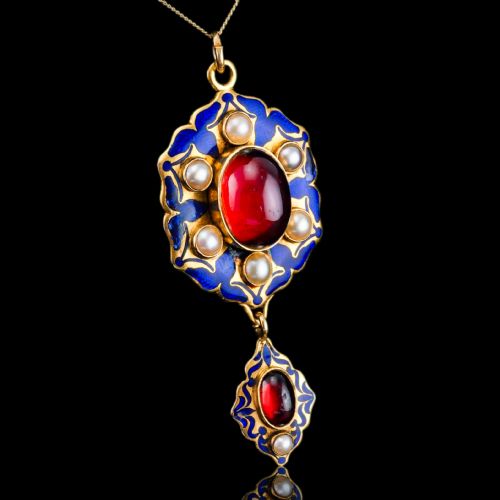
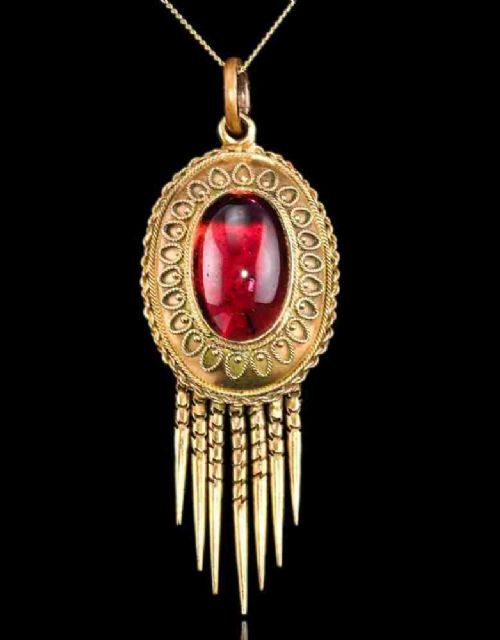
A red cabochon pendant brings together smooth, domed stones and rich gold or silver settings from past centuries. You are most likely to meet Victorian garnet examples, often formed as multi-functional pieces that convert between brooches and pendants.
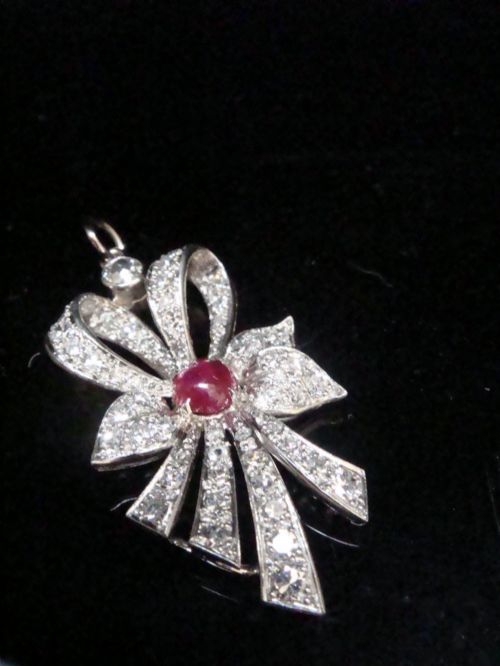
The selection ranges from Edwardian platinum ruby designs to Art Nouveau rose gold pieces and mid-century items. Styles span Etruscan Revival, Renaissance Revival, and geometric Art Deco expressions.
Many items double as lockets, slide chain necklaces, or starburst clusters featuring pearls and diamonds alongside the central red stone. They reflect diverse historical periods from the eighteen-eighties through to nineteen-thirty.
How they were made
Goldsmiths shaped high-carat gold, including fifteen-carat and fourteen-carat varieties, alongside silver and platinum to form secure settings. Stones were cut with rounded, polished tops rather than facets to catch the light in a soft glow.
Garnets, rubies, and red rock crystals form the central cabochons, frequently accented by seed pearls, diamonds, and guilloche enamel. Techniques like granulation and wirework define the revival styles seen across the Victorian period.
Red Cabochon Pendant Retail Price Guide 2026
Typical asking prices for red cabochon pendant among the pieces listed under this phrase on Sellingantiques today, from the lower quarter to the upper quarter. They describe what is for sale here now, not the wider market.
Several pieces double as secret memory keepers, hiding glazed miniature compartments intended to hold a lock of a loved one's hair.
What varies in quality
The depth of the gemstone's colour and the symmetry of the domed polish set the finest examples apart. Superior items display meticulous metalwork, such as fine Etruscan granulation or precise platinum mounting.
Integration of secondary stones like diamonds and pearls influences the distinction of a piece. Original convertible fittings and intact enamel work elevate the integrity of the design.
The Red Cabochon Pendant Glossary
- Cabochon
- A gemstone shaped with a smooth, rounded, convex surface instead of being faceted. This ancient cutting style enhances the rich, deep tones of garnets and rubies.
- Guilloche
- A decorative technique where a precise, intricate pattern is mechanically engraved into metal beneath a translucent layer of enamel. This adds texture and depth to the coloured surface.
- Holbeinesque
- A nineteenth-century revival style drawing on sixteenth-century Hans Holbein portrait jewellery designs. These pieces feature elaborate geometric framework, suspended pendants, and rich gem settings.
- Etruscan Revival
- A Victorian design movement inspired by ancient archaeological discoveries in Italy. It is characterised by tiny gold granules and wire applied to plain metal surfaces.
- Slide chain
- A necklace featuring a movable slide mechanism that holds the chain at a desired length. They often support a substantial pendant or locket.
Red Cabochon Pendant: Frequently Asked Questions
How do I wear a convertible pendant brooch?
These versatile jewels feature a detachable pin mechanism alongside a hidden bail for a chain. You can pin the piece directly to a lapel or suspend it from a ribbon or gold chain.
Ensure the pin stem is securely latched when wearing it as a brooch to prevent loss. When hung as a pendant, tuck the pin safely behind the frame.
What is the difference between a garnet and a ruby cabochon?
Garnets are iron-aluminium silicates that appear frequently in nineteenth-century pieces with a deep, brownish-red hue. Rubies are a variety of corundum, prized for a more vivid, fluorescent crimson tone.
Under magnification, garnets often show internal crystal structures, while rubies display distinct growth lines. Both achieve a smooth, rounded appearance in cabochon form.
How do I care for antique gold and enamel?
Clean these delicate items gently with a dry, soft microfibre cloth to remove surface dust. Avoid harsh chemical dips, ultrasonic cleaners, and prolonged exposure to water.
Enamel is a form of glass and can chip under sharp impact. Store each piece separately in a lined box to protect the soft gold and fragile stones.
How can I tell a Victorian piece from a nineteen-thirty piece?
Victorian items often employ high-carat gold, fifteen-carat gold, and detailed revival motifs like starbursts and granulation. Later pieces from nineteen-thirty lean towards streamlined geometry and different alloy standards.
Examining the reverse construction and finding maker marks or specific clasp styles helps clarify the timeline. The mounting techniques changed significantly between the mid-nineteenth century and the interwar years.